
Uber’s autonomous-vehicle strategy is starting to look less like a single bet and more like a parts catalog with a dispatch app on top.
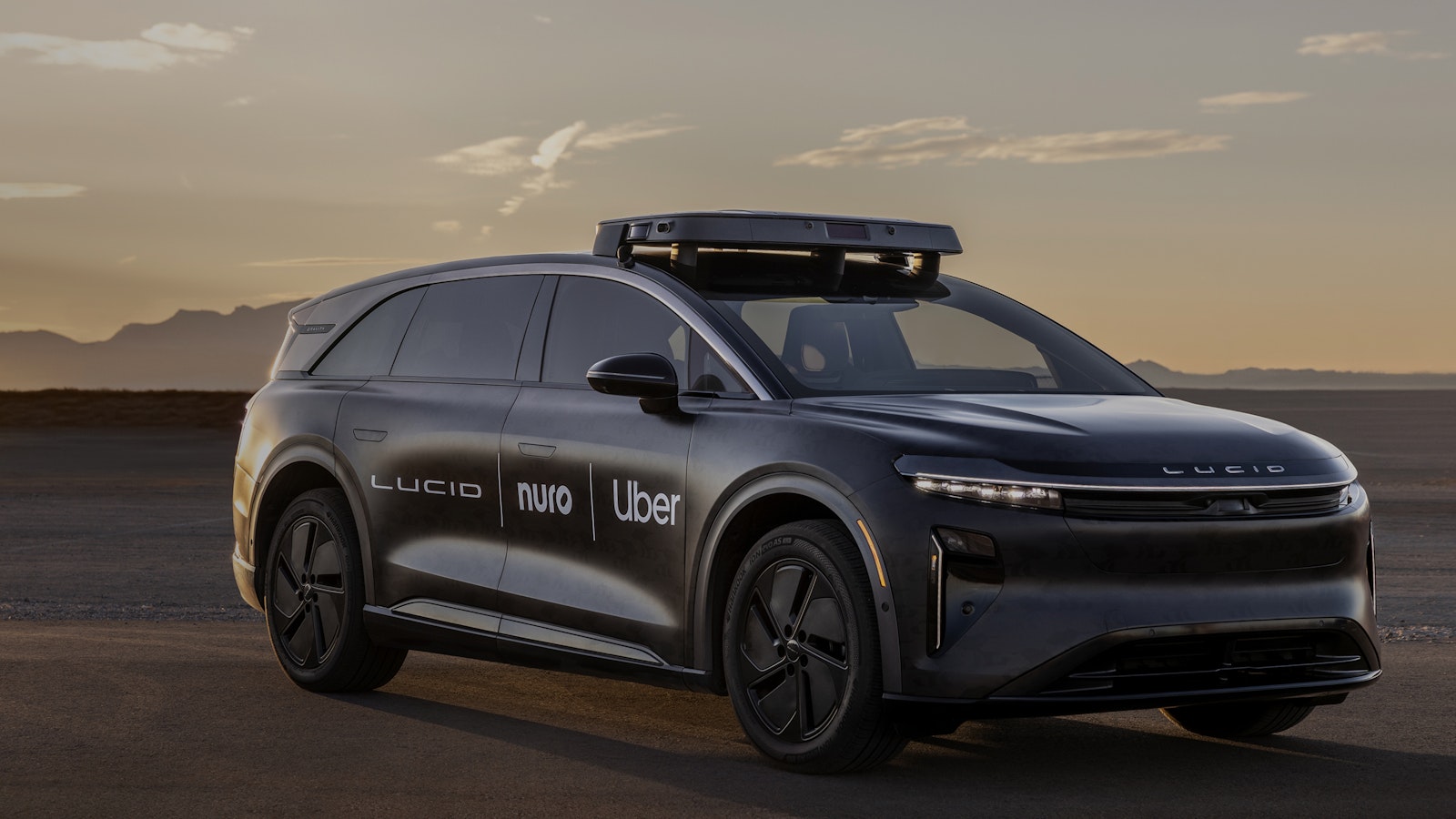
TechCrunch’s current deal tracker lays out the shape: Uber is working across a widening map of autonomous developers, delivery companies, vehicle makers and regional partners. The cleanest example is the Lucid-Nuro-Uber robotaxi program announced at CES. Nuro says Uber has licensed the Nuro Driver system, Lucid will integrate the hardware into Gravity SUVs at its Arizona factory, and the first Uber-native robotaxis are planned for rides in a major U.S. city in late 2026.
GearPulse’s view: this is relevant because robotaxis are moving from demo theater into operating-model questions. The next phase is not just “can the car drive?” It is who owns the car, who maintains it, who answers regulators, who handles rider support and who takes the blame when something weird happens at the curb.
That is why this is a different story from our recent Lyft and Baidu London robotaxi piece and Waymo San Francisco pause analysis. Lyft-Baidu was about bringing autonomy into a brutal city environment. Waymo was about local operating discipline. Uber is building the marketplace layer that wants many autonomous suppliers under one familiar button.
Uber wants to be the operating system
Uber’s own autonomous page is direct about the pitch. The company frames itself as the platform with marketplace management, fleet utilization and local operations experience. That is not the same as saying Uber has the best self-driving stack. It is saying the best self-driving stack still needs demand, routing, payments, support, utilization and city-by-city deployment work.
The Lucid-Nuro deal makes the model easier to see.
| Layer | Public partner detail | Why it matters |
|---|---|---|
| Vehicle | Lucid Gravity-based electric SUV | A premium EV platform with long-range positioning. |
| Autonomy | Nuro Driver licensed by Uber | Uber gets a self-driving system without owning the whole autonomy company. |
| Integration | Lucid factory integration in Casa Grande, Arizona | Hardware is meant to be built into production, not bolted on afterward. |
| Fleet ownership | Uber or third-party fleet partners | The asset model can vary by market. |
| Network | Uber app | Riders do not need to learn a new robotaxi brand. |
| Scale claim | Nuro says 20,000 or more vehicles across dozens of markets; its FAQ also refers to 35,000 or more over six years | The ambition is industrial, but the final deployed count still depends on execution. |
The caveat is important. These are company targets and program descriptions, not proof of reliable public service. Autonomous launches have a long history of confident timelines meeting messy streets.
The clever part is also the risky part
Uber’s strategy has a logic that is hard to dismiss. Building a robotaxi service from scratch means solving autonomy, vehicle sourcing, charging, depot operations, insurance, support, local politics, pricing and customer demand all at once. Uber already has pieces of the commercial machinery.
But modularity creates accountability questions. If a ride uses Uber’s app, a Lucid vehicle, Nuro’s autonomy stack and a third-party fleet operator, the passenger experiences one product. Regulators may see several responsible parties. That split can work beautifully when everything is normal. It becomes much harder when a vehicle blocks traffic, needs remote assistance, has a cleanliness problem, or creates a safety incident that does not fit a neat support script.
For riders, the brand on the phone will matter more than the supplier list. For cities, the supplier list will matter a lot.
Why this could move faster than a purist approach
The upside is that Uber does not need one autonomy winner to own every geography. A partner-led model lets it try different operators, vehicle types and regulatory playbooks across markets. Delivery robots, freight autonomy, ride-hail robotaxis and airport or entertainment-district pilots do not all need the same vehicle.
That could make Uber the aggregator of autonomy before autonomy is fully mature. Human drivers and autonomous vehicles can coexist in the same marketplace, which gives Uber a buffer that single-mode robotaxi companies do not always have.
The question is whether that buffer becomes a competitive advantage or an excuse for uneven quality.
Bottom line
Uber’s robotaxi plan is interesting because it is becoming practical in a very Uber way: asset-light where possible, partner-heavy where necessary and obsessed with keeping the rider relationship inside the app.
That may be the fastest path to putting autonomous rides in front of ordinary users. It also makes trust more complicated. When the driver disappears, the supply chain becomes the product.