London is where the robotaxi pitch stops being abstract.
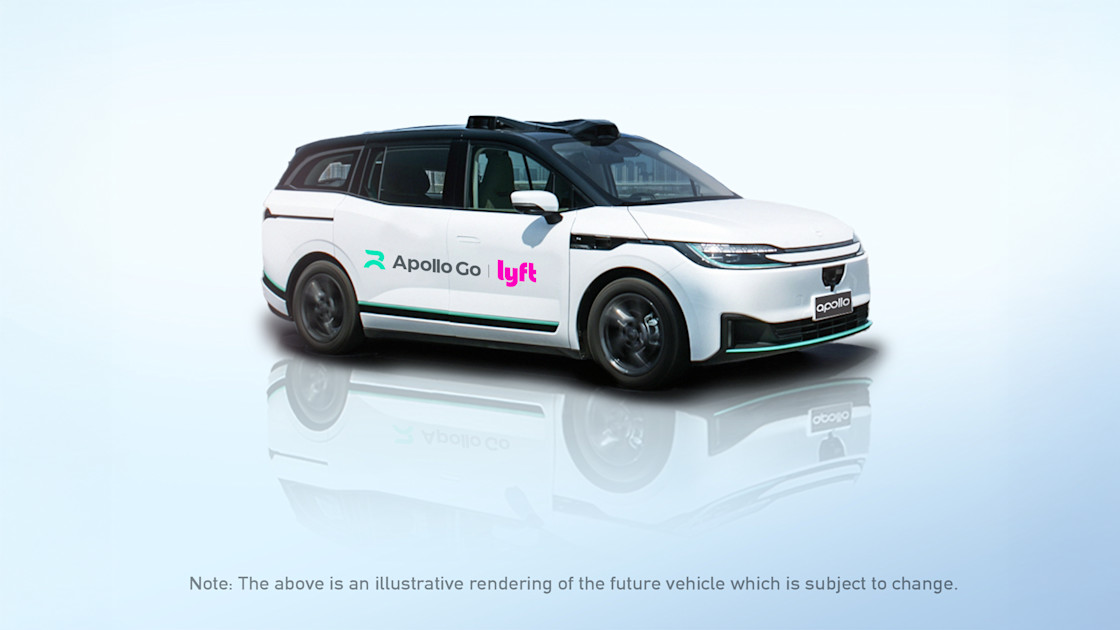
Baidu has started testing Apollo Go autonomous vehicles in London as part of its partnership with Lyft and Freenow, according to TechCrunch. The first phase uses human safety operators, runs in the borough of Brent, and is not yet a public driverless service. Lyft and Freenow expect public hailing to come later, with regulatory approval still the gate.
That caveat matters. But this is still a meaningful moment, because London is not a neat proving ground. It is narrow roads, buses, bikes, black cabs, delivery vans, pedestrians who treat gaps as invitations, and a road culture built on confidence as much as rules. If robotaxis can work here, they become easier to imagine in other European cities. If they stumble, the lesson will travel just as fast.
Why London makes this personal
The emotional promise of a robotaxi is simple: press a button, get a clean ride, avoid awkward small talk, and trust the car to do the boring part.
London complicates that promise. A good London driver does not just know how to steer. They know when a junction is about to lock up, when a cyclist is likely to squeeze through, when a bus lane changes the rhythm of a street, and when a passenger actually needs a human judgment call. The black-cab standard is culturally powerful because it treats local knowledge as part of the product.
That is the bar Baidu, Lyft and Freenow are walking into.
| The promise | The London version |
|---|---|
| A robotaxi can drive safely | It must also read dense, impatient city behavior. |
| The app can route efficiently | It must avoid making bad congestion worse. |
| AVs can scale through platforms | Taxi operators and private-hire drivers still need a place in the system. |
| Regulation can approve pilots | Public trust will depend on what happens during messy edge cases. |
This is why the story is relevant beyond London. Robotaxis are entering the same uncomfortable phase EVs entered years ago: the technology can be impressive and still have to prove it fits real life.
What Lyft and Baidu are actually bringing
The official Lyft-Baidu partnership, announced in 2025, said Lyft planned to deploy Baidu Apollo Go RT6 vehicles in Germany and the United Kingdom starting in 2026, pending regulatory approval. Lyft described the RT6 as a purpose-built, fully electric robotaxi for ride-hailing, and said the partnership would use a hybrid network in which autonomous vehicles and human drivers coexist.
Baidu’s own investor materials give the scale claim some weight. The company said Apollo Go was expected to begin testing in London with Uber and Lyft soon, and earlier reported that cumulative public rides had exceeded 20 million by February 2026. That does not automatically prove London readiness, but it means this is not a prototype startup arriving with one demo van.
The latest reported London detail is more concrete:
| Detail | Current status |
|---|---|
| City | London |
| Test area | Brent, according to TechCrunch |
| Vehicle program | Baidu Apollo Go RT6 |
| Platform partners | Lyft and Freenow |
| Safety operators | Present during the current testing phase |
| Public rides | Expected later, dependent on regulatory approval |
The cautious read is the right one: testing has begun, deployment is not guaranteed, and public availability should not be treated as a done deal until regulators say so.
Regulation is becoming part of the product
The UK government has been preparing the runway. In June 2025, the Department for Transport said self-driving taxi- and bus-like service pilots would be brought forward to spring 2026, with the wider Automated Vehicles Act regime expected later. The government framed safety as the central condition, including the requirement that self-driving vehicles meet a careful and competent human-driver standard.
London City Hall has also opened an investigation into autonomous passenger vehicles, with the Transport Committee looking at trials, safety, accessibility, traffic, employment and public confidence.
That is not bureaucracy for its own sake. It is the product environment. A robotaxi service is not a phone app that happens to move through streets. It is a rolling public system. It needs clear incident reporting, data sharing with city authorities, driver transition plans, accessibility obligations, and a plain-English rider experience when something goes wrong.
The better robotaxi companies will treat regulation as design input, not a hurdle to sprint around.
The human-driver question will not go away
Lyft and Freenow are leaning on “hybrid network” language, and they should. It is the only politically and operationally plausible path.
Autonomous vehicles may be excellent for predictable airport corridors, late-night coverage gaps, simple app-hail trips and areas where supply is thin. Human drivers will still matter for passengers who need help, confusing pickups, blocked streets, unusual luggage, accessibility support and the soft judgment that makes transport feel human.
The smart future is not robotaxis replacing every driver in one dramatic wave. It is fleets becoming another layer in the transport stack. The question is who benefits from that layer: riders, cities and professional drivers, or only platform balance sheets.
GearPulse has covered Waymo’s San Francisco pause and the broader lesson was similar. Autonomy is impressive when the road is normal. It becomes infrastructure when the road is not.
Bottom line
Lyft and Baidu testing in London is intriguing because it puts a scaled robotaxi system into a city that will not politely simplify itself for software.
The best version of this is not a driverless novelty ride. It is a service that knows when to drive, when to pause, when to defer to the city, and when a human driver is still the better answer. London will expose that quickly. That is exactly why this test is worth watching.