
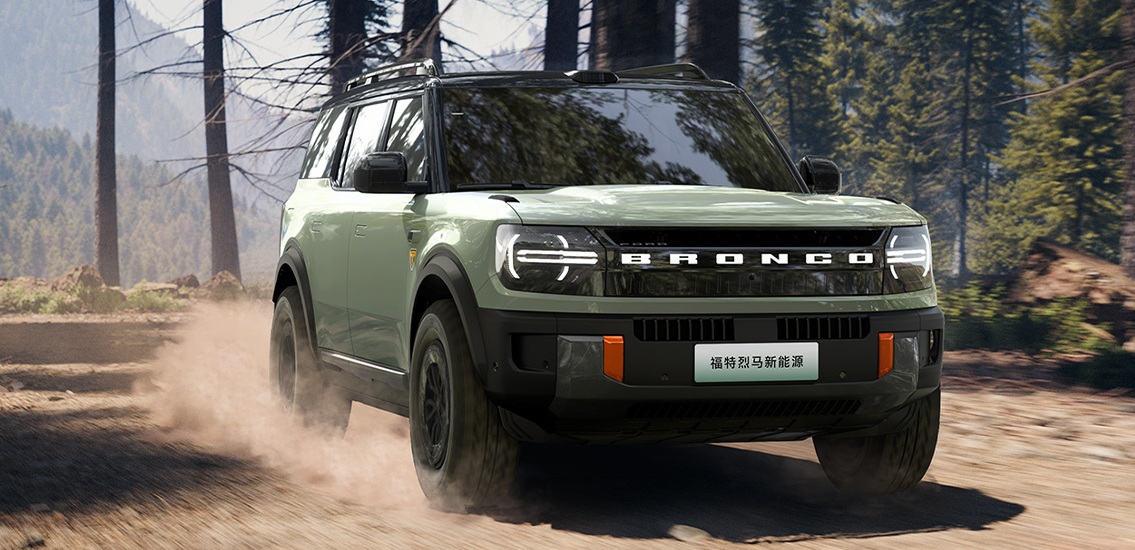
The Ford Bronco New Energy is exactly the sort of vehicle that makes American EV shoppers mutter at their screens.
It looks rugged. It has the right name. It comes as a full battery-electric SUV or a range-extender. It has camping-friendly energy tricks, lidar, a big battery option and the kind of boxy stance that makes crossovers feel apologetic. And, for now, it is a China story.
InsideEVs spent time with the China-specific Bronco New Energy and came away asking the obvious question: why is this not sold in the U.S.? That is the hook, but the more useful point is bigger. Ford China and Jiangling Ford have built the kind of electrified adventure SUV that many buyers say they want from legacy brands. It may not map neatly onto the American Bronco, but it proves the idea is not fantasy.
GearPulse’s view: this matters because the EV market is moving past anonymous aero blobs. Buyers want electric vehicles with identity. We saw the same tension in our Rivian R2 second-shift coverage and the Audi A2 e-tron efficiency argument: the next wave has to feel like something, not just calculate well.
What the Bronco New Energy actually is
This is not simply a U.S. Bronco with batteries shoved underneath. It is a China-market model from the Jiangling Ford joint venture, with Ford Bronco styling cues and new-energy powertrains aimed at Chinese buyers.
Ford China’s official page lists the two big range claims clearly: the range-extender model uses a 43.7kWh battery and claims 1,220km combined CLTC range, while the pure electric model uses a 105.4kWh battery and claims 650km CLTC range.
| Version | Battery | Range claim | Layout / context |
|---|---|---|---|
| BEV | 105.4kWh LFP pack | 650km CLTC | Dual-motor AWD in reporting from CarNewsChina and related sources. |
| EREV | 43.7kWh battery plus 1.5-liter generator | 220km electric CLTC, 1,220km combined CLTC | Range-extender setup for long trips without relying only on charging. |
| Body | 5,025mm long, 1,960mm wide, 1,815mm high, 2,950mm wheelbase, per CarNewsChina’s MIIT-based reporting | Larger than the mental image many U.S. Bronco fans may have | More family/adventure SUV than compact trail toy. |
| Tech | Ford China’s page highlights Snapdragon 8255, high compute for cabin interaction and a 70-inch AR-HUD | Also reported with lidar and a broad sensor suite | Very China-market feature mix. |
The range caveat is essential. CLTC is generally more optimistic than U.S. EPA testing. A 650km CLTC rating does not mean an American-market version would show 404 EPA miles. Treat it as a China-market comparison figure, not a universal promise.
Why people want it anyway
Because the shape tells a story.
EVs are often sold through efficiency, acceleration and software. Those things matter, but they do not make people fall for a vehicle. The Bronco name does. The rear-mounted spare does. The upright body does. The promise of throwing gear in the back and leaving pavement behind does.
That is why this China-only Ford feels more emotionally complete than many global EV concepts. It is not asking buyers to learn a new design language before they understand the point. It takes a familiar adventure template and electrifies it.
| What buyers see | Why it lands |
|---|---|
| Boxy Bronco-ish styling | The vehicle has identity before anyone reads a spec sheet. |
| BEV and range-extender options | Ford can serve charging-confident city users and longer-distance outdoor users. |
| Large battery option | The BEV version sounds serious rather than compliance-grade. |
| Lidar / AR-HUD / cabin compute | China-market tech expectations are high, and Ford is playing that game. |
| Camping and vehicle-to-load themes | Outdoor EVs need to power more than the wheels. |
There is a personal reason this kind of product keeps getting attention. People do not just want an electric version of transportation. They want an electric version of their weekend self-image.
Why it probably is not a simple U.S. import
The frustrating answer is that China-market vehicles are not Lego blocks. Regulations, safety certification, supply chain, battery sourcing, software, dealer service, pricing, tariffs and brand positioning all matter. Ford also has to protect the existing Bronco and Bronco Sport lineup in the U.S., where the gasoline Bronco carries a very specific off-road identity.
There is also a deeper product question. Would U.S. buyers accept a unibody, China-built, tech-heavy Bronco-branded EV if it did not behave like the body-on-frame Bronco they know? Some would. Some would call it heresy before the first test drive.
That is why the most realistic takeaway is not “ship this exact vehicle tomorrow.” It is “Ford should notice how badly people want this kind of thing.”
My read
The Bronco New Energy is compelling because it is imperfect in the right direction. It may be China-specific. Its range numbers need translation. Its relationship to the American Bronco is more visual and emotional than mechanical.
But it has the thing too many EVs lack: a point of view.
Range-extender SUVs in particular deserve more attention in North America. They can cover weekday electric driving while reducing the anxiety of remote trips, cold weather and uneven charging access. That is not as pure as a BEV, but purity is less useful than vehicles people actually buy and use.
If Ford wants electrified adventure to feel normal, not niche, it needs products that look less like homework and more like a plan for Saturday morning. The Bronco New Energy understands that.
Bottom line
The Ford Bronco New Energy is relevant because it shows a legacy brand building an EV around desire, not just compliance.
No, U.S. buyers should not read Chinese CLTC figures as EPA promises. No, this is not the same thing as an electric version of the American Bronco. But the lesson travels well: give people an electric SUV with character, usable range options and outdoor utility, and they will pay attention before the spec debate even starts.
Support independent GearPulse articles at buymeacoffee.com/gearpulse.site.