
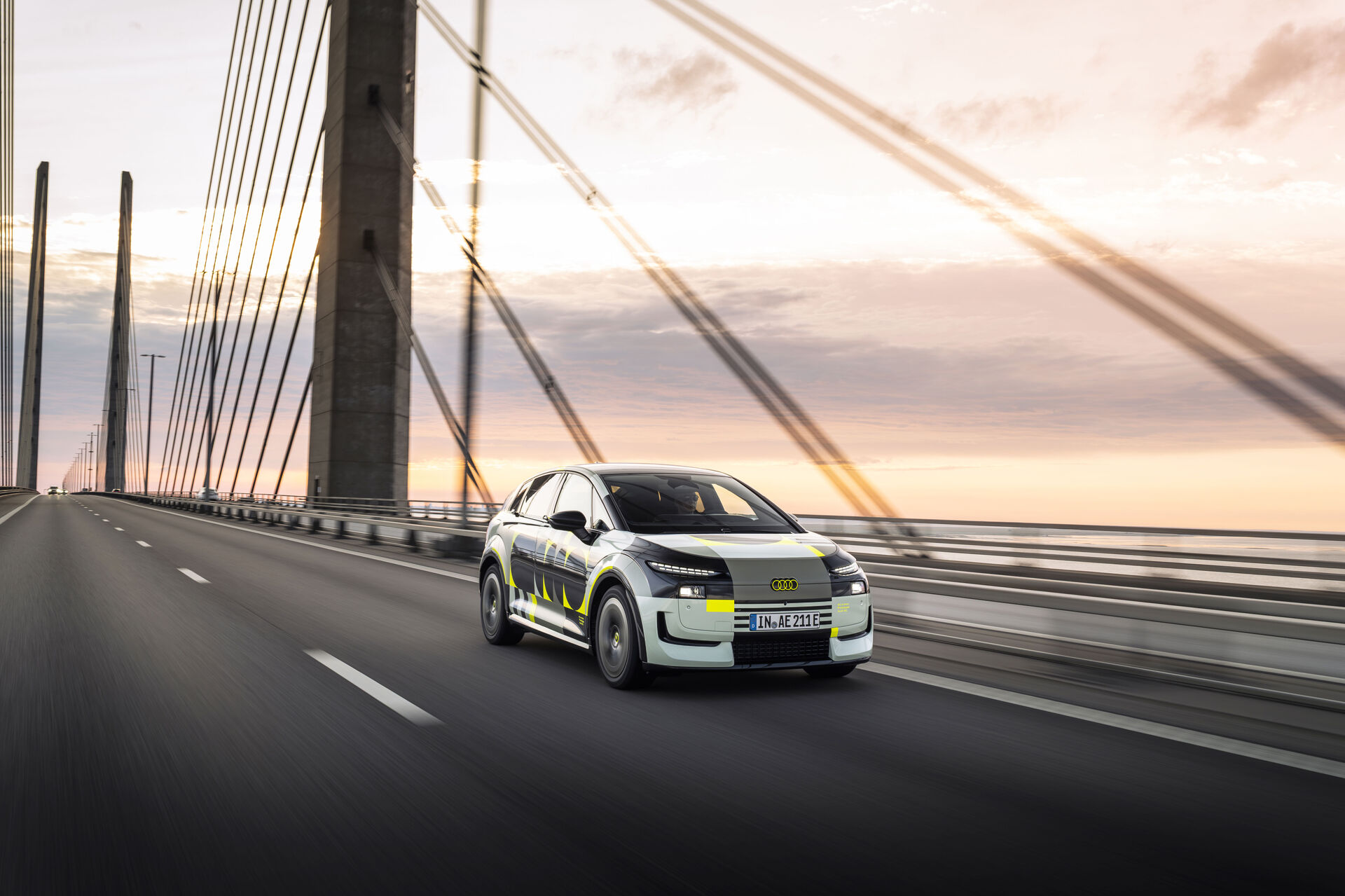
The original Audi A2 was a strange little monument to efficiency. It was light, clever, expensive to build and too odd for the market that was supposed to save it. Now Audi is bringing the badge back as an electric hatchback, and the timing feels better than the nostalgia.
Audi says the A2 e-tron will be unveiled in fall 2026 as a compact electric model family. The company is already making the key claim: with an optional efficiency package, preliminary WLTP data puts consumption at 12.8 kWh/100 km. Motor1 and InsideEVs both read that as the headline number because, by Audi’s own framing, this is meant to be the most efficient Audi yet.
GearPulse’s view: this matters because small EVs have been treated too often as budget compliance cars or style exercises. The A2 e-tron is interesting because Audi is making efficiency the flex. That is exactly what compact electric cars need if they are going to feel desirable instead of merely sensible.
It also gives this week’s EV coverage a cleaner counterpoint to our recent Toyota electric Hilux pricing piece. The Hilux story was about an electric work tool finding a price discipline. The A2 story is about a premium brand rediscovering that restraint can be exciting.
The numbers Audi is putting forward
Audi has not fully revealed the production car yet, so this is not a finished buyer guide. The useful facts are narrower.
| Detail | Audi-stated or reported figure | Why it matters |
|---|---|---|
| Reveal timing | Fall 2026 | The camouflage comes off soon, but final trim/pricing details can still move. |
| Efficiency claim | 12.8 kWh/100 km in preliminary WLTP form with optional efficiency package | That is the number Audi wants people to remember. |
| Drag coefficient | 0.24 with the efficiency package, according to coverage of Audi’s release | Aero is being sold as real engineering, not just smooth styling. |
| Battery mentioned in coverage | 58 kWh usable / 61 kWh gross LFP pack | LFP points toward cost control and routine full charging. |
| Motor mentioned in coverage | 140 kW / 187 hp rear motor | Enough for a compact EV without turning the car into a fake hot hatch. |
| Availability context | Europe-focused launch before late 2026 or early 2027 in media coverage | U.S. availability is not something to assume. |
The caveat is important: WLTP is not your commute, winter highway run or summer motorway blast. An efficient WLTP figure is still useful, but it is not a promise that every driver will see the same number.
Aero is the personality
The A2 e-tron’s most charming detail is that Audi is not pretending efficiency happens by magic. The company points to aerodynamic work around the underbody, wheel areas and active cooling. InsideEVs notes the active front air intake is designed to stay closed during normal driving and at higher speeds, then open when the battery and electronics need cooling during charging, heat or harder acceleration.
That is the kind of invisible engineering compact EVs need more of. Big batteries are the easy marketing answer because range sells. But bigger batteries add weight, cost and material demand. A small car that earns miles by wasting less energy feels more honest.
There is a personal angle here too. A compact EV is only relaxing if it asks less of you: less time planning charges, less money tied up in unused battery capacity, less parking stress, less apology for being practical. The A2 e-tron is not proven yet, but the pitch is pointed in that direction.
The old A2 lesson still applies
Audi fans remember the original A2 because it was weird in a way modern cars rarely are. It had a serious engineering brief and a stubborn shape. It was also a commercial headache.
That history should make Audi cautious. A modern A2 e-tron cannot just be clever. It has to be priced like a real compact car, packaged like one, and supported with trims people can actually configure. InsideEVs reported a now-deleted German-page snapshot with broader version and price clues, but those are exactly the details to treat carefully until Audi publishes final configurator information.
The better lesson from the old A2 is not “make another expensive science project.” It is “make efficiency visible enough that buyers feel smart choosing it.”
What buyers should watch next
| Question | Why it matters |
|---|---|
| What is the final price? | A compact premium EV can lose the plot quickly if it drifts too far from mainstream rivals. |
| Is the 12.8 kWh/100 km figure tied only to one aero package? | The hero number may not describe the car most people buy. |
| What is the real motorway range? | Small EVs live or die by winter and highway confidence. |
| How much practicality survives the aero work? | Low drag is great until rear-seat space, visibility or cargo access suffer. |
| Will Audi offer it outside Europe? | A great small EV that never leaves Europe is still a local answer. |
The most promising part is that none of these questions kills the idea. They are normal product questions, not red flags.
Bottom line
The A2 e-tron is appealing because it gives Audi a reason to be small again.
If the finished car keeps the efficiency discipline, avoids silly pricing and delivers real-world range that matches the engineering story, it could make compact EVs feel premium without making them heavy or overpowered. That would be a more interesting achievement than another massive electric SUV with a bigger battery and a louder spec sheet.