
The next useful step for in-car AI is not letting it drive. It is giving passengers a better cabin without blurring responsibility for the vehicle.
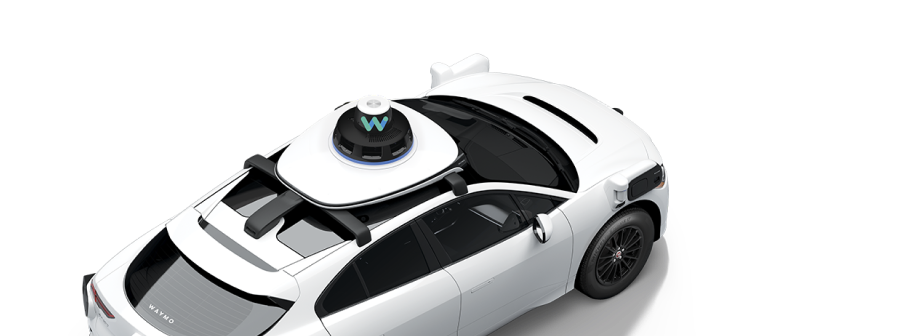
That is the line Waymo is trying to hold with its new Ojai experience. The company has added Gemini to the purpose-built robotaxi alongside a redesigned, three-screen interface. Riders can ask for cabin changes, trip information and local context; Waymo says they can also ask Gemini to request a pullover. But the assistant does not control steering or routing, and it has no access to the live driving data used by the Waymo Driver.
That separation is the story. In a robotaxi, an assistant that sounds like it knows the road could easily create a dangerous impression that it also has authority over the car. Waymo is instead positioning Gemini as a cabin companion—more informed than a climate-control panel, but decisively separate from the autonomous-driving system.
What the Ojai actually gains
Waymo says Gemini is in beta. A rider can use the screen to ask for such things as a cooler cabin, information about a landmark or a nearby coffee shop, and basic help with the ride. It stays inactive until the rider chooses to engage with it.
The other half is a substantial interface redesign. The Ojai has three passenger-facing screens; its new software changes which screen has the most control based on occupied seats. A solo rear-right passenger, for example, can get the fuller interface while the other displays remain on a simplified trip view or ambient media. There is also a Calm Mode that dims the display and reduces the information competing for attention.
| Part of the update | What Waymo says it does | The practical value |
|---|---|---|
| Gemini in Waymo | Answers everyday questions, gives journey information and changes cabin settings | Useful if it replaces menu-diving, not if it becomes another screen to manage. |
| Pull-over request | Lets a rider ask for a pullover by voice | A meaningful escape hatch, though Waymo has not described it as a general driving-control channel. |
| Seat-aware displays | Varies controls and information across the three screens | Better for shared rides, where mirroring every display would be clutter. |
| Calm Mode | Dims the screen and shows minimal trip information | A small but welcome admission that a ride does not need constant stimulation. |
9to5Google called out the product boundary most clearly: Gemini is a helpful passenger, not the robotaxi’s driver. autoevolution likewise reports that the assistant can handle basic cabin functions but not movement, routing or live driving data. Those constraints are not a limitation to apologize for. They are the reason the feature has a chance to feel trustworthy.
The smartest choice is a narrow one
The autonomous system already has a very specific job: interpret the road and move the vehicle safely. A conversational model has a very different one: deal with open-ended language.
Mixing those roles carelessly is how a benign request such as “take me somewhere quieter” starts to sound like an instruction to the car. Waymo’s design leaves a cleaner chain of responsibility. The Waymo Driver makes driving decisions; Gemini handles rider-facing conversation and controls. A passenger can request a pullover, but no chatbot is negotiating a turn, choosing a route or narrating what it thinks it sees through the car’s sensors.
That should also help set the right expectations. Gemini can answer a question about a neighborhood, but it is not a safety authority. It can make the cabin warmer, but it cannot rescue a missed pickup or reason its way around a road closure. The resulting experience may sound less magical than a fully fused AI car, yet it is more legible—especially to someone riding without a human driver in front.
A better cabin is still part of the robotaxi problem
Robotaxi coverage often focuses on the difficult external questions: safety, regulation, dispatch, where the cars can operate and what happens when the road gets weird. We looked at that operational side when Waymo’s San Francisco pause showed why robotaxis need city instinct.
The Ojai update addresses the other side of the experience. Once a passenger has accepted the absence of a driver, the cabin cannot feel like a stripped-out taxi with a tablet bolted to the seatback. It needs to make practical choices easy—temperature, music, ride status, a little local context—without turning the ride into another attention-hungry software surface.
The screen choreography is quietly more interesting than the Gemini badge for that reason. Shared autonomous rides create a basic interface problem conventional cars do not have: who owns the controls when several people are facing several displays? Giving the occupied seat more control while preserving simple trip information elsewhere is a thoughtful answer. Calm Mode is an even better signal. A premium ride can be quiet.
Privacy has to be more than an inactive microphone
Waymo says Gemini remains inactive unless the rider engages it, which is a sensible baseline for a cabin assistant. Still, passengers should not mistake that claim for a complete privacy answer. A person using Gemini in a ride should understand what is retained, what is tied to their Waymo or Google account, and whether that differs from using Gemini on a phone.
The same applies to conversational pull-over requests. The feature could be genuinely reassuring when a passenger feels unwell or needs to change plans. But Waymo will need to make its limits clear in the interface: when the request can be completed, how long it may take and what a rider should do in an emergency. A calm voice is not a substitute for a clearly designed support path.
Bottom line
Waymo’s Ojai update is persuasive precisely because it does not pretend Gemini is a co-driver.
The assistant has a useful, bounded job: make a driverless cabin less fiddly and more personal. The Waymo Driver retains the high-stakes job: operate the vehicle. If Waymo keeps that boundary obvious while making controls fast and quiet, the Ojai could show what in-car AI should look like in a robotaxi—helpful enough to matter, restrained enough to trust.