
Hydrogen trucks have never lacked a good-looking prototype. What they have lacked is a sufficiently boring answer to the fleet manager’s questions: How often does it run? Where does it fuel? What does the interruption cost? And is the whole arrangement competitive once the novelty has worn off?
Toyota and Scania’s new programme is interesting because it aims at those questions. Toyota will supply third-generation fuel-cell systems for 40 Scania heavy-duty vehicles in the truck maker’s Pilot Partner programme. The first vehicles are expected to enter selected customers’ logistics operations in the first quarter of 2027.
That wording matters. These are not 40 retail trucks, and neither company has claimed a production decision. They are a deliberately larger real-world trial, intended to gather performance, operational-efficiency and total-cost-of-ownership evidence. For people who follow the future of freight, that is a more valuable milestone than another range estimate on a show stand.
The hardware claim is specific; the commercial verdict is not
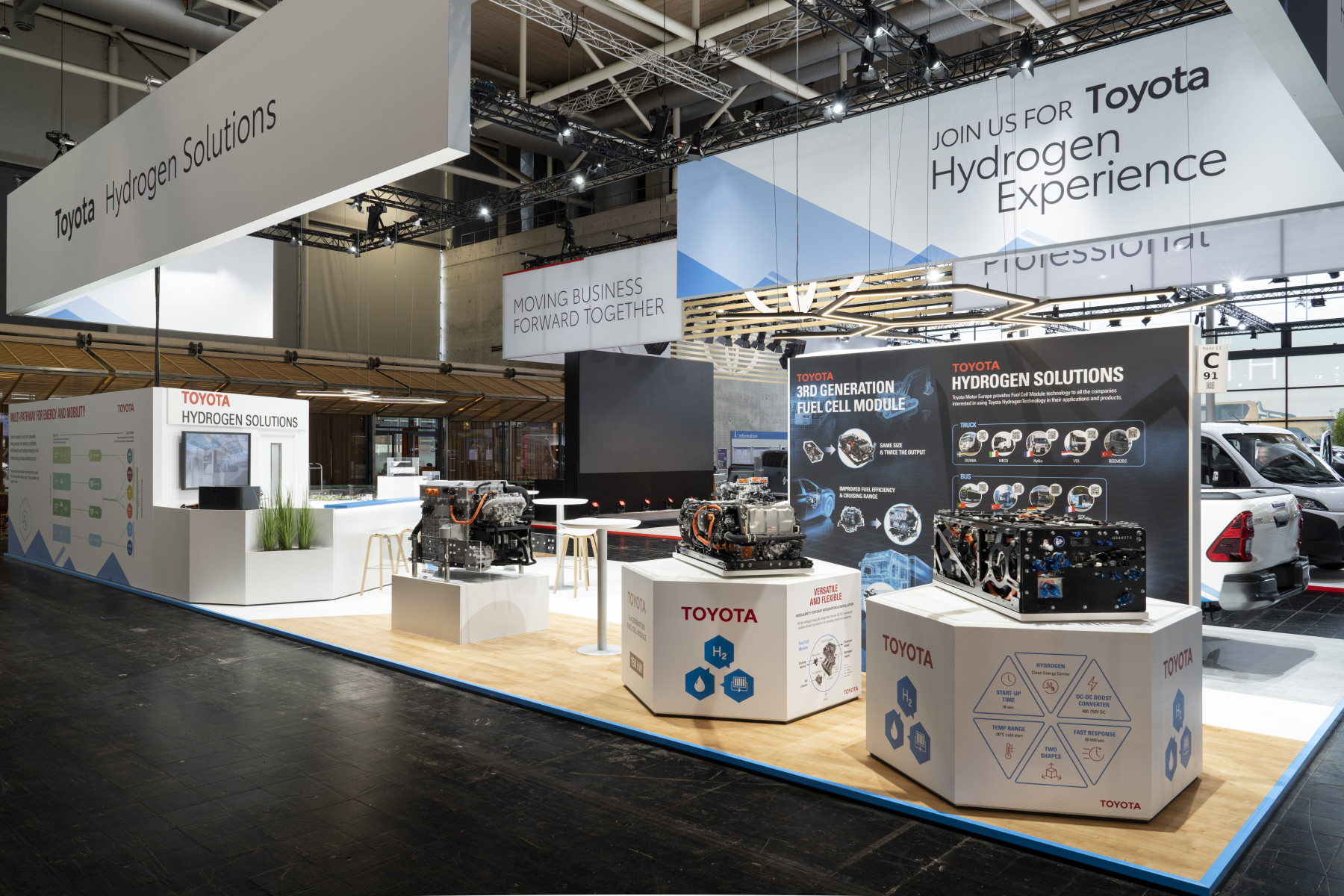
Toyota says its compact third-generation system produces 300 kW. At IAA Transportation, it said the new generation is designed for commercial use and offers twice the output and durability, 20% better fuel efficiency, and lower cost than its previous system. Those are manufacturer comparisons, not independently audited fleet results.
| What is announced | What it could answer | What it does not prove yet |
|---|---|---|
| 40 Scania heavy trucks in the Pilot Partner programme | How the technology behaves in selected real logistics work | That fuel cells suit every route or fleet |
| Toyota’s 300 kW third-generation fuel-cell system | Whether power packaging and uptime work in demanding use | A final truck price, range or hydrogen cost |
| Operations expected from Q1 2027 | When useful customer-operation data can start to emerge | That large-scale deployment has begun |
| Tracking efficiency and total cost of ownership | Whether the business case survives outside a demonstration | A winner between fuel-cell and battery-electric trucking |
The distinction is more than editorial caution. A fuel-cell truck is electric at the wheels, but its economics hinge on a chain beyond the vehicle: hydrogen production, transport, station availability, refuelling reliability and the way a route uses its time. A promising stack cannot fix an unavailable pump.
Why 40 trucks are more meaningful than one concept
Scania’s Pilot Partner programme puts new transport technologies with selected customers in normal operating environments. That makes 40 vehicles a sensible scale for finding out where the edge cases are—different payloads, weather, depot routines, driver schedules and refuelling patterns—rather than merely proving that a single vehicle can move.
Logistiek.be’s coverage makes the same useful reading of the announcement: the point is not a show demonstration but whether technical performance, operating efficiency and total cost hold up in service. Toyota’s own earlier announcement set the context for its third-generation system: the company developed it with commercial applications in mind and planned a rollout after 2026. This Scania work is an early opportunity to test that promise with a meaningful fleet.
The consumer relevance is indirect but real. Freight powertrains shape the cost, resilience and emissions profile of goods moving into cities, shops and homes. As we noted in our look at curbside EV charging, the hardware only becomes useful when its infrastructure fits everyday operations. The same rule applies much more harshly to long-haul trucks: infrastructure is not an accessory to the vehicle; it is part of the vehicle’s job.
Hydrogen’s best case is demanding work, not a universal replacement
Toyota is careful to frame hydrogen as part of a “multi-pathway” approach, especially where long range, high utilisation, quick refuelling, payload and operational flexibility matter. That is a reasonable hypothesis for hard-working trucks with limited downtime. It is not an argument that every electric truck should carry a fuel cell.
Battery-electric trucks have a simpler energy path and are already a strong fit where charging windows and routes cooperate. Fuel cells may earn their place where a fleet cannot spare the charging time or battery mass, if dependable hydrogen supply arrives at a usable price. The Scania trial should be judged against that practical comparison, not against diesel alone.
There are other open variables, too. Toyota has not published the operating routes, customer names, tank capacity, range, fuel price, payload profile or a target total cost for these 40 trucks. Without those details, it would be premature to turn a 300 kW headline into a business-case verdict. The companies have promised operational data, not delivered it.
The bottom line
The Toyota–Scania programme is a good kind of hydrogen news: modest in its claim and concrete in its test. Forty working trucks will not settle Europe’s powertrain debate, but they can expose the inconvenient details that a prototype cannot.
If the vehicles deliver reliable high-use service and the refuelling ecosystem holds up, they will strengthen the case for fuel cells in a narrow but important slice of freight. If the numbers fail, that result is just as useful. Either way, by early 2027 hydrogen trucking will have to earn its next headline with operating data.