
Fast chargers get the glory, but city EV ownership is often won or lost at walking speed.
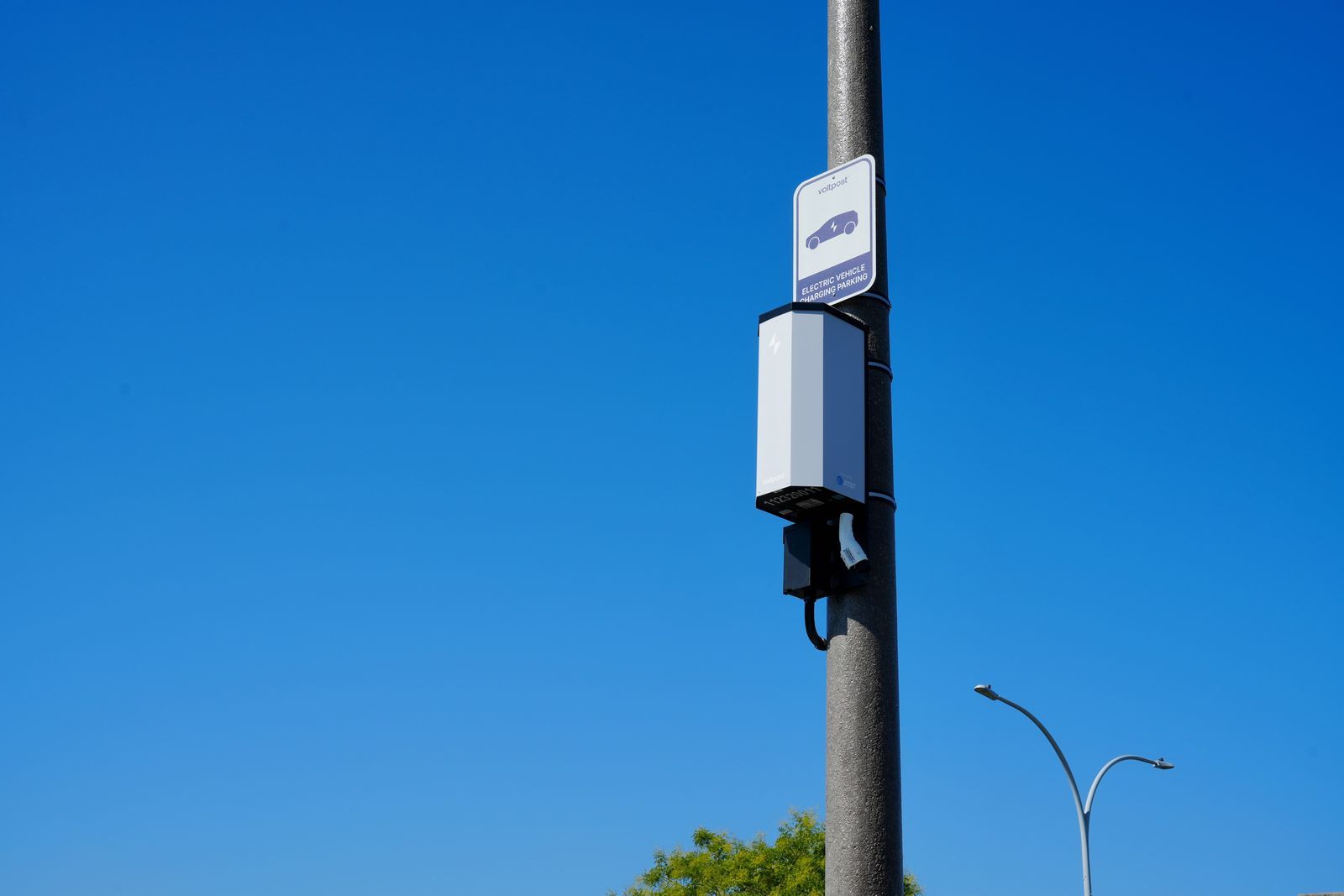
Voltpost and InCharge Energy announced a strategic partnership on July 7 to expand lamppost and utility-pole EV charging deployments, beginning with New York, Connecticut and California. InCharge says it will provide project development, installation, service and maintenance, while Voltpost brings the pole-mounted Level 2 charging platform and Voltpost Care network-management layer.
GearPulse’s view: this matters because apartment dwellers do not need every charging session to feel like a highway pit stop. They need dependable, local, overnight access. If lamppost charging works at scale, it attacks one of the least glamorous barriers to EV adoption: the missing driveway.
What changed
Voltpost’s core idea is simple. Instead of building a charger site from scratch, it retrofits existing lampposts and utility poles with Level 2 EV charging hardware. That can reduce trenching, shorten installation time and put chargers closer to where cars already park.
The new partnership is important because charging hardware is only half of the problem. Deployment, permitting, maintenance and uptime decide whether a charger becomes useful infrastructure or a dead fixture on a curb.
| Piece | Public claim | Why it matters |
|---|---|---|
| Charger type | Level 2 lamppost and utility-pole retrofit | Better suited to long dwell times than fast highway stops. |
| Initial expansion | New York, Connecticut and California | Moves the idea beyond one-off pilots. |
| Installation partner | InCharge Energy | Adds field teams and maintenance infrastructure. |
| Network layer | Voltpost Care using InCharge’s InControl software | Gives operators visibility into charger status and service needs. |
| Product design | Modular, app-connected, pole-mounted platform | Aims to lower construction footprint and improve placement flexibility. |
Voltpost’s earlier Voltpost Air announcement described a compact, modular charger that can mount on wood or metal poles, around 10 feet above ground, with a retractable cable system. The company said the first public Voltpost Air charger in New York City was activated in Brooklyn at MADE Bush Terminal during Climate Week, with support from NYCEDC, NYSERDA and Con Edison.
That matters because the product is not just “put a plug on a pole.” Cities care about sidewalk clearance, vandalism, weather, parking rules, utility access, disabled access, cable management and who fixes the thing after midnight.
Why Level 2 is the point
A lot of EV coverage is obsessed with 350 kW chargers, but that is not the right lens here. Lamppost charging is about time parked, not peak speed.
Level 2 charging can be slow compared with DC fast charging, but a car parked overnight does not need a racing pit crew. It needs enough energy to cover commuting, errands and the next day’s margin. For people without home charging, that can be the difference between an EV feeling normal and an EV feeling like homework.
| Use case | Best charging fit | Why |
|---|---|---|
| Highway road trip | DC fast charging | Short stops and high turnover. |
| Suburban driveway | Home Level 2 | Private overnight charging. |
| Apartment street parking | Curbside Level 2 | Long dwell time where the car already sits. |
| Workplace lot | Level 2 or moderate DC | Cars are parked for hours. |
| Retail errand | Fast or Level 2 depending on dwell | Useful if pricing and access are simple. |
WTOP’s local reporting from Washington, D.C., framed the same problem clearly: Voltpost was preparing to bring chargers retrofitted into existing street lights and utility poles, with the company emphasizing installation in a few hours and reduced construction compared with trenching-heavy charger builds.
GearPulse’s opinion: curbside Level 2 is not less important because it is slower. It is important because it matches how many urban cars live. A charger that works while you sleep is more valuable than a faster charger you have to schedule your life around.
The caveats are very physical
Lamppost charging sounds elegant because it reuses infrastructure. The hard part is that streets are messy.
Not every pole is in the right place. Not every curb has parking. Not every electrical feed has spare capacity. Some streets need snow clearance. Some need accessible sidewalk space. Some have delivery zones, bus stops, bike lanes, tree pits or parking turnover that makes a dedicated charging stall politically difficult.
Then there is the user experience. Drivers need to know whether the charger is available, whether the space is actually open, whether a cable will reach the port, whether the price is fair, and whether enforcement prevents gasoline cars or fully charged EVs from blocking the stall.
| Promise | Real-world test |
|---|---|
| Uses existing poles | The pole must be electrically and physically suitable. |
| Faster installation | Permitting and utility coordination can still slow rollout. |
| Lower construction footprint | Sidewalk, parking and accessibility rules still apply. |
| App-based access | Drivers still need reliable payment and status information. |
| Scalable maintenance | Uptime has to be proven street by street. |
That is why the InCharge partnership is more meaningful than a normal press-release pairing. For urban charging, maintenance is strategy. A charger that cannot be serviced quickly will lose trust, especially when it is meant to serve people who lack a fallback plug at home.
Why cities should care
EV policy often assumes charging will follow private property. That works for homeowners with garages. It does not work as cleanly for renters, dense neighborhoods and older cities where street parking is the default.
Lamppost chargers give cities another tool. They are not a universal answer, and they will not replace fast-charging corridors. But they can fill the middle: affordable-ish, distributed, visible charging where people already leave cars for hours.
The relevance for readers is straightforward. If curbside charging becomes dependable, buying an EV without a driveway becomes less of a gamble. That would broaden the EV market beyond the easiest early adopters.
It also changes how people think about range. Drivers with local overnight charging do not need to obsess over using public fast chargers for routine life. They can treat DC charging as travel infrastructure and Level 2 as the quiet daily base.
What to watch next
The next proof points are not glossy product shots. They are deployment density, uptime and policy fit.
Watch whether cities can approve clusters of chargers instead of isolated pilots. Watch whether the app shows reliable availability. Watch whether charging spaces are marked and enforced. Watch whether the cable system survives weather, vandalism and daily use. Watch whether pricing feels like community infrastructure or premium convenience.
| Signal | What it would show |
|---|---|
| Multiple neighborhood deployments | The model can scale beyond demonstration sites. |
| Public uptime data | Operators are willing to be judged on reliability. |
| Clear curb rules | Cities understand charging as parking policy, not just hardware. |
| Utility coordination | Pole power and grid constraints are being handled early. |
| Accessible placement | The rollout is not creating new sidewalk problems. |
Bottom line
Voltpost’s lamppost charging push is relevant because it tackles the part of EV ownership that rarely photographs well: where renters and city drivers plug in at night.
The partnership with InCharge Energy gives the rollout a more credible operations story, but the judgment will come from ordinary use. Drivers will care less about the cleverness of the pole retrofit than whether the charger is available, working, reachable and priced sensibly.
GearPulse’s read: curbside Level 2 charging is not the flashiest EV infrastructure. It may be one of the most important, because it makes electrification feel possible for people who cannot install a charger at home.