
There is a particular kind of loss that only digital entertainment can create. You still remember the game. You may still have the receipt. You may even still have the files. Then one day the server goes dark and the thing you bought behaves less like a possession and more like a locked room.
That is the wound Ross Scott has been poking since the Stop Killing Games campaign began after Ubisoft shut down The Crew. Ars Technica is bringing Scott into an August 11 Ars Live discussion about preservation, and the timing is useful because the campaign has grown beyond a familiar gamer complaint. It now sits inside European consumer politics, industry pushback and the larger question of whether digital purchases deserve an end-of-life plan.
GearPulse’s view: this is relevant because gaming is where many people first learned that “buy” can mean something slippery. The same pattern now shows up in smart-home gadgets, fitness devices, cloud cameras, connected cars and subscription software. A game that dies when a server is switched off is not only a gaming problem. It is a warning label for everything we buy that depends on someone else’s backend.
It also pairs neatly with our old-disk preservation piece. That article was about rescuing media from physical decay. Stop Killing Games is about a newer decay: products that are technically intact but commercially abandoned.
What the campaign wants
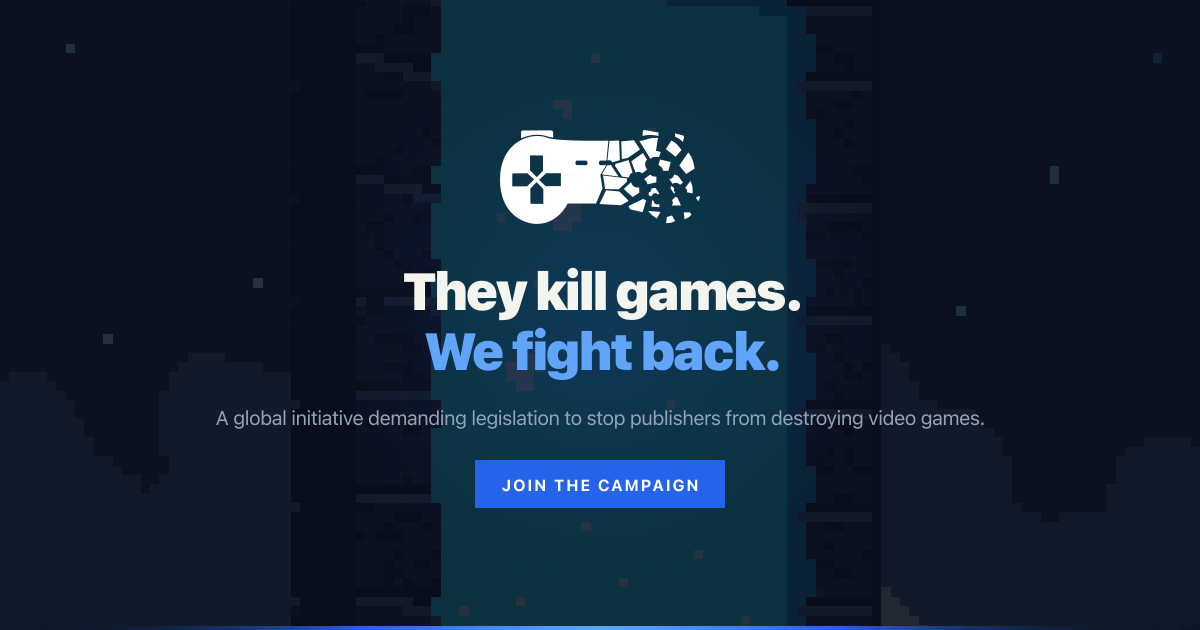
Stop Killing Games describes itself as a global coalition of players, consumer advocates and developers pushing for legal protections when publishers shut down games that people paid for. The campaign’s core complaint is not that every game must receive updates forever. It is that games designed around central servers can become completely unplayable when support ends, including experiences that many buyers reasonably understood as purchased goods.
| Question | Why it matters |
|---|---|
| Can a game remain playable after commercial support ends? | Preservation does not require new content, only a usable end state. |
| Was the buyer told the practical lifespan? | Digital storefront language often feels clearer than the license behind it. |
| Can private servers or offline modes be enabled? | Technical exit paths need to be planned before shutdown day. |
| Who carries the cost? | Small studios and live-service games may not face the same burden as major publishers. |
| What counts as “reasonable” functionality? | Multiplayer, licensed content, anti-cheat and online economies complicate simple rules. |
The European Citizens’ Initiative route is important because it turns outrage into procedure. It forces a policy conversation that publishers cannot dismiss as forum noise. Even if the final rules are narrower than activists want, the debate changes how buyers, regulators and studios talk about end-of-life obligations.
Why players are angry
The anger is not just nostalgia. It is the mismatch between the emotional language of buying a game and the legal reality of using a service.
When a book goes out of print, your copy does not vanish from the shelf. When a cartridge is discontinued, the console may age, but the publisher does not normally flip a remote switch that disables it. Online games are different. Central servers can be necessary for matchmaking, anti-cheat, world simulation or account systems. But some games blend service infrastructure with single-player or lightly connected experiences in ways buyers do not fully see at checkout.
My opinion: that hidden dependency is the problem. If a game is fundamentally a rented experience, say that like an adult at the point of sale. If it is sold as a purchase, there should be a serious plan for what happens when the commercial lights go off.
The industry has real objections
The hard part is that preservation is not free. EGDF’s response to the Commission conversation argues against a blanket legal obligation to keep all games playable after support ends, pointing to intellectual-property constraints, varied business models and technical diversity across the sector.
Those objections deserve attention. A tiny multiplayer studio cannot be treated like a platform giant. Licensed music, branded cars, moderation, anti-cheat systems and third-party middleware can make a clean offline handoff genuinely difficult. A sloppy law could discourage ambitious online games or push studios into even more restrictive terms.
But “hard” is not the same as “ignore it.” The best version of this debate would separate impossible demands from reasonable duties.
| Reasonable pressure | Risky overreach |
|---|---|
| Clear shutdown disclosures before purchase | Requiring every live-service feature to live forever. |
| End-of-life plans for games with solo or private-session modes | Forcing private servers where security or licensing makes that impossible. |
| Refund or remedy expectations when promises are misleading | Treating all server shutdowns as consumer fraud. |
| Preservation exemptions for museums and archives | Mandating public source-code releases for every game. |
That middle ground is where the movement becomes useful beyond slogans.
Why non-gamers should care
Games are just the loudest version of a quiet consumer shift. Plenty of physical objects now depend on remote services. A smart speaker can lose features. A cloud camera can become e-waste. A car can ship with software-locked capabilities. A fitness watch can age badly when its app dies. The hardware is yours, but the usefulness is leased through someone else’s server.
Stop Killing Games gives that frustration a simple emotional shape. You paid money. You expected access. The company changed the conditions later. That is why the campaign travels so well: even people who do not care about The Crew understand the feeling.
Bottom line
Stop Killing Games is compelling because it asks a buyer’s question in a lawyer’s world: what did I actually purchase?
My take: the campaign should not become a demand that every online game live forever. That would be unrealistic. But it is entirely reasonable to expect clearer sales language, better shutdown planning and preservation paths where technically possible. Digital ownership has been vague for too long. If publishers want customers to keep accepting “buy” buttons, they need to make the afterlife of those purchases less disposable.
Support independent GearPulse articles at buymeacoffee.com/gearpulse.site.