
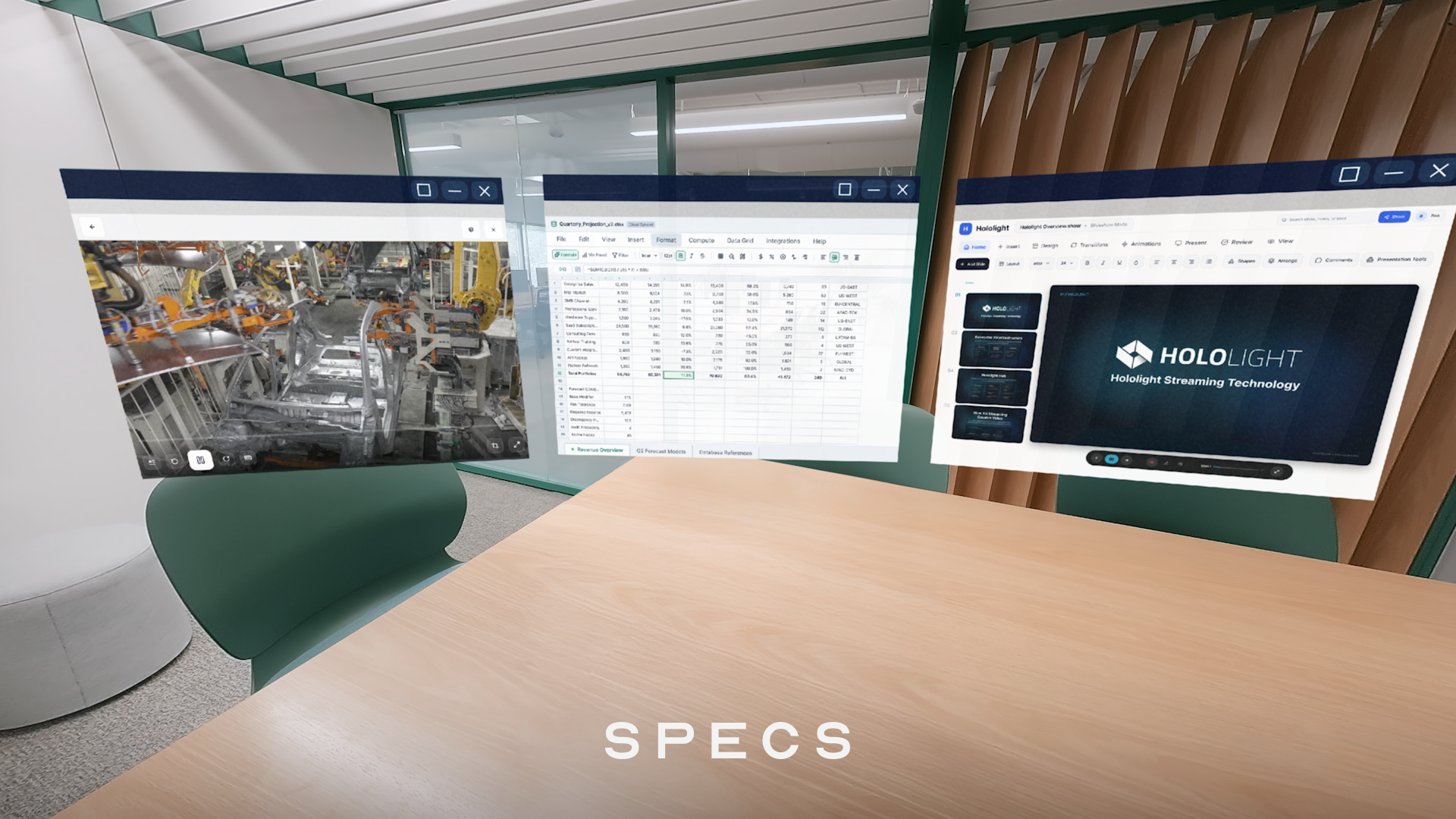
Snap’s SPECS glasses have an obvious problem: at $2,195, they are too expensive to survive on the promise that augmented reality will someday replace a phone. This week’s enterprise partnerships offer a more grounded answer. The glasses do not need to replace everything. They need to make a particular kind of work easier enough to justify being worn.
Snap says it is working with Salesforce, Amazon Web Services, Nvidia, Trifork and Hololight on hands-free tools for field service, remote support and retail. The names matter, but the shift in emphasis matters more. This is a product argument based on workers who cannot comfortably hold a tablet while inspecting equipment, helping a customer or receiving instructions—not on a speculative new social interface.
TechCrunch framed the move as Snap trying to give its costly, heavy-looking hardware a clearer purpose. That is fair. A compelling pair of smart glasses cannot be defined by its display alone; it needs a repeatable task where looking up information in the moment is better than stopping to pull out a phone or laptop.
The glasses are becoming a work screen, not a phone substitute
Snap’s announced examples are deliberately practical. Salesforce is positioned around field-service guidance; AWS supplies cloud and AI infrastructure; Nvidia’s involvement points to visual computing and AI workloads; Hololight and Trifork bring industrial visualization and enterprise software experience. Snap describes the common goal as putting information, guidance and collaboration in a worker’s view while their hands remain free.
| Work situation | What SPECS is supposed to add | The test that matters |
|---|---|---|
| Field repair | Step-by-step overlays, diagrams or an expert’s remote view. | Does it reduce errors and time without obscuring the real task? |
| Remote support | A technician can share what they see rather than describe it by phone. | Is video reliable, low-latency and safe to use in the field? |
| Retail | Product or task information can appear without leaving the customer. | Does it improve service rather than make an interaction feel mediated? |
| Industrial visualization | Spatial models can be placed in the real working environment. | Are the models accurate, comfortable to inspect and easy to update? |
That is a much healthier frame for AR than calling every floating panel a revolution. A mechanic needs torque values, a procedure and a way to ask for help; a warehouse or shop-floor worker needs instructions without losing situational awareness. If SPECS can deliver those moments consistently, the display earns its place. If it cannot, the glasses remain a very expensive way to watch a demo.
Partnership slides are not deployment evidence
Snap’s announcement is a roadmap, not proof that a worksite has adopted the system. It does not publish customer rollouts, measured productivity gains, battery life in a full shift, or pricing for a fleet and its supporting software. Those gaps are especially important because enterprise hardware lives or dies on the unglamorous details: device management, repair turnaround, user training, identity controls, network reliability and safety policy.
Tom’s Guide reports that SPECS use two Snapdragon processors and carry the same $2,195 starting price that makes the consumer pitch daunting. The official launch material also adds a charging case with cellular connectivity and says a Los Angeles first-look location opens October 1. Neither changes the fundamental purchasing question. A business will not buy a new computing category because it is futuristic; it will buy it when the total workflow beats a rugged phone, headset or tablet it already owns.
The privacy question is just as concrete. Glasses designed for remote assistance can put cameras, screens and AI interpretation in workplaces where bystanders and confidential materials are unavoidable. Employers will need visible operating rules: when recording is allowed, who can join a live view, how long data is retained, and how someone nearby knows the system is in use. Hardware that keeps a worker’s hands free should not make everyone else’s consent invisible.
Why this route is more believable
Consumer smart glasses have to clear an impossibly broad bar: look ordinary, feel comfortable, last all day, protect privacy, do enough useful things and cost little enough to be casual. Enterprise systems can be more specialized. A heavier product is tolerable when it is used for a defined shift or procedure; a $2,195 device can make sense when it avoids repeat visits, shortens training or gets a remote expert into the right view.
That does not make enterprise AR easy. It just gives SPECS a testable job. Snap should be judged first on narrow deployments with clear before-and-after measures, not on grand claims about a post-phone future.
We recently argued that camera-free smart glasses can make privacy a product feature. SPECS takes the opposite path: it is valuable precisely because it can see and interpret a workplace. That makes transparent controls and limited, accountable use more important—not less.
Bottom line
Snap’s new partners do not solve the hard parts of wearable computing, but they make the product’s purpose more credible. The strongest version of SPECS is not a pair of glasses that tries to replace every screen. It is a carefully managed work tool that helps someone see the right information at the moment their hands are busy.
The next evidence to watch is mundane and decisive: named deployments, per-user costs, IT administration, real battery results and safety outcomes. Until then, the enterprise story is promising precisely because it is narrower than the old dream.