Smart glasses have a social problem before they have a spec problem.
People may want navigation, translation, notes and quick prompts in their line of sight. They do not necessarily want every conversation to happen in front of a wearable camera. Even Realities is leaning into that tension with the G2, a pair of display-first smart glasses that deliberately removes the outward camera and speakers.
GearPulse’s view: this is relevant because smart glasses are moving from novelty demos into ordinary public spaces. The camera-free approach does not make wearable AI automatically harmless, but it is a cleaner starting point for trust than pretending a tiny recording light solves every consent issue.
What Even is selling
Even Realities positions the G2 as “quiet tech”: glasses that look like eyewear first and show useful information only when called on. The official store lists the Even G2 A and G2 B from $599, with the Even R1 ring sold separately at $249.
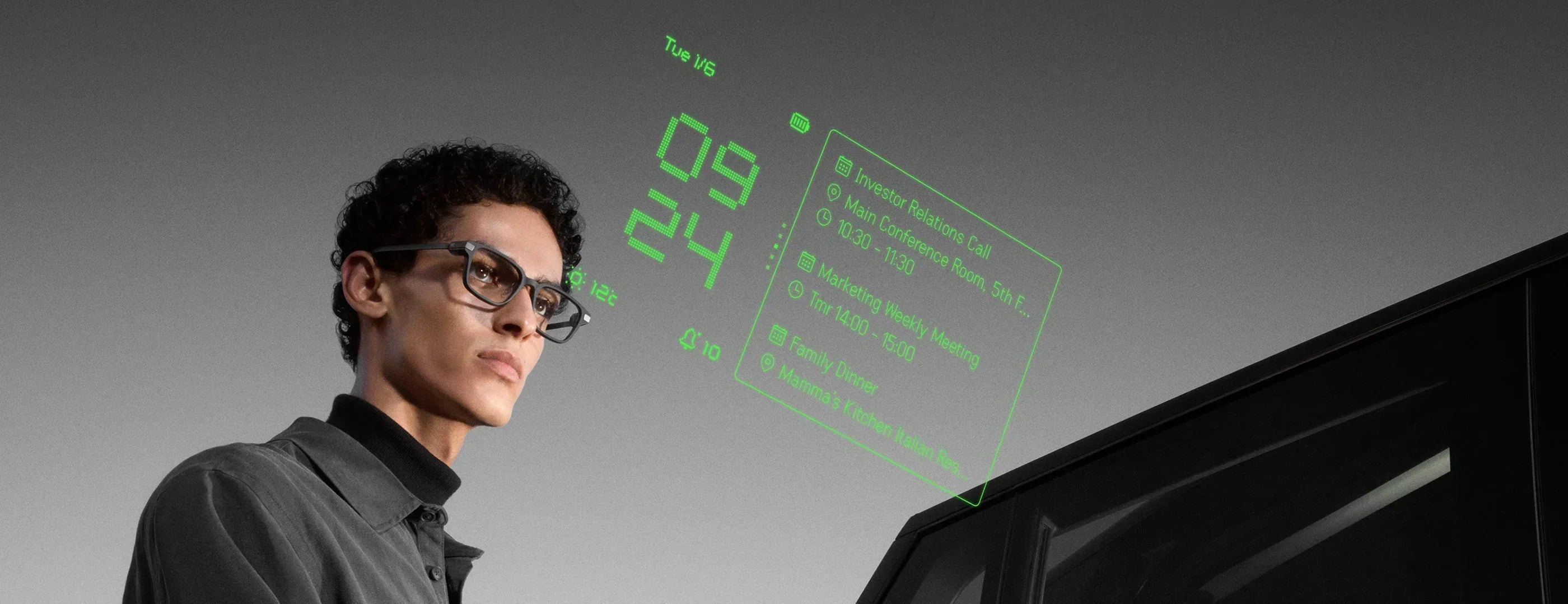
The official spec page gives the hardware story. The G2 uses binocular waveguides, a green Micro LED display, 640 by 350 resolution, a 27.5-degree field of view, 60Hz refresh rate and 1,200-nit brightness. It has four microphones, BLE 5.4, auto brightness and IP65 dust and water resistance.
| Detail | Even G2 public spec | Reader takeaway |
|---|---|---|
| Starting price | From $599 | Premium wearable, not an impulse accessory. |
| Display | Green Micro LED waveguide, 640 x 350, 60Hz | Built for glanceable text, not full-color AR worlds. |
| Brightness | 1,200 nits | Outdoor readability is a core claim. |
| Camera | None | Removes the most obvious surveillance concern. |
| Input | Four microphones | Voice and conversation features still need consent discipline. |
| Durability | IP65 | Practical enough for daily wear, not a rugged sport device. |
TechCrunch framed the current G2 story around productivity beating recording. The Verge’s earlier launch coverage made the same essential point: Even is choosing a narrower feature set than camera-equipped glasses from Meta and others, but the omission is part of the product argument.
The privacy win is real, but not complete
No camera is a meaningful design decision. It reduces the chance that someone nearby is being photographed or filmed without realizing it. It also makes the glasses easier to read socially. A person sitting across from you does not have to decide whether your eyewear is pointed at them as a camera.
That matters in offices, schools, cafes, public transit and family spaces. The audience for smart glasses is not only the buyer. It includes everyone around the buyer.
The caveat is that the G2 still has microphones. Even’s own feature list includes Conversate, Translate, Teleprompt, notifications, QuickList and AI prompts. Those can be useful, especially for meetings, accessibility, travel and presentations. They can also become awkward if people do not know when speech is being captured, summarized or sent to an app.
That is the more mature way to judge this category. The question is not “camera bad, no camera good.” The question is whether the device makes its data boundaries obvious enough for normal people to understand.
Why it matters to buyers
The G2 is appealing because it does less than a phone in some ways. That sounds backwards, but it is the point. A small monochrome display can be better than a full phone screen when the goal is to keep your head up and stay in the conversation.
| Use case | Why G2 fits | What to watch |
|---|---|---|
| Presentations | Private teleprompter text without looking down | Needs reliable controls and readable text speed. |
| Translation | Captions in line of sight | Accuracy and consent matter in real conversations. |
| Navigation | Glanceable prompts without holding a phone | Not a replacement for rich map detail. |
| Meeting notes | Less phone-checking during discussion | Recording and summary settings need to be explicit. |
| Notifications | Quick triage without a wrist or phone screen | Too many alerts would ruin the “quiet” premise. |
The G2 will not satisfy someone who wants first-person video, social capture or full mixed reality. That is fine. Those products already exist. The more interesting question is whether a quieter pair of glasses can become useful enough that people wear them by choice, not because the spec sheet looks futuristic.
The bottom line
Even Realities is making the right argument for the moment: smart glasses need trust before they need more cameras.
The G2’s camera-free hardware gives it a cleaner social contract than many AI wearables. But the product still lives or dies on software behavior: how clearly it signals microphone use, how well it handles consent, how stable the AI features are, and whether a $599 pair of glasses actually reduces phone dependence rather than adding another device to manage.
For GearPulse readers, the G2 is worth watching because it shows a better direction for wearable AI. Not bigger screens on your face. Not always-recording glasses. A calmer tool that earns its place by staying useful and staying out of the way.