
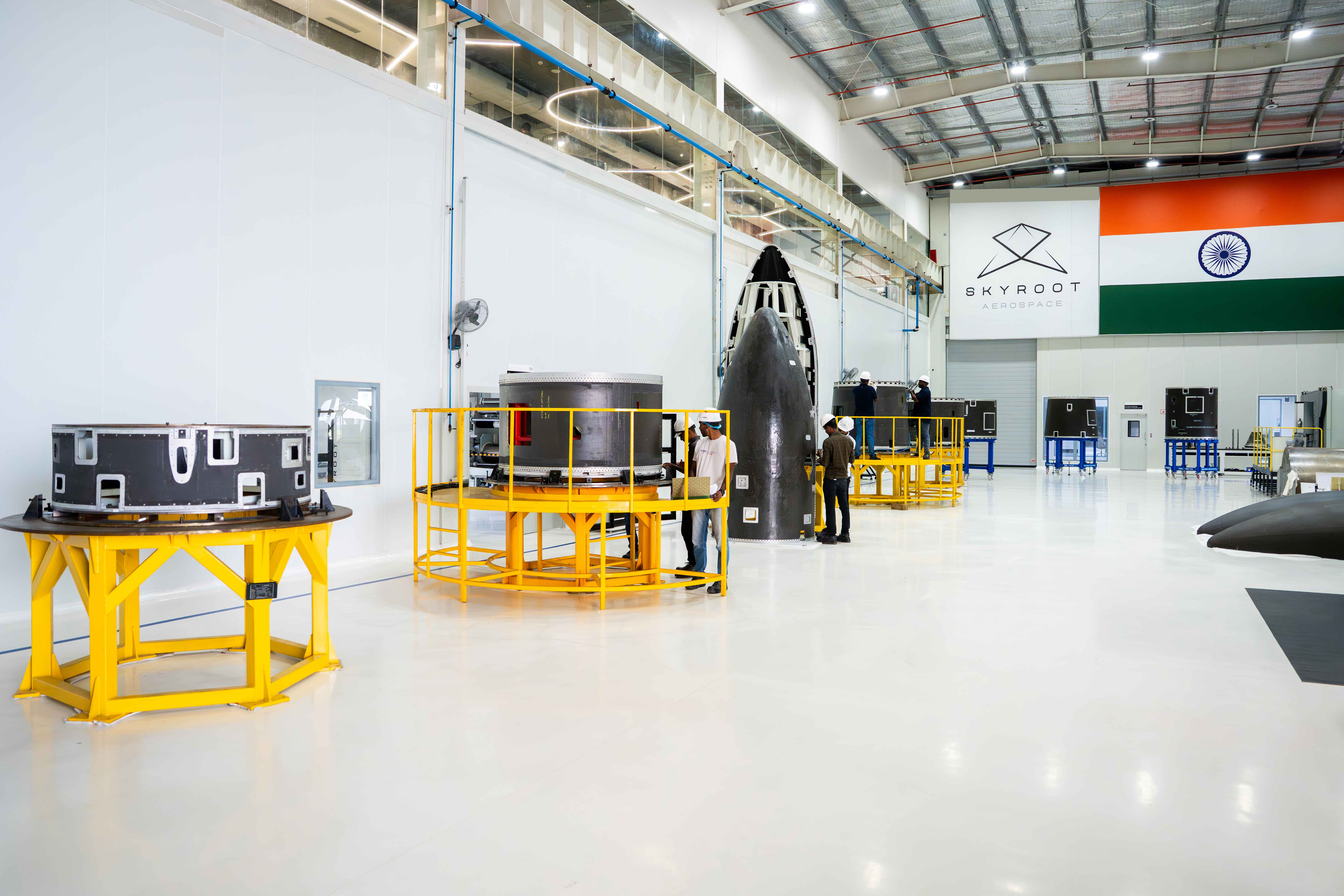
Private spaceflight usually gets judged through an American lens: SpaceX cadence, Rocket Lab responsiveness, Blue Origin patience, a dozen startups trying not to run out of money before the next static fire.
Skyroot’s Vikram-1 launch is a useful reminder that the private orbit race is no longer that narrow.
On July 18, 2026, Skyroot Aerospace’s Vikram-1 reached low Earth orbit on its debut Aagaman mission, according to Space.com, Ars Technica and Al Jazeera. Space.com reported liftoff from India’s Satish Dhawan Space Centre at 2:35 a.m. EDT, or 12:05 p.m. India Standard Time, with the mission completing its primary objectives within about 17 minutes.
The big number is simple enough: India now has a private company that has put payloads into orbit. The better story is what that does to the small-satellite market. Customers do not just need spectacular rockets. They need more doors to orbit, more schedule leverage and more launch providers whose business is built around smaller payloads instead of treating them as leftovers on someone else’s giant mission.
That connects neatly to our recent SpaceX Starship Flight 13 coverage. Starship is trying to make very large launch capacity routine. Vikram-1 is playing a different game: dedicated, flexible access for smaller spacecraft. Both stories are really about turning space from an event into infrastructure.
What Vikram-1 brings
Skyroot’s own site positions Vikram-I as an on-demand launch vehicle for rapid, precise and customizable small-satellite deployments. The company lists up to 350 kg to low Earth orbit and up to 260 kg to sun-synchronous orbit, with dedicated and rideshare launch options, custom orbital deployment, all-carbon-composite structure, solid boosters and a 3D-printed liquid engine.
That package matters because small satellites are not a niche anymore. Earth observation, communications, in-orbit demonstrations, universities, defense payloads and climate monitoring all want access to orbit without waiting for a perfect ride-share slot.
| Vikram-I item | Source-backed claim | Why readers should care |
|---|---|---|
| Payload class | Up to 350 kg to LEO, according to Skyroot | Aims at the small-sat customers that often need schedule control. |
| Structure | All-carbon-composite design, according to Skyroot | Keeps the vehicle in the lightweight, modern small-launcher category. |
| Launch style | Dedicated and rideshare options | Gives customers more ways to trade cost against timing. |
| Aagaman result | Reached orbit on first Vikram-1 mission, per Space.com and Ars Technica | A debut orbital success changes how seriously the market has to take Skyroot. |
| Payloads | Space.com reported Skyroot, DCUBED, Grahaa Space, Cosmoserve and symbolic payloads | Shows the mission was more than a logo flight. |
There is a caveat. One successful launch is not a launch business. It is permission to try becoming one.
The first flight is emotional. The second one is business.
It is easy to get swept up in the national milestone. India has spent decades building serious state space capability, and a private orbital launch from Indian soil is genuinely meaningful. Skyroot’s founders came out of ISRO’s engineering culture, and the company’s pitch lives inside India’s broader push to open space activity to private industry.
But the customer question starts the morning after the celebration: can Skyroot do it again, on schedule, at a price and cadence that makes commercial sense?
That is where this story gets interesting for anyone outside India. Small-satellite operators want optionality. Launch markets get healthier when customers can choose between large rideshare, responsive small launch, regional providers and specialized orbital insertion. A successful Vikram-1 does not replace SpaceX or Rocket Lab. It adds pressure to the idea that only a small circle of providers can be trusted with orbital access.
The more personal angle: I love these middleweight launch stories because they make space feel less like a few national monuments shouting at the sky and more like a supply chain. Not less romantic, exactly. More useful.
What still needs proof
The next phase is less glamorous than the first launch video.
Skyroot has to show manufacturing repeatability, range coordination, vehicle inspection discipline, customer integration, insurance confidence and clean post-flight reporting. Those are not as shareable as a rocket clearing the tower, but they decide whether a startup becomes a launch provider or a historic footnote.
| Question | Why it matters now |
|---|---|
| How quickly can Skyroot fly again? | Cadence turns a milestone into a service. |
| How transparent will post-flight data be? | Customers need confidence beyond celebration. |
| Can pricing stay competitive? | Small launch has to justify itself against rideshare. |
| Can India scale launch infrastructure? | More providers need range capacity, licensing flow and supplier depth. |
| Will Vikram-II arrive on time? | Skyroot’s roadmap depends on moving beyond a single payload class. |
None of these questions dull the achievement. They make it more serious.
Why it matters to GearPulse readers
The reason to care is not that every reader is buying satellite capacity. It is that launch access shapes the tech we eventually use: weather data, maps, emergency communications, rural connectivity, climate monitoring, disaster response and the quiet industrial telemetry that keeps modern systems stitched together.
When more credible launch providers enter the market, satellite builders get more room to experiment. That can lower the cost of proving a sensor, launching a university payload, testing debris-removal hardware or giving a regional operator a route to orbit without waiting in someone else’s queue.
Vikram-1 is not only India’s achievement. It is one more sign that orbital access is becoming more distributed.
Bottom line
Skyroot’s Vikram-1 debut is a milestone with real commercial teeth.
The launch does not prove that Skyroot can run a high-cadence launch business yet, and it should not be inflated into a SpaceX-sized comparison. But it does prove that India’s private space sector has crossed a line that customers, competitors and governments will notice. The next launch will tell us whether this was a beautiful first page or the start of a durable new chapter.