
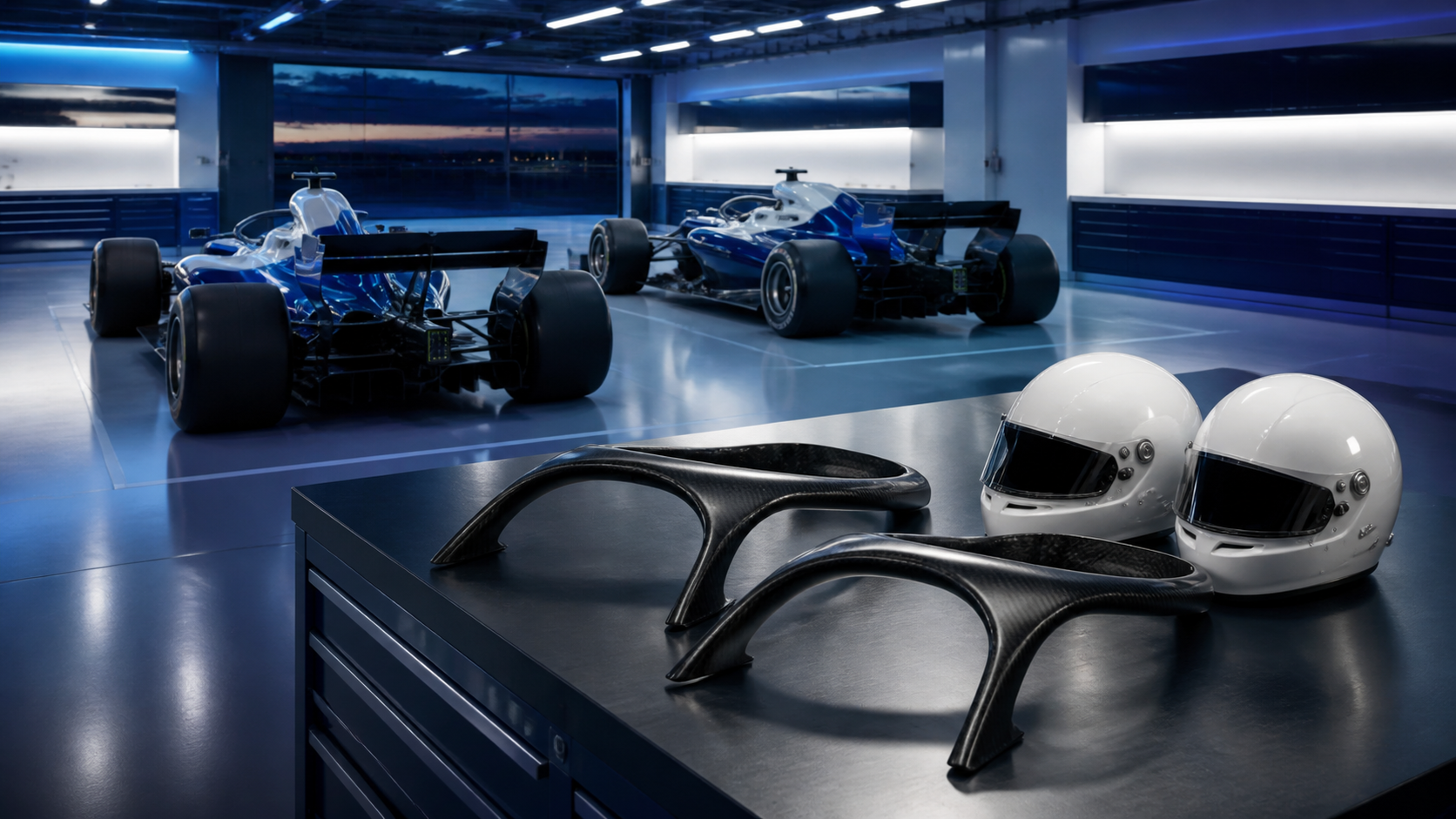
Carlos Sainz renewing with Williams is the sort of announcement that can look routine until you remember what he said three weeks ago. The Spaniard had openly tied his future to how quickly the team could pull itself out of a disappointing 2026. Now he has signed a new multi-year deal, and Williams has its 2027 pairing in place with Alex Albon.
That is more consequential than a neat summer-break contract graphic. Williams has persuaded a proven winner to stay while its new-regulation car is still asking difficult questions. It has also chosen continuity over another season of reintroductions, comparisons and driver-market noise.
The team’s official video confirms the extension. Cadena SER and Diario AS report that it completes Williams’ 2027 lineup after Albon’s renewal. The length has not been publicly specified beyond “multi-year”, so the useful point is the commitment, not pretending to know the exit clauses or the final year.
This is a vote for the work, not the results
Sainz did not arrive at Grove to collect a comfortable midfield seat. His move from Ferrari was a bet on James Vowles’ long-term rebuild: better tools, more technical depth and a route back towards the front under the 2026 rules.
The first part of that wager has been awkward. Formula 1 reported in July that Sainz had made his future conditional on Williams’ ability to recover, after a season in which the FW48 was overweight and struggled to turn expected development into consistent performance. That was the subject of our July look at Williams’ correlation problem.
The new deal does not erase any of that. It says both sides see more value in solving the problem together than in reopening the market.
That distinction matters. Driver announcements are often marketed as declarations of faith, but the stronger reading here is practical. Sainz knows the team, the engineers and the car’s shortcomings. Williams knows exactly what kind of technical feedback it is retaining. Starting again with an unfamiliar driver in 2027 would consume time a rebuilding team cannot easily afford.
Williams has secured an unusually useful pairing
Albon and Sainz are not interchangeable drivers, which is precisely why the lineup works. Albon has become exceptionally good at extracting a tidy race from a difficult package; Sainz brings a more explicit development-driver reputation, formed through Renault, McLaren and Ferrari before Williams.
Neither quality is a magic cure for an underperforming car. Together, though, they make the feedback less one-dimensional. If both drivers identify the same limitation, Williams has a stronger reason to treat it as a car issue rather than a setup preference. If their solutions diverge, the team has a better chance of understanding where its operating window is too narrow.
That is less glamorous than talking about “star power”, but it is the substance of a rebuild. The 2026 cars have made chassis balance, energy use, cooling and active-aero choices more interconnected. A team that has missed a development target needs stable reference points before it needs a different pair of hands on the steering wheel.
| What Williams keeps | Why it matters in 2027 |
|---|---|
| Albon’s continuity | He already understands the team’s working methods and can spot whether a change is genuinely moving the baseline. |
| Sainz’s experience | His feedback carries comparisons from multiple competitive environments, including Ferrari’s recent race-winning operation. |
| A settled driver market | Engineers can concentrate on the car rather than building a fresh driver-integration programme. |
| A shared recovery target | The pairing is now accountable for whether Williams turns its investment into a more usable car. |
The timing puts pressure on Grove in a healthy place
The renewal is not a free pass for Williams. It raises the standard.
Vowles said in May that he had “zero doubt” about wanting to retain both drivers while explaining the team’s longer championship timeline. This week’s two contract announcements mean the team has followed through. The next obligation is to give that conviction something measurable to stand on.
Williams’ 2026 shortfall has been frustrating because it arrived just as the team had been selling a more mature operation. In 2025, the Albon-Sainz partnership helped the team return to podiums and its strongest season for years. In 2026, the reset car arrived late, carried excess weight and has not given either driver enough repeatable pace.
There is a temptation to see a multi-year contract as a reward for past results. It is better understood as a decision about the next development cycle. If Williams’ upcoming packages make the car clearer and more competitive, the settled lineup gives it the chance to build momentum instead of merely celebrate isolated points. If they fail, the team will have two drivers qualified to explain why—and no plausible excuse that the feedback was too new.
Why the 2027 target is more than symbolic
Williams turns 50 in 2027. The anniversary will inevitably bring heritage footage and reminders of nine Constructors’ Championships, but this driver decision should stop the season becoming a nostalgia exercise.
Sainz and Albon give the team a credible professional centre at the moment it needs one. Their combined experience does not guarantee a fast car, and it does not place Williams alongside Mercedes, Ferrari, McLaren or Red Bull overnight. It does remove one avoidable variable.
The wider F1 market makes that valuable. The sport’s leading seats are not normally available on demand, while the teams below them are fighting not just for raw pace but for a convincing story about their direction. A driver of Sainz’s calibre choosing to continue is a useful signal to engineers, partners and prospective hires—provided the team turns it into evidence at the circuit.
Bottom line
Carlos Sainz has not signed away the right to expect better from Williams. Williams has not solved the FW48’s problems with a contract announcement. Both things can be true.
But keeping Sainz alongside Albon is the smart call. A rebuilding team cannot afford to spend another year relearning its own weaknesses through a changing driver roster. Williams now has the experience, continuity and accountability it said it wanted. The next car has to give that pairing a better answer.
Support independent GearPulse articles at buymeacoffee.com/gearpulse.site.