
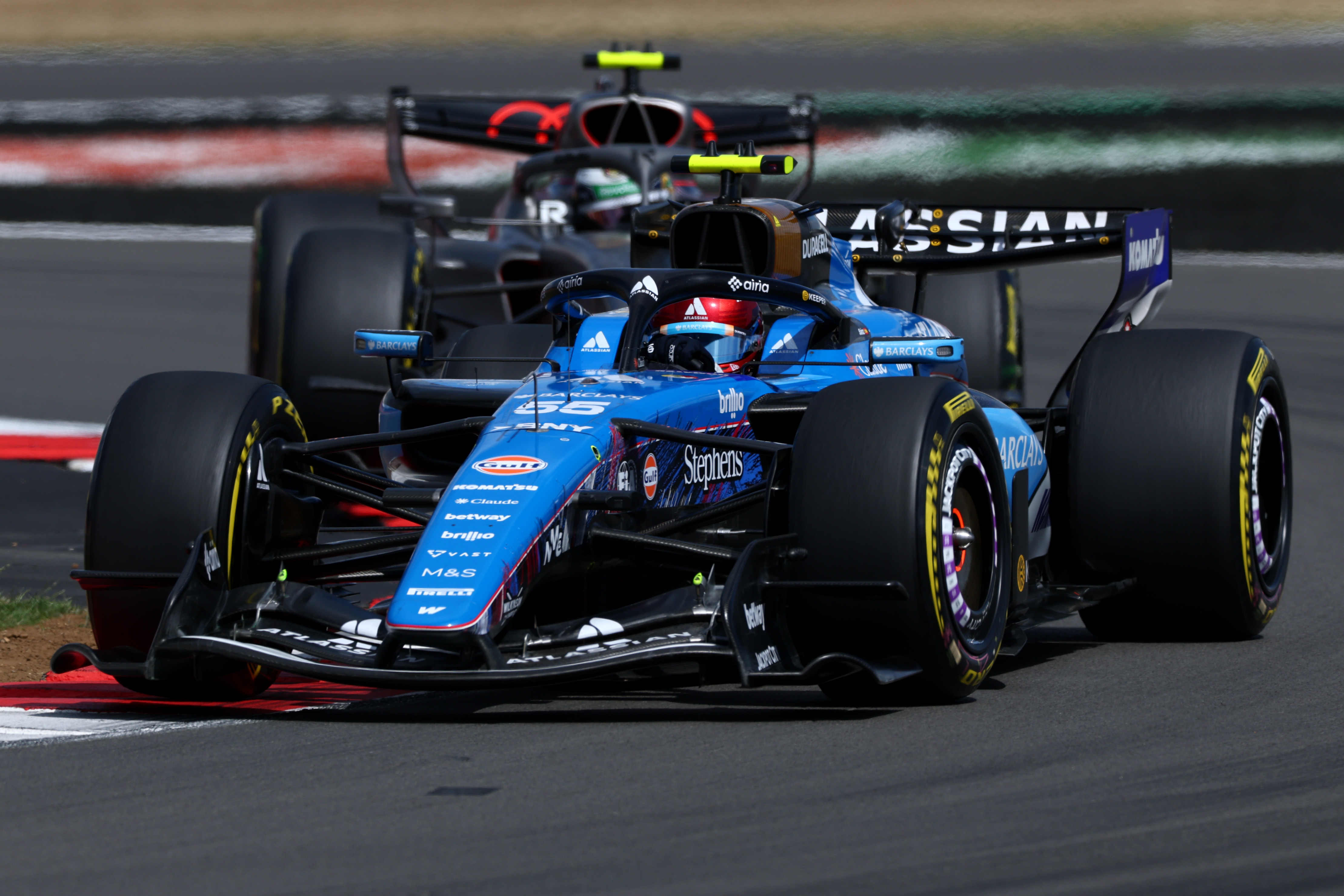
Carlos Sainz did not just leave Silverstone without points. He left it with a question Williams cannot dodge.
The Race published a fresh July 10 analysis of Sainz’s concern that Williams is not recovering from its miserable 2026 start quickly enough. That followed Sainz’s own British Grand Prix report, where his official site said the weekend was harder than expected, the new front wing did not deliver enough, and the team now has to understand why the FW48 is lacking so much performance.
That is why this is today’s Daily Dose of F1. GearPulse covered Ferrari’s Madring filming-day milestone on July 9, McLaren’s customer-engine problem on July 8, and Red Bull/Ferrari active-aero safety on July 7. Williams is a different kind of story: not a title-fight drama, not a rules fight, and not a one-off strategy error. It is a development-trust problem.
GearPulse’s view: Williams does not need Carlos Sainz to be patient forever. It needs to make the Baku upgrade credible. If the next major package does not match the wind tunnel and simulator, the FW48’s lack of pace becomes less damaging than the doubt around the process that created it.
Why this story rose today
Sainz’s British GP result was bad, but the lap chart alone is not the story.
His official site says he made a strong start, jumped from 14th into the points fight, and then simply did not have the pace to keep faster midfield cars behind. Formula 1’s race report put him outside the points on the road, before a one-lap penalty for incorrectly unlapping himself under the late Safety Car dropped him further down the classification. Team-mate Alex Albon retired, so Williams left a chaotic race with nothing.
That would normally be a rough weekend and little more. The issue is what came before it.
Williams brought a new front wing to Silverstone, a part The Race says had originally been targeted for Spa. Sainz’s concern, echoed across RaceFans, RacingNews365 and GrandPrix.com coverage, is that the upgrade looked stronger in the team’s tools than it did in the real car. That is the kind of statement that travels inside an F1 factory, because it points beyond setup and into correlation.
In plain English: if the tunnel and simulator say a part should help, and the stopwatch says it barely helped, the team has to ask whether it is solving the right problem.
The FW48 problem is no longer just weight
Williams’ early 2026 weakness has often been described through weight. That matters. A heavy car loses acceleration, hurts tyre life, limits setup freedom and forces compromises at hot or high-energy circuits.
But Sainz’s latest worry is more serious because he says Williams has already removed a meaningful amount of weight and still has not closed the competitive gap. The Race’s supertimes analysis supports the broad direction: Williams improved from its worst early-season state, but has not moved forward relative to the midfield in the way the team expected after Miami and Silverstone updates.
That distinction matters.
| Problem | What Williams can do | Why Sainz is worried |
|---|---|---|
| Excess weight | Remove mass, revise parts, improve manufacturing discipline | The car can get lighter without becoming competitive enough |
| Low downforce | Add aero load through upgrades | New parts must actually transfer from tunnel to track |
| Balance inconsistency | Refine setup windows and driver tools | Both drivers have struggled to attack with confidence |
| Correlation doubt | Audit wind tunnel, CFD, simulator and track data | This slows every future development decision |
Weight is painful, but it is at least measurable. Correlation is slipperier. A team can spend weeks designing performance that exists in a model and then find that the circuit does not agree.
That is why Sainz’s language matters more than the P17 classification. A driver can live with being slow if the trend is upward. It is much harder to live with being slow and unsure whether the next upgrade will behave as advertised.
Why Baku has become the pressure point
RacingNews365 reported that Williams has a bigger package planned for the Azerbaijan Grand Prix in September. That gives the team time, but it also creates a clean deadline.
Baku is not a forgiving place to test a half-understood car. The long full-throttle section rewards efficiency. The castle section and traction zones punish poor balance. Braking stability matters. The 2026 cars add another layer because energy deployment and active aero are now part of the same performance equation.
If Williams brings a major upgrade to Baku and it works, Silverstone becomes a painful but useful diagnostic weekend. If Baku disappoints, the story shifts from “Williams started slowly” to “Williams cannot yet turn development resource into lap time.”
That would be a much larger problem for James Vowles’ project. Williams sold Sainz on a long-term climb, not a miracle. But a climb still needs visible steps.
The Sainz factor makes it sharper
Sainz is not a rookie learning how F1 disappointment feels. He has won grands prix, lived inside Ferrari’s political pressure, and built a reputation as one of the grid’s most useful development drivers. When he says a team needs to understand why an upgrade has not delivered, it lands differently from a vague post-race complaint.
There is also career logic underneath this. Sainz chose Williams when other midfield doors were available. The Race points out the uncomfortable optics: Alpine and Audi, two teams he could have joined, were among the cars Williams could not hold back at Silverstone. Gabriel Bortoleto scored for Audi. Pierre Gasly and Franco Colapinto put Alpine into the points. Sainz started well and still slid backwards.
That does not mean Sainz is about to walk away. The more credible read is that he is applying pressure while still giving Williams a chance to show its rebuild is real. Driver trust is not binary. It erodes or recovers through evidence.
GearPulse’s probability read, as editorial analysis rather than betting advice: Sainz staying publicly committed through the summer break feels likely, around 70-80%, because Williams’ next big answer is still ahead. The chance that Baku becomes a genuine relationship stress point if the upgrade misses is much higher, around 45-55%.
Albon is part of the same warning
This should not be framed as only a Sainz drama.
Alex Albon has spent years extracting more from difficult Williams cars than the package obviously deserved. If the FW48 were only a Sainz adaptation issue, Albon would be the stabilizer. Instead, Williams has had both cars fighting the same broader lack of performance, and Albon’s British GP ended in retirement.
That shared struggle makes the diagnosis more technical than personal. It is not simply that Sainz has not settled in. It is that Williams has not yet produced a car that lets either driver consistently attack the midfield.
The fun fact with a hard edge: Williams is one of F1’s great constructors, but its last drivers’ title came in 1997 and its last constructors’ title in 1997 as well. The modern rebuild is trying to reconnect a famous badge with a contemporary factory process. Sainz’s feedback is valuable precisely because it tests whether the process is now sharp enough.
Spa is the immediate reset, not the answer
Formula 1’s official Belgian Grand Prix page confirms Spa comes next on July 17-19. It is a tempting place for Williams to search for a cleaner weekend, but Spa should not be confused with the real development verdict.
The circuit can flatter or punish a car depending on weather, drag level, tyre warm-up and straight-line efficiency. A decent Spa result would help morale. It would not prove the front wing suddenly correlates. A poor Spa weekend would sting, but it would still come before the larger Baku package.
So the useful way to watch Williams now is not only through points. Watch whether the team can explain its problems with increasing precision. Watch whether Sainz’s language changes from “we do not understand enough” to “we know what to fix.” Watch whether Albon starts describing the car as more predictable, not merely lighter.
In a development race, understanding is performance before it becomes lap time.
Bottom line
Williams’ British Grand Prix did not become the most interesting F1 story of the day because Carlos Sainz finished down the order. Bad weekends happen, especially to rebuilding teams.
It became the story because the team’s newest parts did not appear to answer the right question, and Sainz is now openly pushing Williams to prove its tools can find real lap time. That is more important than one Silverstone classification and more revealing than a normal post-race complaint.
Williams does not need to become a front-runner by Spa. It probably cannot. It does need to make its development path believable before Baku.
If the Baku package works, Sainz’s bluntness will look like the pressure that helped sharpen the rebuild. If it misses, Williams will have a harder problem than a slow FW48. It will have a driver who came for the future asking whether the future is arriving on the right data.