
NVIDIA is trying to move the AI infrastructure conversation beyond one familiar bragging right: how cheaply a system can serve tokens.
That still matters. It matters a lot. But NVIDIA’s July 17 Vera Rubin post makes a sharper argument for the agentic AI era: the expensive part is no longer only serving the model after it is built. It is keeping the model useful after deployment, with repeated post-training runs, reinforcement learning loops, sandboxed tasks, verifiers, tool changes and production edge cases that keep coming back for more compute.
GearPulse’s view: this is relevant because it describes the bill behind the next wave of AI products. If every serious agent needs to be corrected, tuned and re-trained continuously, then AI infrastructure becomes less like buying a fast graphics card and more like running a factory line that never fully shuts down.
We covered NVIDIA’s recent open-model and robotics pushes, including Nemotron Labs and LeRobot infrastructure. Vera Rubin sits underneath that same direction. The models and robots get the demos. The rack-scale economics decide how often those systems can improve.
What NVIDIA is actually claiming
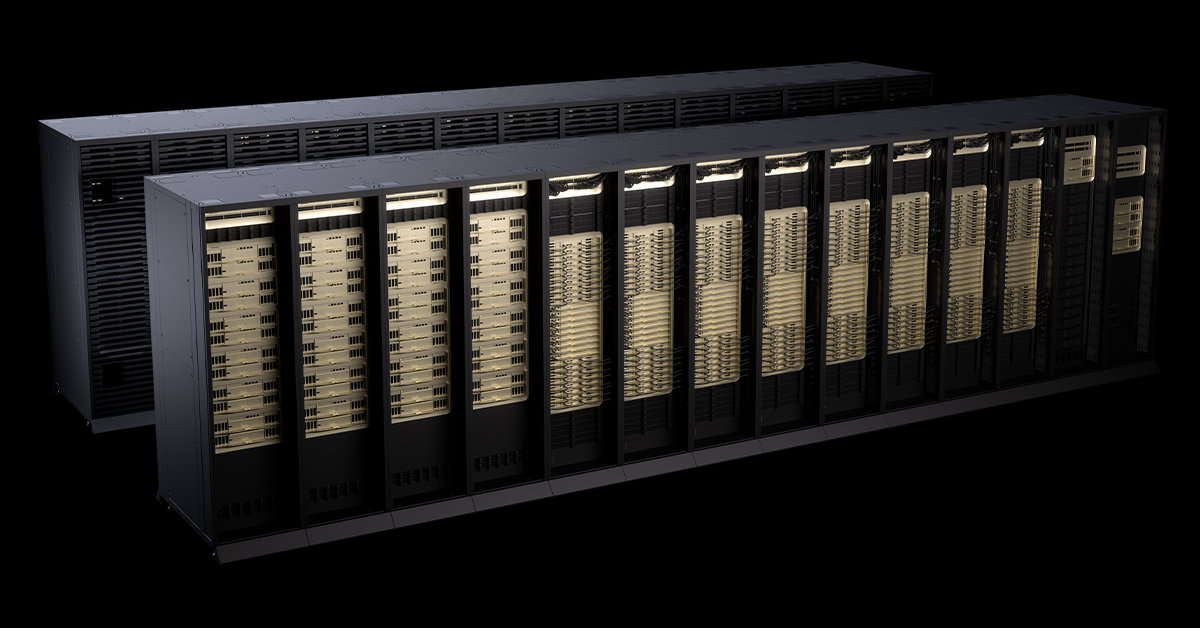
NVIDIA’s official Rubin launch materials say the platform combines Vera CPUs, Rubin GPUs, NVLink 6, ConnectX-9, BlueField-4 and Spectrum-6 networking into a full-stack AI factory design. The January platform release claimed up to 10x lower inference token cost and 4x fewer GPUs for mixture-of-experts training compared with Blackwell.
The new July post narrows the lens to post-training. NVIDIA says agentic models need continuous refinement after pretraining because tools, codebases, policies and production failures change. It points to NeMo Gym for training environments, NeMo RL for distributed post-training, Nemotron 3 Ultra as an open-weight example, and Prime Intellect, Perplexity and Together AI as workflow examples.
| NVIDIA claim | Why readers should care | Caveat |
|---|---|---|
| Cost per token is still central | Cheaper inference makes every agent run less painful. | Real cloud pricing will depend on provider margins and utilization. |
| Post-training becomes continuous | Agents need repeated correction as tasks and tools change. | Not every app needs frontier-scale reinforcement learning. |
| Vera Rubin trains MoE models with fewer GPUs than Blackwell | Big labs may do more improvement cycles for the same capital. | This is NVIDIA’s comparison, not a GearPulse benchmark. |
| Vera CPUs help sandbox-heavy RL workloads | Agent training often runs code, tools and checks, not just GPU math. | CPU throughput gains vary by workload and software stack. |
| NeMo turns RL workflows into infrastructure | Repeatable tooling matters when post-training stops being bespoke research. | Teams still need strong evaluation design and clean reward signals. |
The interesting part is not the headline multiple. It is the framing. NVIDIA wants buyers to think about “intelligence per dollar” as a system metric, not a chip spec.
The hidden cost is correction
The phrase “agentic AI” is overused, but the workload shift is real.
A chatbot can answer a prompt and stop. An agent is expected to plan, call tools, inspect outputs, recover from mistakes and keep moving. That means the model must learn more than fluent text. It has to learn operational judgment: when to search, when to run code, when a tool result looks wrong, when to ask for help, and when to stop.
That learning does not happen once. A coding agent trained on one test set may still fail against a new package layout. A research agent may hallucinate around fresh policy changes. A business agent may be correct in one company’s workflow and dangerous in another. Every useful deployment creates new examples of where the model was almost right.
That is why NVIDIA’s sports analogy lands even if the marketing is polished: the game is not only game day. It is practice, film review, correction, and then doing it again.
Rubin is also a CPU story
GPU headlines are easier to sell, but the Vera CPU matters because agent workflows are messy.
Reinforcement learning for agents often involves running environments in parallel: code sandboxes, browser tasks, simulated APIs, evaluation scripts, reward models and verifier logic. Those pieces need CPU throughput, memory movement, networking and orchestration. NVIDIA cites Prime Intellect finding 30% greater throughput per CPU against alternative x86 architectures for realistic RL sandbox workloads after optimizing its infrastructure around Vera.
That does not mean every buyer should treat the 30% figure as universal. It does mean the old mental model is too simple. If an AI factory spends part of its time waiting for environment steps, verifiers or data movement, then raw GPU FLOPS are not the whole system.
| Old AI-infrastructure question | Newer agentic question |
|---|---|
| How fast can the GPU train the model? | How many verified improvement attempts can the whole system run? |
| How cheap is inference? | How cheaply can the model be served and improved? |
| How much memory does the accelerator have? | How well does memory, networking and CPU orchestration keep GPUs busy? |
| Can the model answer? | Can it recover, learn and improve after a failed task? |
This is where NVIDIA is strongest. The company is not just selling a GPU; it is selling the rack, the interconnect, the networking, the software libraries and the developer gravity around them.
The buyer risk is lock-in with a good reason
The practical question is whether “intelligence per dollar” becomes a helpful buying metric or just another NVIDIA phrase.
For a frontier lab, the appeal is obvious. If Vera Rubin lets the lab generate more rollouts, run more verifiers and tighten the gap between training and inference, the platform can pay for itself through faster model iteration. For a cloud provider, the pitch is also clean: more capable instances, lower token economics, and a reason for customers to stay inside one optimized stack.
For everyone else, caution is healthy. Many companies are not limited by post-training compute. They are limited by unclear product design, bad data permissions, weak evaluations, poor reliability targets and teams that still do not know what an agent should be allowed to do. More infrastructure will not fix that by itself.
GearPulse’s read: Vera Rubin is exciting because it treats agent training as an operations problem, not a keynote demo. It is also a reminder that advanced AI is becoming a capital-intensive habit. The model that learns every week may be better. It may also be much more expensive to keep honest.
Bottom line
NVIDIA’s Vera Rubin story is not simply “the next chip is faster.”
The better read is that NVIDIA is preparing for AI systems that need constant correction. In that world, the winners are not only the teams with powerful models. They are the teams that can afford enough experiments, enough verifiers, enough infrastructure and enough discipline to make those models improve without losing control of the bill.
If NVIDIA is right, the next AI race will be measured less by one launch-day benchmark and more by how cheaply a company can keep learning after launch.