
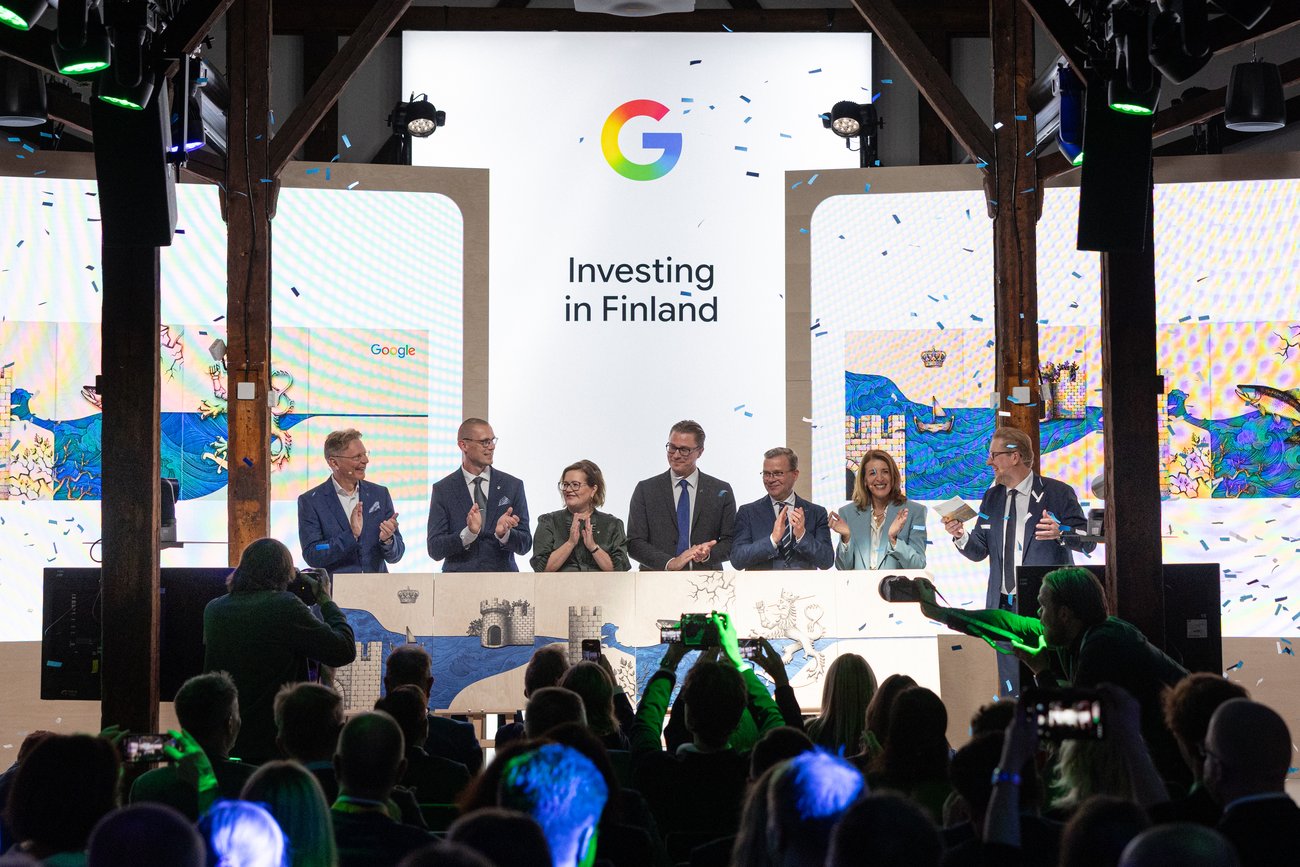
AI infrastructure announcements have developed a familiar weakness: the compute number is enormous, while the electricity plan is a fog of future renewables and reassuring nouns. Google’s new Finland commitment is still a very large corporate promise—at least €13 billion over 2027 and 2028—but it arrives with a detail that makes it worth taking more seriously than the usual data-centre press release.
Alongside new and expanded facilities in Hamina, Kajaani, Muhos and Vaala, Google has signed a 22-year power-purchase agreement with Fortum. The deal is meant to support the life extension and uprate of the Loviisa nuclear plant, not merely claim credit for electricity that already existed. That does not make an AI build-out impact-free. It does make the power question visible, contractual and unusually specific.
For everyone using cloud AI—or deciding where to put the next workload—that distinction is becoming part of the product.
The useful number is not just €13 billion
Google calls this its largest single European investment. The company says the money will go to data centres, supporting infrastructure and partnerships across four Finnish locations during 2027–28. It has also announced community, education and environmental funding around those sites.
Those are meaningful commitments, but they remain plans with company-supplied economic projections. Google estimates more than 37,000 jobs nationwide during construction and roughly €3.6 billion of annual GDP contribution in that phase; Reuters reported the company expects about 7,000 jobs annually once the facilities are operating. Treat those as forecasts, not delivered outcomes.
The part with a clearer physical shape is the Fortum agreement:
| Piece | What is committed | Why it matters |
|---|---|---|
| Google infrastructure plan | At least €13bn across 2027–28 | A major new block of European AI and cloud capacity is being planned, not opened tomorrow. |
| Loviisa PPA | 22 years, starting in 2028 | It gives the energy side a long-duration customer rather than a short-term procurement story. |
| Contracted capacity | Up to 50% of Loviisa’s capacity from 2030–49 | The agreement is material enough to change the economics of keeping the plant running. |
| Fortum investment programme | About €1bn aimed at operating through 2050 | Fortum says the PPA provides revenue certainty for the outstanding life-extension decisions. |
Fortum says Loviisa currently supplies around 10% of Finland’s electricity and employs about 580 people. Its release says the PPA begins with a smaller allocation in 2028, rising to 50% of the plant’s capacity for 2030–49. That is a more precise claim than “powered by clean energy,” and it is important not to blur it: this is a contract for existing nuclear generation plus an extension programme, not an announcement that a brand-new reactor is being built for Google.
A data-centre plan that acknowledges grid arithmetic
This is the core editorial point. AI systems feel weightless when they are a tab in a browser, but the model serving them has a location, a connection queue, substations and a power bill. A hyperscaler cannot turn that into a consumer feature with a nicer chatbot answer.
Google is also pointing to additional wind agreements and a contracted 94 MW battery system near Kajaani, expected to connect in late 2027. Those assets play different roles. Wind adds generation; a battery can shift and stabilize supply; a long nuclear agreement offers firm, low-carbon output across seasons. Putting them in the same sentence does not make them interchangeable.
Finland is a logical place to attempt that mix. It has a relatively decarbonised power system, industrial infrastructure and a cooler climate that can reduce cooling burden versus hotter data-centre markets. But favourable starting conditions do not eliminate local trade-offs. New large loads can still pressure network build-outs, energy pricing and the pace at which additional generation arrives. Google and Fortum’s language about affordability and grid resilience should be read as an objective, not a result already in evidence.
That restraint is especially necessary because the companies have also signed a memorandum of understanding to explore new nuclear, renewables and flexibility capacity. An MoU maps a direction; it is not the same thing as a financed project with a commissioning date.
Why this matters to people who do not operate a Finnish data centre
The audience relevance is not simply that AI needs power. It is that power availability increasingly determines which AI products can scale reliably, where latency falls and how much capacity providers can responsibly promise customers. The back end is becoming a constraint on the front-end experience.
We saw the compute side of that shift in our look at Waymo’s custom 5 nm robotaxi chip: specialised AI services ultimately depend on deliberately designed infrastructure, not generic magic. Google’s Finland move extends the same truth outward. The bottleneck is not only silicon or model quality; it is also whether the electricity system can support another generation of always-on inference.
For European businesses, the appeal is straightforward. More regional capacity can mean lower-latency cloud and AI services, and potentially more choice about where sensitive workloads run. Google is not promising a particular new consumer service here, however, and it would be premature to infer availability, price or performance from an infrastructure budget. Those are decisions the company will make product by product.
What would prove this is more than a good-looking blueprint
The story now needs milestones, not superlatives.
Watch whether the projects secure grid connections and permits on schedule; whether Fortum makes the remaining Loviisa life-extension investment decisions; and whether the 94 MW battery and additional generation actually enter service in 2027–28. Watch the supply mix too. The honest test is not whether Google can attach a clean-energy claim to more capacity, but whether new demand is matched by durable, additional low-carbon supply without pushing costs or risks onto everyone else.
Google’s plan is still a plan. The €13 billion headline should therefore be treated with the normal caution reserved for multi-year infrastructure spending. But the Loviisa agreement gives this announcement a harder edge than most: it makes an energy asset, a time horizon and a commercial mechanism part of the public story.
Bottom line
Google’s Finland expansion is not compelling because it is gigantic. Every AI infrastructure number is gigantic now.
It is compelling because the company is pairing its demand with a 22-year nuclear agreement that can help keep a real plant operating through 2050, alongside wind and storage plans that address different parts of the grid problem. That is not a complete answer to AI’s energy cost, and it is not proof that the build will be frictionless. It is, however, closer to the kind of accountable infrastructure thinking this race needs: name the power, name the mechanism and let the delivery dates do the talking.