
There is a version of the AI boom that only lives in boardrooms: sovereign AI, national capacity, regional hubs, strategic compute.
Firebird’s new Armenia AI factory is interesting because it makes that language less abstract. NVIDIA says Firebird has launched the CIS region’s largest AI factory in Hrazdan, Armenia, powered by NVIDIA accelerated computing and Dell Technologies infrastructure. Dell frames the first phase as a $500 million facility using PowerEdge servers and Blackwell platforms. Firebird’s own materials point to a broader platform built across emerging markets.
My read: this matters because AI infrastructure is turning into the new industrial base. If a country cannot get reliable access to compute, it cannot seriously build local language models, scientific tooling, startup infrastructure or public-sector AI without depending on someone else’s cloud priorities. Armenia is not suddenly competing with every hyperscaler. But it is trying to keep more of the hard work close to home.
That connects cleanly to GearPulse’s recent coverage of DOE’s Genesis-Science-1 open-model push and NVIDIA’s Vera Rubin post-training infrastructure. The theme is no longer just smarter models. It is who controls the machines that make them useful.
What launched
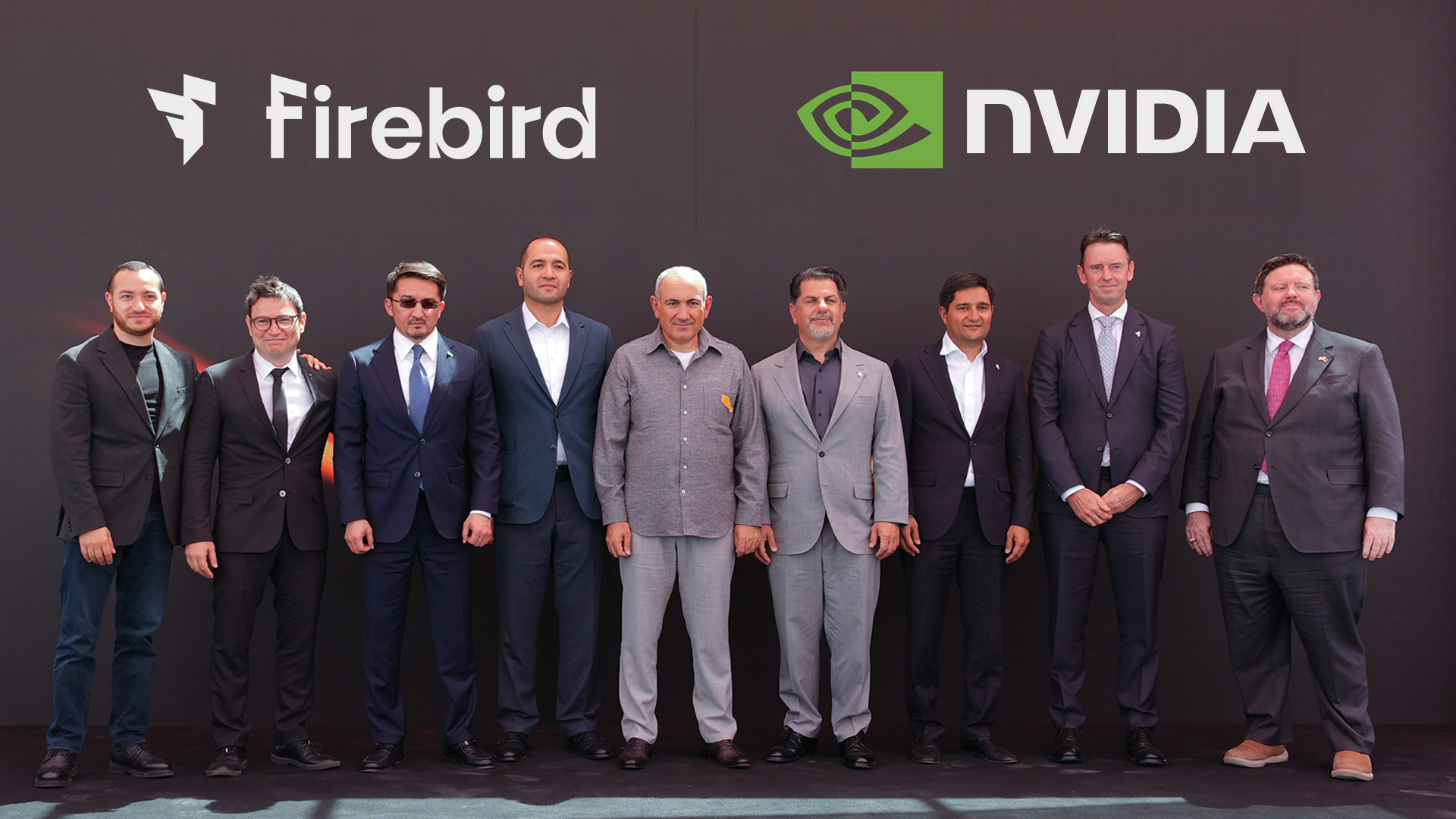
The companies describe the Hrazdan site as an operational first phase, not the finished end-state. NVIDIA says Armenian prime minister Nikol Pashinyan, Kazakhstan deputy prime minister Zhaslan Madiyev and U.S. charge d’affaires David Allen attended the opening ceremony.
| Claim | What the sources say | Caveat |
|---|---|---|
| Location | Hrazdan, Armenia | Exact live cluster size is not fully broken out in public materials. |
| First-phase framing | Dell describes a $500 million phase-one facility | This is partner-stated investment context, not an audited build sheet. |
| Platform | NVIDIA accelerated computing, Dell PowerEdge infrastructure and NVIDIA DSX design ideas | Individual rack/server configurations are not fully public. |
| Roadmap | More than 70,000 NVIDIA Blackwell and Rubin GPUs in Armenia by end of 2027 | Roadmap capacity is not current capacity. |
| Power target | NVIDIA cites 300MW for Armenia by the end of 2027; Dell mentions an approved expansion beyond 400MW | Power, cooling and grid delivery are the hard execution test. |
| Global ambition | Firebird says its platform is built to scale across emerging markets | Ambition will need customers, energy and delivery discipline. |
The important caveat is obvious: 70,000-plus GPUs is a roadmap number. The useful story today is that the first site is live and the partners are putting their names behind a much larger buildout.
Why Armenia is an interesting place to watch
AI infrastructure usually concentrates where capital, fiber, power contracts and cloud customers already exist. That creates a loop: the places with compute attract more AI work, and the places without it stay buyers rather than builders.
Firebird is arguing for a different map. Its pitch is that emerging markets can host serious AI infrastructure if the facility design, power systems, cooling and network links are built as one system. NVIDIA’s DSX language matters here because it treats an AI factory as a complete production machine, not a room full of expensive accelerators.
That sounds like vendor poetry until you remember what can go wrong. GPUs without power are sculptures. Power without cooling is downtime. A data center without low-latency connectivity is a local trophy. A cluster without customers is stranded capital.
For Armenia, the upside is more than bragging rights. Local developers, universities, startups and public institutions get a more plausible route to train, fine-tune and deploy AI around local needs. That includes Armenian-language systems, regional enterprise software, scientific workloads and services that may not be priority jobs for a giant U.S. cloud.
The sovereign AI promise has to earn its name
“Sovereign AI” can become a very lazy phrase. A government signs a memorandum, a vendor says the word sovereignty, and everyone pretends control has been achieved.
Real sovereignty is less glamorous. It means knowing where the data sits, who operates the machines, what software stack controls jobs, which workloads receive priority, how incidents are handled, whether universities can actually access capacity and whether local companies can afford useful compute without being crowded out by global buyers.
| Question to watch | Why it matters |
|---|---|
| Who gets priority access? | A national AI hub is less meaningful if only foreign anchor customers can afford it. |
| How transparent is actual capacity? | Roadmap figures can blur what is live today. |
| Can the grid and cooling plan keep pace? | AI factories are energy projects as much as computing projects. |
| What local programs form around it? | Talent, grants and university access turn hardware into an ecosystem. |
| How resilient is the vendor stack? | Sovereign AI still depends on NVIDIA, Dell and other global suppliers. |
None of that ruins the announcement. It makes it more interesting. The real test starts after the ribbon-cutting, when the cluster has to attract workloads and prove it is more than a regional logo exercise.
My read
I like this story because it pushes the AI conversation away from chatbots and back toward infrastructure. It is easy to underestimate how physical AI has become: land, substations, chillers, racks, fiber, customs, financing, construction schedules and operations teams.
Firebird’s Armenia launch is also a useful reminder that the next AI hubs will not all look like Silicon Valley, Northern Virginia or Dublin. Some will be bets on smaller markets trying to turn geography, ambition and political alignment into compute access.
The risk is that the roadmap outruns the reality. The best version of this project gives Armenia and nearby markets a credible AI base. The weaker version becomes another huge capacity slide that depends on power and customer demand arriving exactly on time.
Bottom line
Firebird’s Armenia AI factory is relevant because it treats compute as economic infrastructure, not just a cloud SKU.
The launch does not prove the full 70,000-GPU roadmap will land. It does prove that smaller AI markets are no longer content to watch the infrastructure race from the sidelines. For developers and institutions outside the usual hyperscaler centers, that shift is worth watching closely.
Support independent GearPulse articles at buymeacoffee.com/gearpulse.site.