
Ferrari has given its Monza car a special livery for the right reason: it has something specific to say.
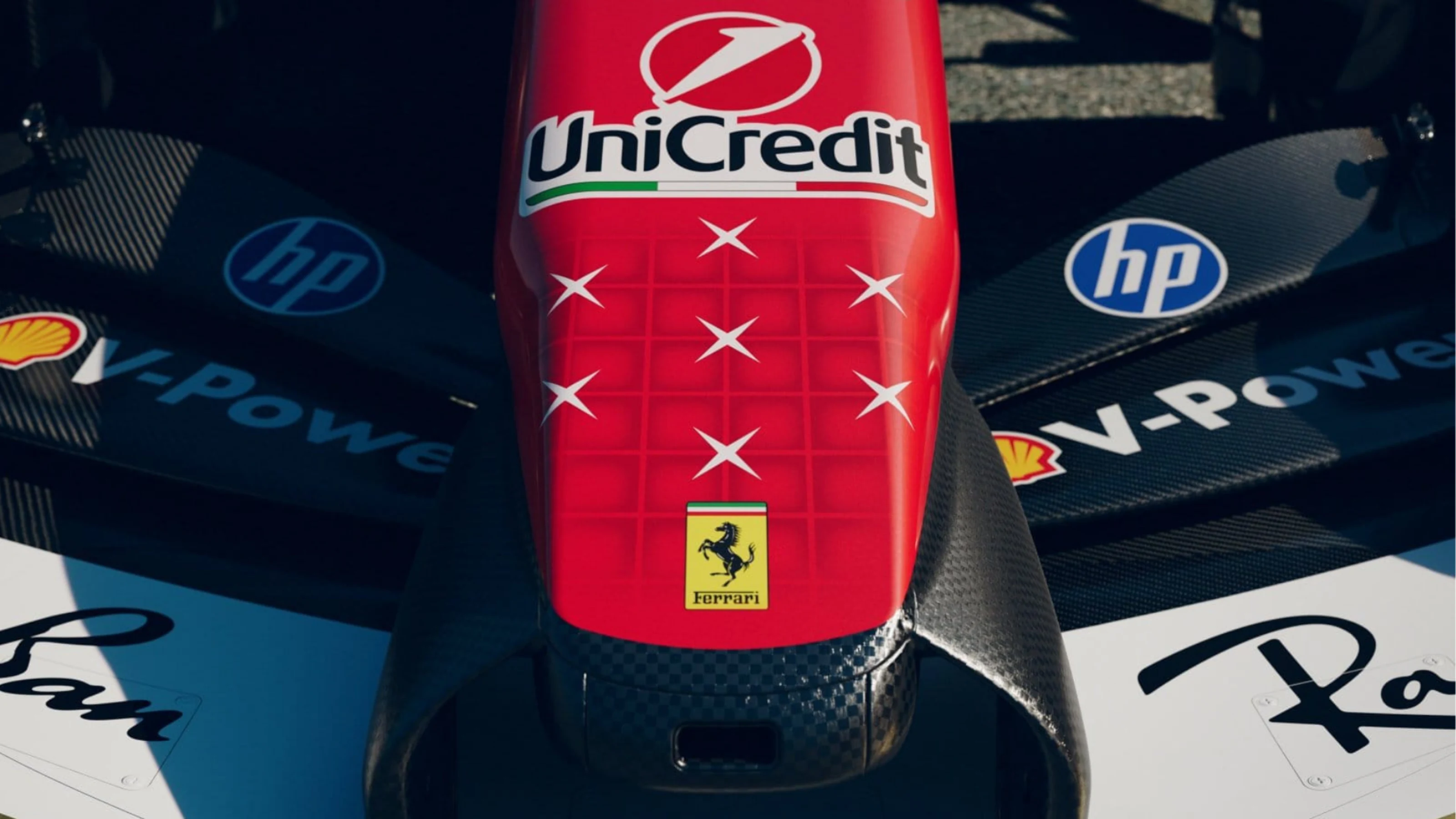
The SF-26 that Charles Leclerc and Lewis Hamilton will race at the Italian Grand Prix carries a tribute to Michael Schumacher, 30 years after he joined Ferrari and 20 years after his final victory for the team. Formula 1 says the design is a one-off for Ferrari’s home weekend. Motorsport.com and RacingNews365’s reveal coverage makes the visual language plain: a redder engine cover, retro-style driver numbers, Schumacher’s signature and seven stars on the nose.
That could have been a cluttered anniversary exercise. Instead, it appears deliberately selective. Ferrari has not tried to recreate a mid-1990s car on a 2026 chassis. It has borrowed a few recognisable signals and let the contemporary SF-26 remain itself.
A tribute works best when it does not cosplay
There is a tempting but usually misguided formula for special liveries: add historic colours, cover every available surface with references and hope the emotional weight does the design work. Modern Formula 1 cars have different proportions, dense sponsor obligations and much less empty bodywork than the machines they commemorate. Literal recreations can look like a sticker pack applied to a very fast billboard.
Ferrari’s Monza treatment avoids the worst of that. The colour balance is warmer and less interrupted, while the type and small symbols carry the historical reference. That makes the idea legible at a distance without demanding that viewers decode a museum label at 300 km/h.
| Detail | What it references | Why it lands |
|---|---|---|
| Reduced white on the engine cover | A more emphatically red Ferrari for its home race | It changes the car’s silhouette instead of adding decoration for its own sake. |
| Retro driver-number treatment | Schumacher-era visual cues | It is a small, readable nod that does not fight the current identity. |
| Schumacher signature | The driver at the centre of the tribute | It makes the occasion personal rather than treating success as an abstract statistic. |
| Seven stars on the nose | Schumacher’s seven world championships | The symbol is compact and meaningful, not an extra sponsor-shaped graphic. |
Why Monza gives the design weight
Monza is not merely a convenient Italian backdrop. Formula 1’s event information confirms the 53-lap race takes place this weekend on the 5.793 km circuit, and it remains Ferrari’s most exposed annual stage: a home crowd, a high-speed circuit and a weekend where every choice made by the Scuderia gets magnified.
Schumacher’s connection gives the timing more substance than a generic heritage drop. Formula 1 records five of his Monza victories in Ferrari red, while the current tribute arrives at a naturally reflective pair of milestones: three decades since he joined the team and two since his final Ferrari win.
That history does not solve Ferrari’s current race-weekend questions. A special livery cannot create downforce, reduce drag or rescue a poor strategy. It should not be read as a promise of performance. But it can sharpen a sporting moment. At Monza, where Ferrari is judged with unusual intensity, the team has chosen a reminder of the period when the badge and the result were most closely aligned.
The contrast is useful. Our earlier look at Mercedes’ Monza penalty dilemma is about the hard operational math of a title fight. Ferrari’s livery is not an answer to that problem; it is the emotional side of the same weekend, designed to give a contemporary race car a credible connection to the people watching it.
The line Ferrari has to keep holding
The strongest heritage design borrows confidence, not expectation. Schumacher’s Ferrari years set an impossible standard for any one current race, so the team is sensible to keep the tribute graphic rather than theatrical. The stars and signature acknowledge the achievement without making Hamilton and Leclerc wear a replica of someone else’s career.
It also gives fans something more durable than a launch caption. The SF-26 will be remembered from this weekend for how it performs, but it will be instantly recognisable in the photographs either way. That is a surprisingly high bar for a special livery: make the car feel more like itself, not less.
Bottom line
Ferrari’s Monza edition is a strong piece of motorsport design because it is precise. It honours Schumacher with colour, typography and symbols that reward recognition, while leaving the current car’s shape and identity intact.
The results still matter more than the paint. They always do at Monza. But Ferrari has found a way to put its most successful era on the SF-26 without asking the past to drive it.