
An eight-hour trip to the International Space Station sounds almost routine until you remember what the usual alternative looks like: astronauts in a compact spacecraft, chasing a laboratory that is moving at roughly 28,000 km/h, for most of a day or sometimes much longer.
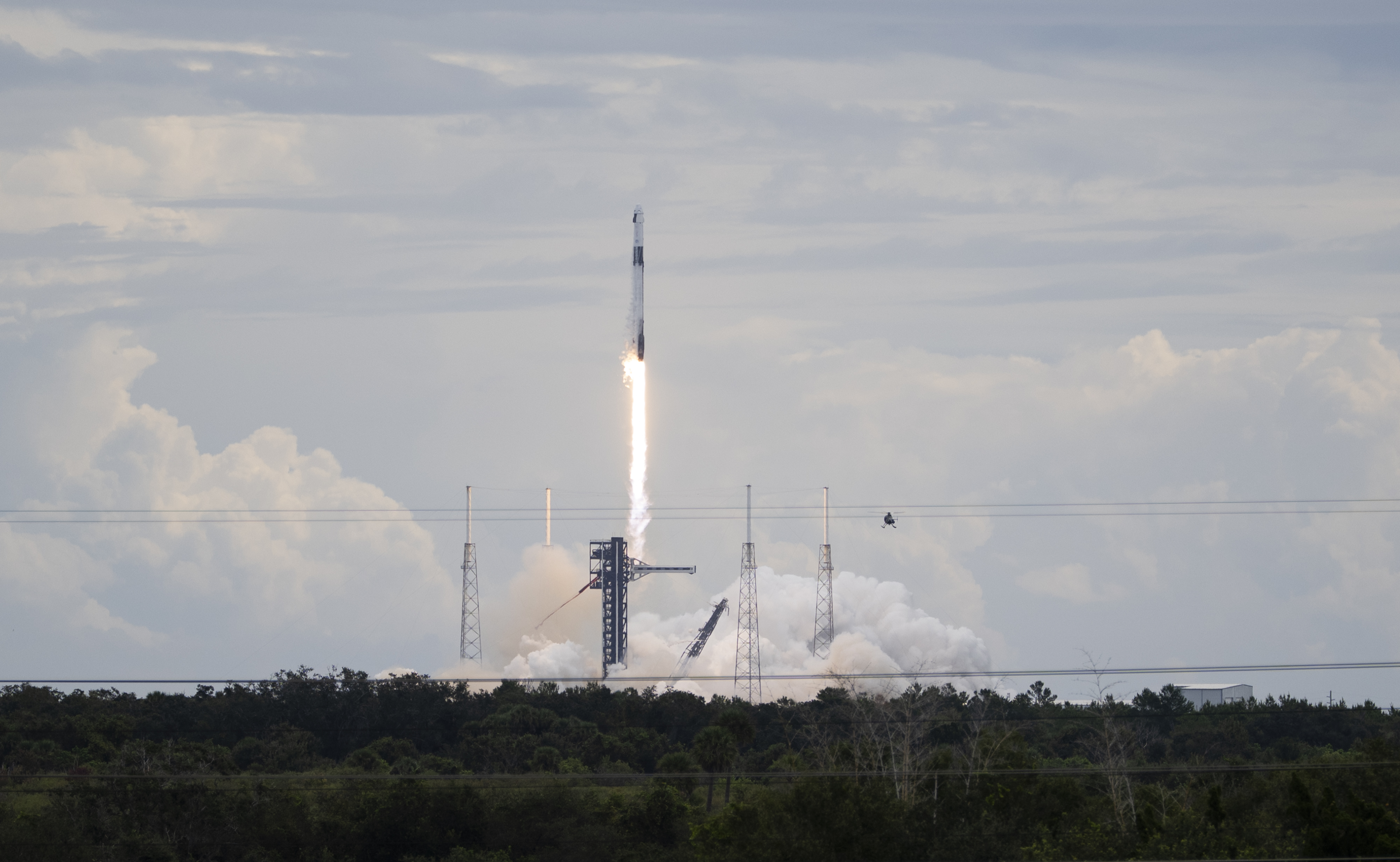
NASA’s SpaceX Crew-13 launched from Cape Canaveral on October 1 and docked at the station about seven hours and 50 minutes later. NASA says that makes it the fastest launch-to-docking transit by a U.S. spacecraft in the ISS’s history. Associated Press reported the completed trip as just under eight hours.
The tempting headline is that SpaceX suddenly made the ride faster. The better one is that the mission made the rendezvous cleaner. Crew-13 is a sharp example of how much orbital operations still depend on timing, geometry and a launch window that puts the station in the right place—not simply on adding more thrust.
The record in context
Crew-13 carried NASA astronauts Jessica Watkins and Luke Delaney, Canadian Space Agency astronaut Joshua Kutryk and Roscosmos cosmonaut Sergey Teteryatnikov aboard the Dragon spacecraft Grace. NASA says the crew is beginning a long-duration science expedition, with a handover from Crew-12 before the previous team returns home.
| What happened | The useful detail |
|---|---|
| Liftoff | October 1, 2026, 11:10 a.m. EDT from Space Launch Complex 40 |
| Docking target | The forward port of the ISS Harmony module |
| Transit | About 7 hours, 50 minutes, according to NASA’s pre-arrival timeline |
| Record | Fastest launch-to-docking by a U.S. spacecraft to the ISS |
| Mission length | Roughly five and a half to six months, according to Space.com and AP |
NASA described the transit as a sequence of automatic maneuvers monitored from SpaceX mission control in Hawthorne and NASA’s Johnson Space Center. The precise opportunity mattered: AP noted that the station’s convenient position at launch helped enable the fast journey.
That distinction keeps the achievement honest. Falcon 9 did not turn into a different rocket for Crew-13, and Grace did not take a shortcut through physics. The launch was timed so Dragon could converge with the station efficiently. A rapid rendezvous is a tightly coordinated mission profile, not a general promise that every future crew flight will arrive before dinner.
Why faster is valuable only when it stays boring
For passengers, a shorter early mission phase means less time living in seats, suits and the unusually constrained rhythm of a newly launched capsule. For the program, it can move a crew handover and station work along with less waiting. But this is not a corner worth cutting just to win a headline.
Rendezvous and docking are deliberately conservative operations. Teams still need the right orbital conditions, vehicle health, station readiness and contingency planning. NASA’s release makes clear that Dragon’s maneuvers were automated but actively monitored; the absence of drama is the point.
That is also why the American qualifier belongs in every telling of this record. NASA calls Crew-13 the fastest U.S. launch-to-docking mission to the ISS. It is not a claim to the fastest human trip to the station by any nation or spacecraft. In spaceflight, a cleanly stated record is more impressive than an inflated one.
The science starts after the fast part
Speed is the news hook, but the crew’s months aboard the station are the work. NASA says Crew-13 will support research using microgravity to produce human stem-cell-derived tissues, investigate a mostly autonomous plant-growth system, and continue studies of human health in orbit. Those are practical pieces of the ISS’s value: experiments that need the environment, repeated access to it and enough operational reliability for researchers to plan around it.
There is a useful connection here to our look at Firefly’s Jetson-powered lunar imaging test. Different destination, different hardware, same modern spaceflight reality: the launch is the visible moment, but the durable story is whether the system creates useful time and reliable capability after arrival.
Bottom line
Crew-13’s record is a victory for mission planning as much as hardware. NASA and SpaceX got a crew to the ISS in less than eight hours because the launch window, orbit and operations lined up unusually well.
That does not make an eight-hour station trip the new normal. It does show how mature commercial crew operations can turn orbital mechanics into a quieter, more efficient experience when the conditions cooperate. For astronauts and station teams, that is the sort of record worth having: fast, precise and uneventful.
Support independent GearPulse articles at buymeacoffee.com/gearpulse.site.