
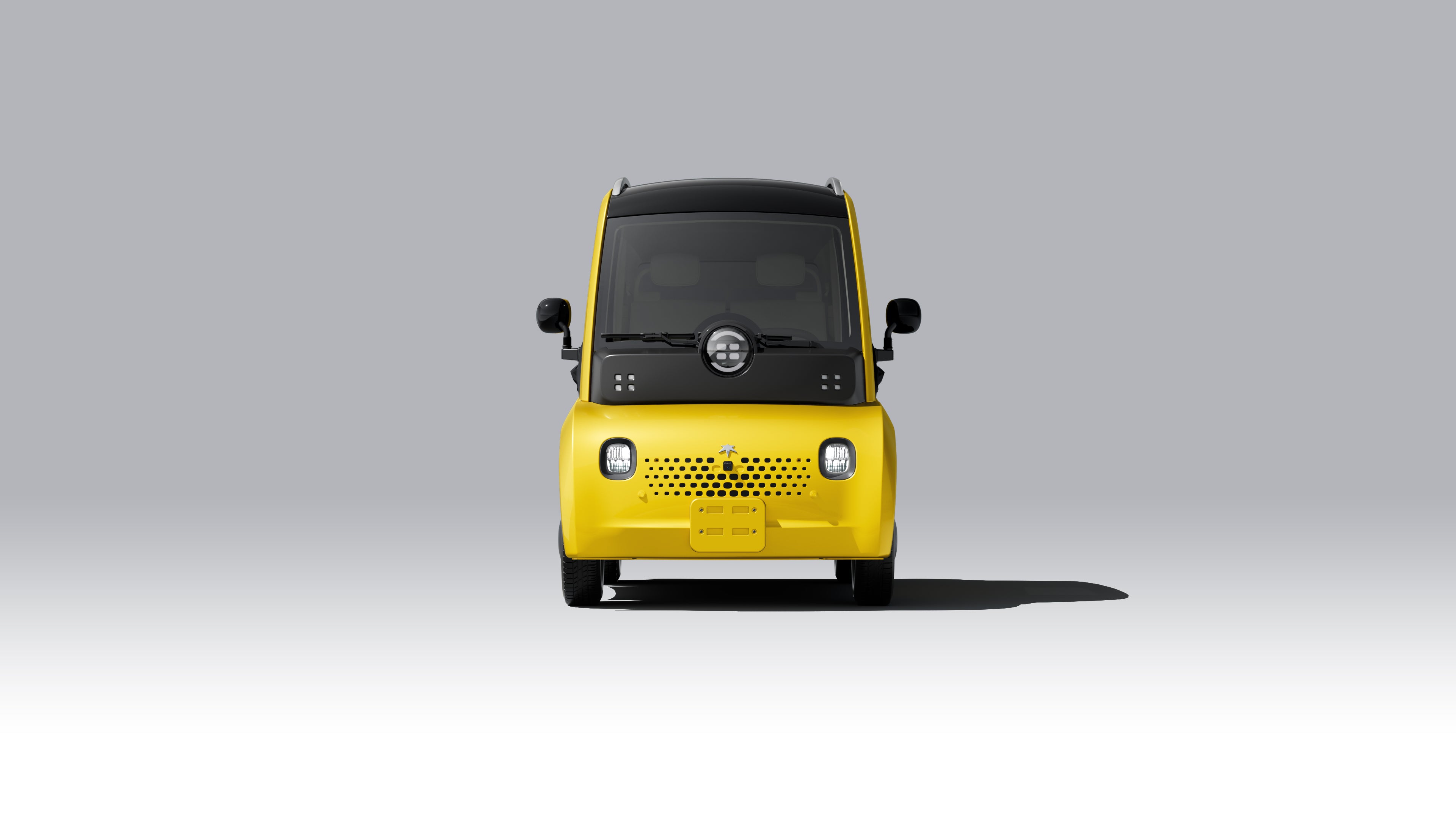
The most convincing electric vehicle for a city is often not the one with the biggest battery, the tallest roofline or the longest options list. It is the one that does not make a five-kilometer errand feel ridiculous.
That is the appeal behind the Astraux AL7, a tiny electric quadricycle that the company says starts at EUR 9,990 in Europe. Astraux lists a 10 kW motor, a claimed 150 km range and a 90 km/h top speed for the standard AL7. On paper, those figures put it in a very different conversation from 45 km/h microcars such as the Fiat Topolino or Citroen Ami.
GearPulse’s view: the AL7 is interesting because it makes a blunt argument for the second car to become much smaller. For the school run, a commute across town or a supermarket trip, a normal family car can be an expensive, heavy and oversized answer. A compact EV that can keep up with urban traffic could be liberating, but only if buyers are honest about its limits before they fall for the price.
This is a quadricycle, not a budget hatchback
Calling the AL7 a car is convenient, but not quite precise. Astraux positions it as an L7e quadricycle for Europe. That category sits outside the usual passenger-car type approval framework, even when a vehicle has four wheels, doors, heating and an infotainment screen.
The distinction changes the buying decision. Quadricycle rules, licensing, insurance, registration and road access are national matters layered on top of European type-approval rules. Astraux says it will provide a European Certificate of Conformity, but GearPulse has not independently checked that document or its acceptance in any particular country. A buyer should do that before paying a deposit, along with confirming the road restrictions where they actually live.
| What Astraux lists for the AL7 | What it means in practice |
|---|---|
| Starting price: EUR 9,990, VAT included | Treat it as vehicle price, not necessarily the all-in road price. |
| Claimed range: 150 km | Useful for short daily trips, but not a verified WLTP result in the material reviewed. |
| Maximum speed: 90 km/h | More flexible than a 45 km/h city microcar, still not a motorway tool. |
| Motor: 10 kW | Enough on paper for urban and suburban work, not a performance claim. |
| Category: L7e | Registration, insurance and allowed roads need a local check. |
| Seller delivery estimate: late July to August 2026 | An estimate subject to shipping, customs and local handover. |
This is not pedantry. The best micro-mobility products are defined by where they cannot go as much as where they can. An AL7 could make central Bucharest, Milan or a dense French suburb much easier to navigate and park. It would be a poor answer to a regular motorway commute, a four-person family holiday or a winter trip that depends on dependable public charging.
The specification is impressive, but it needs context
Astraux’s product page calls out air conditioning, electric power steering, ABS, EBD, remote features and an app-connected key for the standard AL7. Higher trims add equipment such as parking sensors, keyless entry, wireless charging and a display with phone integration.
For a micro-EV, that is a notably ambitious equipment list. InsideEVs’ coverage makes the same basic point: the AL7 is trying to feel like a miniature real car, rather than a bare-minimum neighborhood vehicle. Italian publication Quattroruote has also reported planned Italian distribution for the AL6 and AL7 through China Car Company.
But a feature list is not a quality verdict. The questions that matter after the first glossy webpage are less romantic: how well are the doors sealed, what does crash protection look like for the homologated version, how easily can parts be sourced, which workshop handles a fault, and what happens to the claimed range in winter with the heater on?
Those answers are not yet available from independent testing. Neither are they settled by an official product page. That is not a reason to dismiss the AL7. It is a reason to view the first cars as an invitation to inspect, not a request to assume.
Why right-sizing can beat bigger batteries
The usual electric-car argument starts with range anxiety. For an urban second vehicle, that is often backwards. The more relevant question is whether the vehicle matches the trip.
An owner who drives 15 to 40 km most days does not necessarily need a huge battery, a 2.2-ton SUV or the associated tire and energy costs. They need a weather-protected vehicle that is easy to park, cheap enough to own sensibly and fast enough to avoid becoming an obstacle in normal traffic. A 90 km/h quadricycle has a chance of fitting that brief in a way a 45 km/h city car often does not.
There is a parallel with GearPulse’s recent look at Waze’s motorcycle mode. The value was not a vague promise that AI improves travel; it was the recognition that the vehicle changes the route. The AL7 applies the same basic logic to ownership. Different trips deserve different hardware.
That does not mean every household should replace a car with one. The AL7 has two seats, limited cargo space and a modest performance envelope. It works best when it complements a larger vehicle, public transport or a bicycle rather than pretending to eliminate every mode of travel.
The price needs an all-in calculation
EUR 9,990 is compelling. It is also not the number a sensible buyer should use alone.
Astraux’s order page says its quoted vehicle price includes VAT, while the purchaser remains responsible for local last-mile delivery and possible regional environmental or customs handling fees. Insurance, registration, plates, a home charging arrangement and local service access belong in the calculation too. The company lists a EUR 99 reservation deposit and gives an estimated late July to August delivery window for the current European fulfillment cycle, both subject to its own terms.
Before ordering, ask these questions in writing:
| Buyer question | Why it matters |
|---|---|
| Is this exact configuration registrable at my address? | A claimed EU category is not a substitute for a local registration answer. |
| What is the final delivered price? | The headline price can exclude practical handover costs. |
| Which range figure applies to this battery and trim? | The company lists different ranges across its lineup. |
| Who performs warranty and collision work nearby? | A small EV is only cheap if it can be kept running. |
| Which roads are prohibited? | The difference between 45 km/h and 90 km/h does not make it a motorway car. |
The bottom line
The Astraux AL7 could be a smart answer for the person who keeps using a full-size car for small, repetitive city trips. Its advertised EUR 9,990 price, 90 km/h ceiling and claimed 150 km range give it a more credible role than the slowest microcars.
The caveat is as important as the appeal. This is a new, lightly proven quadricycle product, not a conventional hatchback with an established dealer network. Verify registration, delivery costs, local service and the exact specification before committing. Do that, and the AL7’s smallness stops looking like a compromise and starts looking like the point.