The best navigation updates are the ones that reduce the number of tiny decisions you have to make while moving.
That is the useful way to read Waze’s latest rollout. Google says Waze is adding an AI-assisted motorcycle mode, personalized navigation, a less chatty voice mode, expanded conversational reporting and Gemini-powered destination search. Some features are global now, some start in selected countries, and one is still limited to beta users.
GearPulse’s view: this matters because navigation is becoming less like a map and more like a driving interface. That can make trips easier, especially for riders and commuters, but it also means users should care about what the app learns, how much it speaks, and whether personalization is easy to turn off.
What is changing
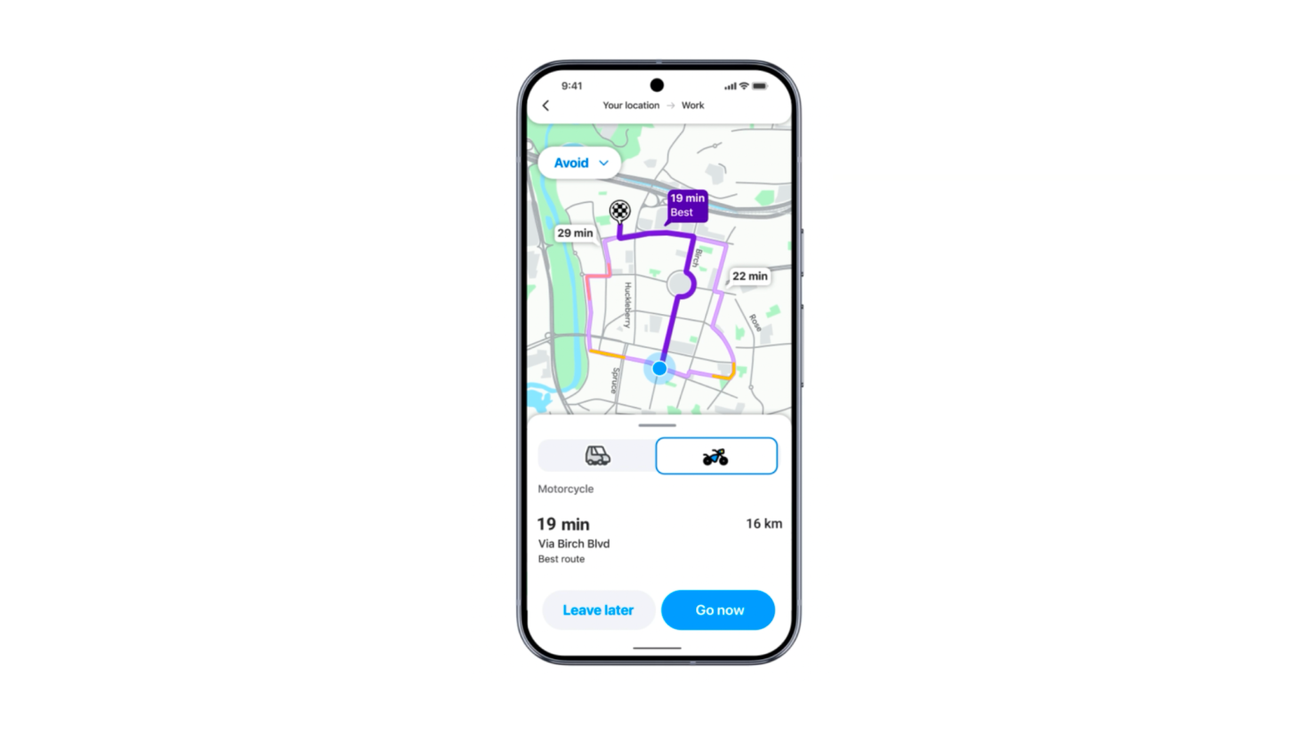
The headline feature is motorcycle mode. Google says it uses AI, Waze traffic data and motorcycle map-editor input to account for two-wheel routing needs, shortcuts, restrictions and hazards such as potholes, speed bumps, raised crosswalks, shoulder endings and narrow bridges.
The rollout is not universal yet. Waze says motorcycle mode is rolling out now on Android and iOS in Argentina, Brazil, Colombia, Malaysia, Mexico, Peru and the Philippines, with more countries planned.
| Feature | Rollout detail from Waze | Why it matters |
|---|---|---|
| Motorcycle mode | Android and iOS in seven initial countries | Riders do not always want car-first routing logic. |
| Personalized navigation | Global on Android and iOS | Waze can prefer routes that match prior trip patterns. |
| Less chatty mode | Global on Android and iOS | Fewer voice interruptions during music or podcasts. |
| Conversational map updates | Global on Android and iOS | Drivers can report closures or map issues by voice. |
| Gemini destination search | Waze beta community globally | Search becomes more conversational before a trip starts. |
The Verge framed the update as Waze’s deeper step into Gemini-powered navigation. Road & Track emphasized the motorcycle angle, including routing and hazard details that matter more on two wheels than in a car.
The motorcycle feature is the most grounded AI use
AI in a navigation app can sound like branding until it solves a concrete problem. Motorcycle mode is concrete.
A rider cares about surface quality, narrow routes, shortcuts, lane restrictions, exposure and hazards differently from a driver in a sedan. A route that is merely annoying in a car can be tiring or risky on a motorcycle. Waze has had rider-related community efforts before, but this update makes the two-wheel use case more explicit in the main product story.
The caveat is coverage. The initial country list is useful but limited. Riders outside those markets should treat this as a direction of travel, not a feature they can count on today. Waze also still depends on data quality. AI can help incorporate signals, but bad map data and thin community reporting will still show up on the road.
Personalization is useful, but it needs restraint
Waze says personalized navigation will suggest routes based on previous trips as well as traffic patterns. If you normally choose highways over stop-and-go local streets, the app can surface that preference earlier.
That is exactly the sort of small convenience that can make a navigation app feel smarter. It is also the point where privacy expectations matter. A route preference is not a password, but a pattern of movement can still reveal habits. Waze says users can choose alternate routes or turn off personalization in settings. That control should be visible and boring to use, not buried like an advanced troubleshooting option.
| Reader question | Practical answer |
|---|---|
| Should commuters care? | Yes, because fewer repeated route corrections save attention. |
| Should privacy-minded users care? | Yes, because personalization depends on trip history signals. |
| Should riders install it today? | Only if motorcycle mode is live in their market. |
| Is Gemini doing all navigation? | No. Waze still leans on community data, traffic signals and map editors. |
| Is this hands-free enough? | It helps, but drivers still need to avoid treating voice AI as permission to fiddle. |
The quieter voice mode may be the sleeper feature
“Less chatty” mode is not glamorous, but it may be the update people notice every day.
Navigation apps have a bad habit of treating every prompt as equally important. If Waze can shorten routine instructions while preserving critical warnings about hazards, turns and lanes, the experience gets calmer without becoming less useful. That is good product judgment. Driving software should earn interruptions.
The same idea applies to conversational reporting. Voice reports for closures or outdated addresses are helpful if they reduce screen taps. They are less helpful if they create a new habit of negotiating with a chatbot while driving. The best version of this update is quick, sparse and confirmable at a glance.
The bottom line
Waze’s update is relevant because it makes navigation more situational.
Motorcycle mode recognizes that vehicle type changes the route. Less chatty mode recognizes that attention is limited. Personalized navigation recognizes that the fastest route is not always the route a person will actually choose. Gemini search and reporting recognize that speech can be safer than tapping when it is kept short.
The tradeoff is that smarter navigation needs clearer controls. If Waze gets the defaults right, this can feel like a genuinely useful evolution of the driving app. If it gets too hungry for attention or personalization, the same features could become another layer of cockpit noise.