
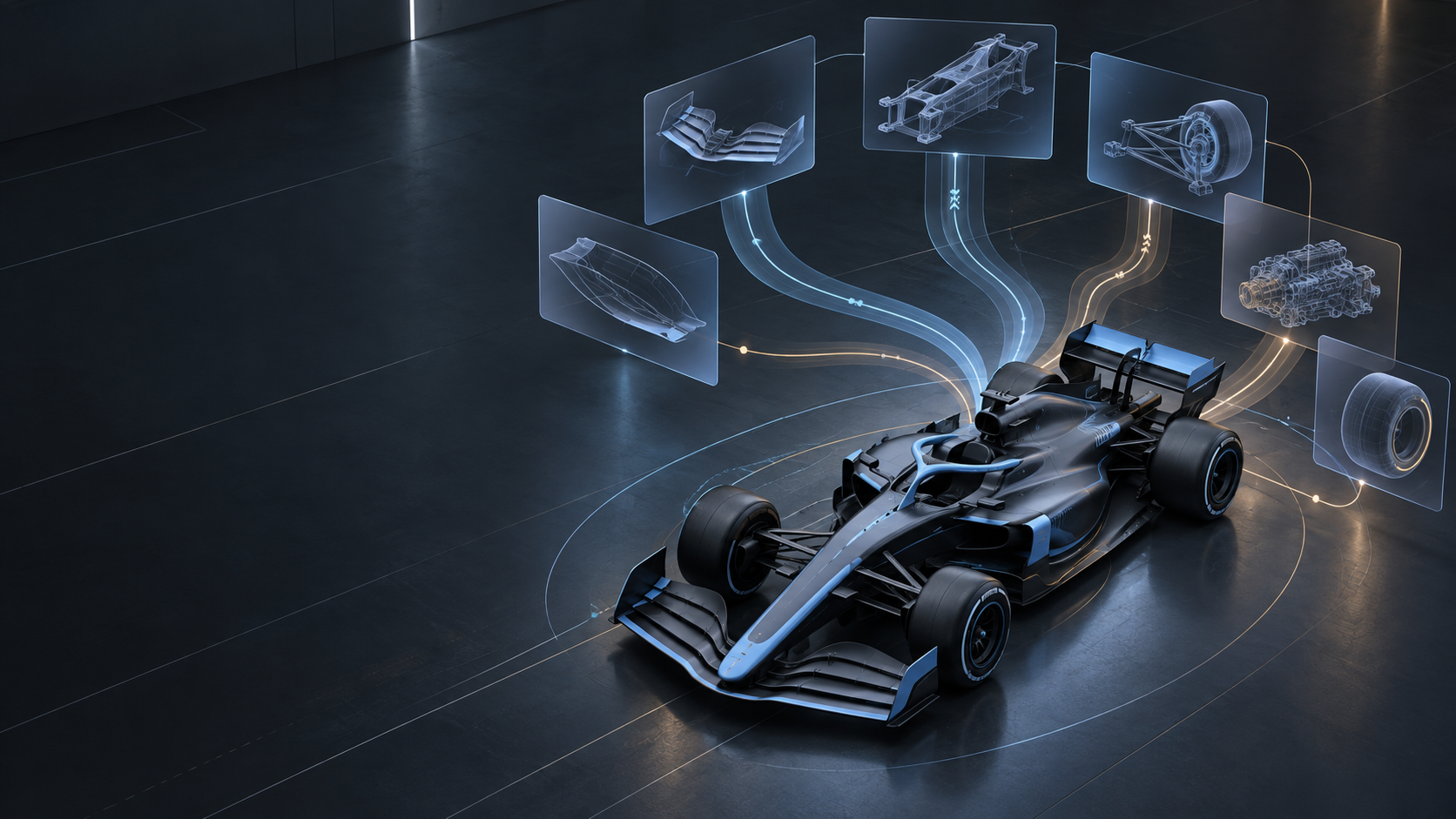
Alpine has hired Mike Elliott as Chief Technical Officer, but the interesting part is not the familiar résumé line about eight Constructors’ and eight Drivers’ Championships. It is the job description: Elliott will lead and oversee the technical and engineering functions at Enstone.
That is a deliberately broad sentence. In Formula 1, broad can be more valuable than glamorous. It says Alpine wants one person whose view reaches beyond a wing, a floor, a simulator correlation plot or a single weekend’s setup. For a team that has shown it can make a car fast on the right Saturday, that is the missing kind of responsibility.
Alpine’s announcement confirms Elliott’s return to the factory where he was Principal Aerodynamist from 2008 to 2012, following more than a decade at Mercedes. Autosport reports that executive technical director David Sanchez is understood to report to Elliott. Neither Alpine nor Elliott has publicly described a new car concept, a personnel reshuffle or a timetable for effects on track. That restraint matters. This is an organisational move, not a magic upgrade arriving in Baku.
But it is a meaningful one.
Alpine has evidence of pace; it needs a system for keeping it
The last month has made Alpine’s 2026 case unusually clear. GearPulse’s look at Franco Colapinto receiving the same Monza specification as Pierre Gasly was about making a development result easier to read. Then came the stronger proof: Gasly took pole at Monza, while Colapinto reached Q3 on the same basic package. A team does not accidentally do that at a circuit that exposes drag, braking and energy deployment.
Yet a serious team cannot build its identity around a single exceptional qualifying hour. The old problem at Enstone has not been a lack of clever people or isolated quick cars; it has been turning flashes of potential into a development direction two drivers can use, at different tracks, over a season.
That is the reason Elliott’s remit matters more than a title alone. A CTO can ask the questions that sit between departments:
| The decision | Why it is bigger than one department |
|---|---|
| Is an aero gain real? | Wind-tunnel, CFD, manufacturing and track correlation have to agree before it becomes usable lap time. |
| Does a new part help both cars? | Driver preference and setup freedom matter, but a two-car team needs a platform, not one perfect lap. |
| What should be developed next? | The answer has to weigh current points, 2027 work, resources and what the car has actually taught the factory. |
| Who owns a missed correlation? | A clear senior owner turns an awkward post-mortem into a decision rather than a departmental argument. |
It is unglamorous work, which is precisely why it decides so much. A midfield-to-front-running climb is usually lost in the handovers: an aerodynamic idea that does not translate, a part that arrives late, a balance gain that costs tyre life, or a promising simulation result that never becomes a repeatable race setup.
The new reporting line is the real signal
Alpine has not said that David Sanchez’s technical role is being erased, and it should not be read that way. Sanchez remains an executive technical director. The useful distinction is between leading a vital technical function and holding the whole technical picture together.
Autosport’s report that Sanchez is understood to report to Elliott gives the appointment its weight. If that structure is accurate, Alpine is not merely collecting famous engineering names. It is making the point where competing technical priorities converge visible. That can make decisions faster, but it also makes them easier to judge.
Elliott’s Mercedes record brings both the attraction and the caveat. He was part of the group that helped prepare for the 2014 rules and then contributed to an extraordinary title run; Formula 1 notes his later roles as Technology Director, Technical Director and CTO. His tenure also includes the difficult early ground-effect period and the 2023 role swap with James Allison. That history should discourage hero worship. A technical leader is not a car, and no individual “solves” a regulation cycle from an office.
It does, however, make Elliott unusually qualified for Alpine’s current issue. He has worked in a championship-winning structure, managed a change of technical direction when a concept was not working, and knows Enstone rather than arriving as a distant consultant. Those are relevant skills for an organisation trying to convert an improved baseline into a dependable one.
Better than a promise of instant results
The numbers underline the scale of the opportunity without pretending they are a forecast. RacingNews365 places Alpine sixth after the Spanish Grand Prix on 68 points, nine behind Racing Bulls in fifth. The official 2026 schedule shows that 14 rounds are complete and Azerbaijan is next, leaving enough races for small technical advantages—and small operational mistakes—to compound.
Alpine itself says the aim is to build on improved track performance and close the gap to the top four. That is an ambition, not a measured delta. There is no public basis for assigning Elliott a lap-time gain, predicting a particular result, or claiming that he will choose Alpine’s next upgrade path. The customer-Mercedes arrangement may simplify one part of the programme, but it does not turn aerodynamics, vehicle dynamics, production capacity and race execution into the same problem.
Still, the hire creates a fairer test. In a year when Alpine has already shown both two-car potential and weekend-to-weekend variability, the team will now have a named senior owner for whether the technical operation is cohering. If a new direction works, the credit should spread across Enstone. If it does not, the structure should make the diagnosis more direct.
That is a better promise than a headline about a saviour. Alpine has put a proven engineer above the junctions where a modern F1 car either becomes a usable whole or a collection of clever parts. The next step is not to win a press release. It is to make the next fast Alpine less surprising than the last one.