
Formula 1 teams talk about upgrades as though they arrive in neat, universal parcels. They rarely do. Parts come off the production line in batches; one car gets the first set; the other becomes the most revealing control sample in the paddock.
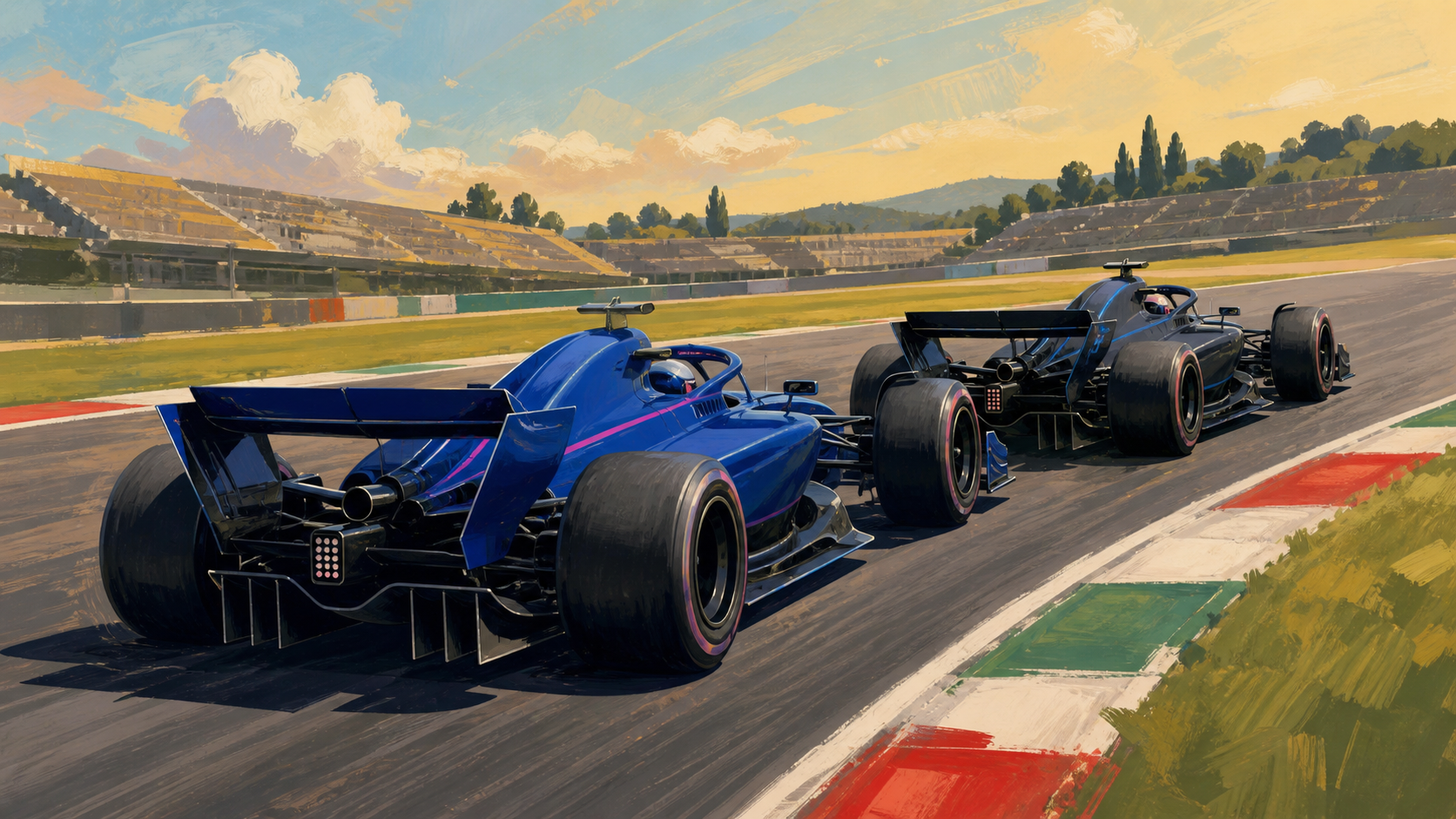
That was Alpine’s position at Zandvoort. Pierre Gasly received the team’s substantial post-shutdown package while Franco Colapinto ran the older A526. At Monza, that split ends. Alpine has confirmed that Colapinto will carry the same upgrade this weekend, giving its two established race drivers the first proper opportunity to test the package on equal terms.
It is a more consequential change than it sounds. Alpine says Gasly’s update worked as expected, but the Dutch Grand Prix offered only a partial answer: one car, a compressed Sprint weekend and a race shaped by a red flag. Monza will not make the comparison perfectly scientific—set-up, traffic, track evolution and driver preference still matter—but it removes the largest and least useful variable. If Alpine moves forward or stalls, it will be much easier to understand why.
Zandvoort supplied promise, not a verdict
The package was originally intended to reach both cars at Monza. Encouraging simulator work let Alpine accelerate one set to Zandvoort, where the team described it as an impactful, meaningful change. Gasly was P8 in Sprint Qualifying and said the car felt stronger and more responsive; Colapinto, driving the older specification, called the situation “bittersweet” even as he accepted its value for the team’s comparison work.
Those were useful signals, but not a conclusion. Gasly ultimately collected two points in the Grand Prix, and Alpine’s managing director Steve Nielsen said the team felt more had been possible. A weekend with mixed weather, a Sprint and a red flag is a poor place to turn a single-car delta into a headline lap-time figure.
What matters is the direction. Alpine had slipped behind Racing Bulls in the development race before the break, with Nielsen previously describing the fight as a development war. The Zandvoort package was the team’s response: revised aero surfaces intended to restore a car that had lost some of its earlier midfield authority. Gasly’s feedback suggested a gain; the return of a second matching package lets Alpine find out whether that gain travels.
Equal cars make the driver comparison fairer
This does not mean Gasly and Colapinto will suddenly produce a clean laboratory result. Formula 1 never does. A driver can prefer a different brake migration, take a different kerb, get a tow on one qualifying lap or lose a crucial run to a red flag. Monza’s low-downforce configuration will add another layer, because the team must trade corner stability against efficiency on long straights.
But equal hardware changes the value of the evidence. Until now, any direct comparison risked answering the wrong question: was a gap created by the driver, the setup, or the fact that only one car had the new floor and surrounding aero pieces? From Friday, those explanations are much less tangled.
For Colapinto, that is an opportunity rather than an obligation to beat his team-mate immediately. He already has 19 points from six scoring finishes this season, according to Alpine’s recent 2027 driver announcement, including a career-best sixth in Montreal. His first Formula 1 weekend came at Monza in 2024, so there is a useful element of familiarity too. The sharper test is whether he can learn the new platform quickly enough to give Alpine two credible routes into the points.
That matters because one fast car is often strategically lonely in the midfield. Two cars near the top 10 can split tyre plans, cover an undercut and make rivals choose which threat to answer. Alpine is not promising that outcome; Nielsen’s language is sensibly conditional, saying the package should provide a platform for both cars to contend while more extraction work remains. Still, a second comparable car makes the race team more capable even before it makes the car faster.
Monza is a demanding place to find the answer
The Italian Grand Prix is a harsh first equal-specification test. Formula 1’s new cars make energy deployment and straight-line efficiency especially visible at Monza, where long full-throttle runs turn small deficiencies into exposed seconds. Alpine will also hand Gasly’s FP1 seat to reserve driver Paul Aron, who has driven the latest package in the simulator and will return to Enstone after the session to help with setup work.
That creates both a complication and a useful extra layer. Gasly will have one fewer practice hour in the car, while Aron can offer the team a fresh reference between simulator expectation and track behaviour. It is not the sort of thing that wins a Grand Prix by itself, but in a close midfield it can determine whether a promising package arrives at qualifying properly prepared.
GearPulse’s August look at Alpine’s Zandvoort upgrade treated the package as a credibility test after a difficult development stretch. Monza moves it to the next stage. The question is no longer whether Alpine can deliver a serious update to one car; it is whether the operation can make both cars work with it when the circuit gives nowhere to hide.
Bottom line
Alpine has not solved its season merely by producing a second set of parts. Monza could still expose a weakness in efficiency, setup or execution, and the first weekend on matching hardware will not settle the Gasly–Colapinto comparison for good.
But it does create the cleanest evidence Alpine has had since the summer break. If both drivers can turn the Zandvoort promise into repeatable pace, the team’s late upgrade will look like a real route back into the midfield fight. If only one car thrives—or neither does—the diagnosis gets much more specific. In Formula 1, that clarity is often the first performance gain worth having.