
Weather forecasting is one of those technologies you only notice when it fails you.
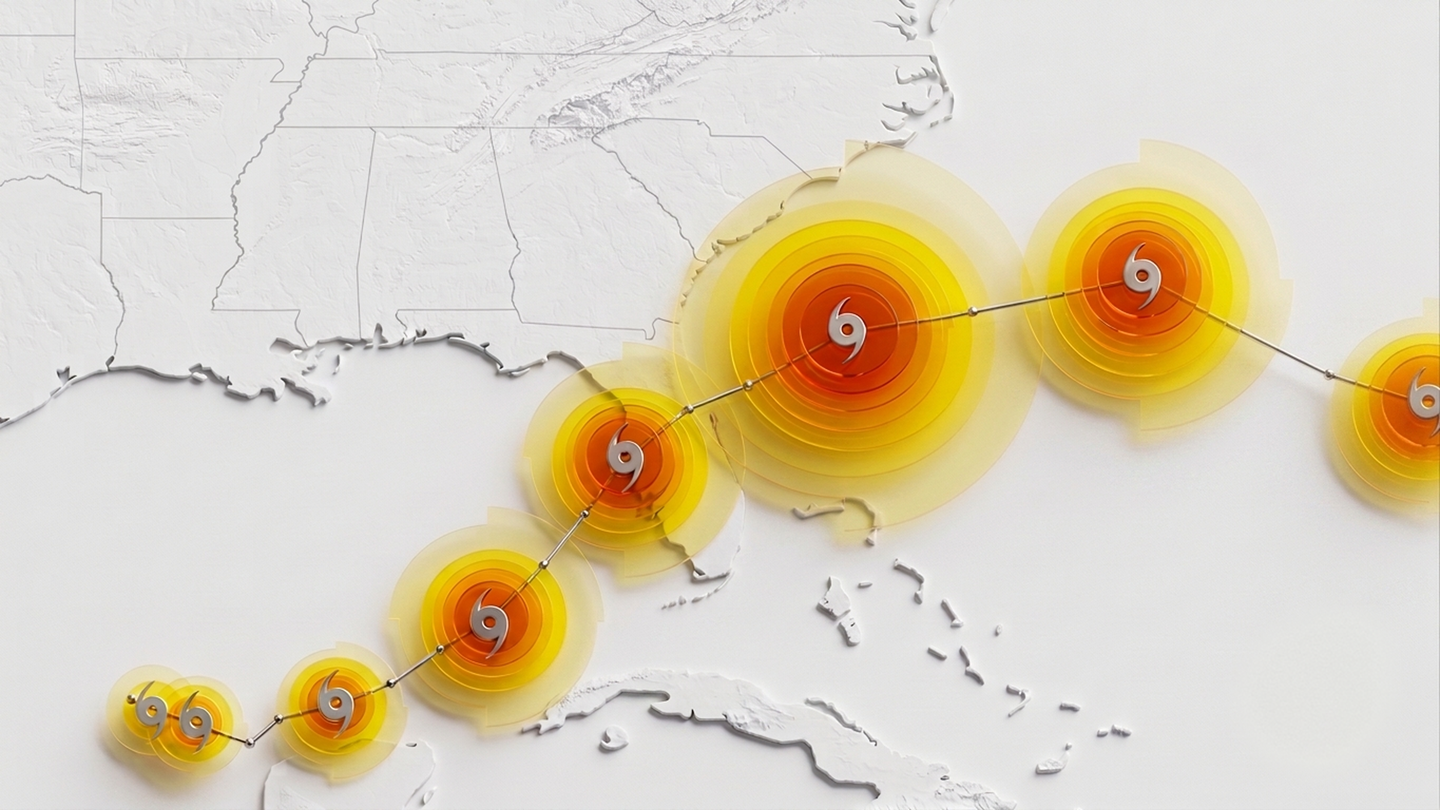
Google DeepMind and Google Research now say WeatherNext Cyclones can give forecasters roughly an extra day of useful warning for tropical cyclones. The claim is backed by a Nature paper published on August 6, 2026, an official Google DeepMind write-up, open-source code and model weights, and collaboration with forecasting experts including the National Hurricane Center, CIRA and the UK Met Office.
The headline will naturally become “AI predicts hurricanes earlier.” The more responsible read is better: AI may be giving human forecasters a longer clock.
That distinction matters. Nobody should make evacuation decisions from an experimental model page. But if a model helps expert agencies see possible tracks, intensity shifts and rare scenarios earlier, the value is enormous.
What Google is claiming
Google says WeatherNext achieved state-of-the-art accuracy for tropical cyclone track, intensity and wind structure. In plain English: it is trying to help with where a storm goes, how strong it gets and how its damaging wind field behaves.
The Nature abstract says WeatherNext Cyclones generates large ensembles of global weather and cyclone scenarios extending 15 days into the future. Evaluated on tropical cyclones from 2023 through 2025, the model delivered an average lead-time advantage of a day or more over leading operational models for track, intensity and wind-radii predictions.
Google’s version is easier to remember: three-day forecasts are as useful as what previous models managed at two days.
| Claim | Source-backed detail | Reader translation |
|---|---|---|
| Extra lead time | Average day-or-more advantage in Nature evaluation | More time for warnings, staging and preparation. |
| Forecast scope | Track, intensity, size and wind structure | Not just where the center line might go. |
| Ensemble scale | Up to 1,000 possible scenarios | Better odds of seeing low-probability danger early. |
| Open release | WeatherNext 2 and WeatherNext Cyclones code and weights on GitHub | Researchers can inspect, run and build on the work. |
| Official caveat | Google says official warnings should come from meteorological agencies | This is decision support, not a replacement weather service. |
The personal reaction is simple: an extra day sounds small until you imagine trying to move hospital patients, pre-position generators, close ports, protect a school district or decide whether a coastal community needs to leave.
Why the open-source part matters
AI weather models are not just another consumer feature. They touch public safety, emergency planning, insurance, shipping, energy and agriculture. That makes closed confidence a problem.
Google putting code and model weights in the WeatherNext repository is important because it gives researchers a way to inspect assumptions, reproduce work, compare outputs and find failure modes. The GitHub documentation lists WeatherNext 2, WeatherNext Cyclones and smaller variants, with pretrained weights and sample data available through Google’s cloud bucket.
That does not magically make the model neutral or perfect. It does make the scientific conversation healthier. Weather systems are too consequential for “trust us, the demo looks good” to be enough.
GearPulse recently covered Google’s NOAA cloud work, and the connection is obvious. Weather is becoming a compute story. Forecasting is no longer only about better satellites and traditional numerical models. It is also about who can move data, train models, run ensembles and put useful outputs in front of experts quickly enough to matter.
The caveat: storms still punish certainty
Hurricane forecasting is hard because storms are living systems. Small changes in water temperature, shear, dry air, pressure, eyewall structure or land interaction can make a forecast age badly.
That is why the most important sentence in Google’s material may be the least glamorous one: official forecasts and warnings should come from local meteorological agencies or national weather services.
The right future is not a Gemini-style answer telling people whether to evacuate. The right future is a forecaster with another strong instrument on the desk.
| What AI can help with | What still needs human authority |
|---|---|
| Generate many plausible storm scenarios quickly | Decide which risks become public warnings. |
| Spot track and intensity patterns in large datasets | Explain uncertainty in language people understand. |
| Extend useful guidance when time is scarce | Coordinate with emergency managers and local officials. |
| Make model outputs easier to explore | Own the consequences of public safety communication. |
That is the mature view. Better AI forecasts are not less human. They make the human part more important, because the last mile is judgment, communication and trust.
Why readers should care even far from hurricane zones
WeatherNext is a hurricane story today, but the shape of the technology is broader.
Google DeepMind’s WeatherNext 2 page says the model family is being used across Google’s weather ecosystem, including Search, Gemini, Pixel Weather and Google Maps Platform’s Weather API. It also points to access through Earth Engine, BigQuery and enterprise tooling.
That means AI weather is moving down two paths at once. One path is public-safety science, where agencies and researchers care about rare events and high-stakes warnings. The other is everyday product plumbing, where weather becomes a richer signal inside apps, logistics systems, energy tools and maps.
The opportunity is better decisions. The risk is forecast confidence becoming invisible background software.
Bottom line
WeatherNext Cyclones is compelling because it focuses on time, not spectacle.
An extra useful day in a cyclone forecast can change the rhythm of preparation. Open-source code and model weights give researchers something real to inspect. Collaboration with expert forecasters keeps the work connected to operational reality. And Google’s own caveat keeps the line clear: this is not an official warning system.
The best version of AI weather is not a chatbot telling people what to do. It is a better clock for the people who already carry the responsibility.
Support independent source-backed coverage at buymeacoffee.com/gearpulse.site.