
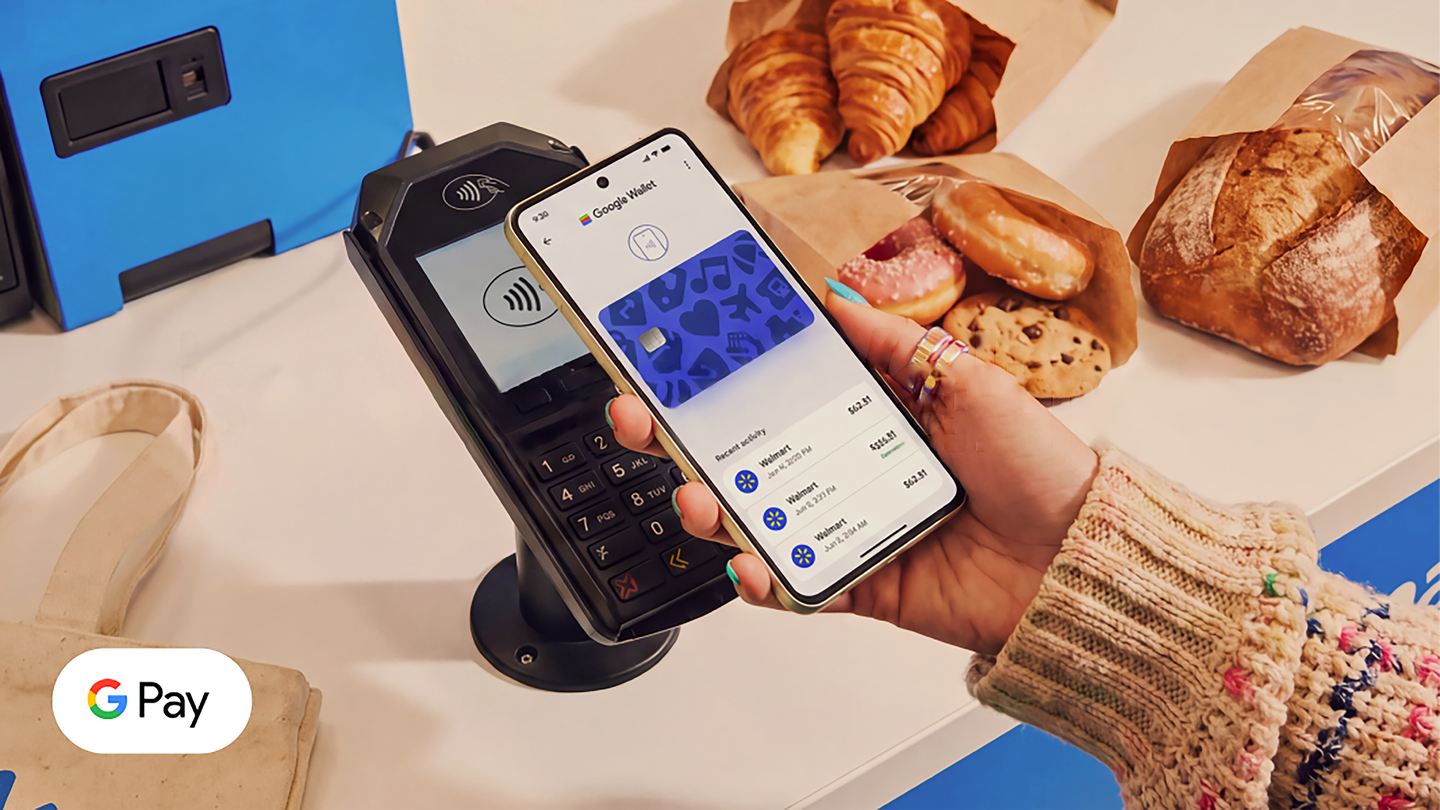
For years, one of the most ordinary rituals in American retail became oddly old-fashioned at Walmart: take out a physical card, insert or swipe it, or open the retailer’s own app. Starting August 24, that begins to change.
Walmart says Tap to Pay will arrive first at select Walmart stores and Sam’s Club locations in the U.S. The company’s stated timetable is broader availability across all U.S. stores and clubs by the end of 2026, then fuel stations by mid-2027. Google separately says Google Pay will be part of the launch. Walmart’s announcement is wider than one phone platform: it describes eligible contactless cards, phones and smartwatches.
The practical rule is still the boring but important one: the first wave is select locations, not a guarantee that every register will work on Monday. Treat the rollout dates as Walmart’s targets, and look for the contactless symbol at the terminal before leaving the physical card at home.
What is changing — and what is not
| Where | Walmart’s plan | What shoppers can use |
|---|---|---|
| Select Walmart and Sam’s Club locations | Begins August 24 | Eligible contactless cards, phones and smartwatches |
| U.S. stores and clubs | Planned by the end of 2026 | The same Tap to Pay methods, subject to rollout completion |
| Walmart fuel stations | Planned by mid-2027 | Contactless payment, once the fuel rollout reaches a site |
| Existing checkout options | Remain available | Cash, conventional card payment, Walmart Pay; Sam’s Club Scan & Go remains separate |
That last row matters. This is an additional checkout path, not an obituary for Walmart Pay or Sam’s Club Scan & Go. Walmart says customers can still use its app to pay and view receipts, while Sam’s Club members can keep scanning goods as they shop and bypass a conventional checkout line. Those systems solve different problems: a wallet tap is the fast default at a register; scan-and-go is a shopping workflow.
Why this is a bigger change than it looks
The announcement ends a conspicuous gap between the way phones and cards are designed to pay and the way the largest U.S. retailer’s checkouts have worked. Before this rollout, independent reporting from Money, MacRumors and 9to5Mac documented that U.S. Walmart stores did not accept Apple Pay, Google Pay, Samsung Pay or even ordinary contactless card taps; the retailer directed shoppers to its QR-based Walmart Pay instead.
That history makes the distinction in Walmart’s wording useful. The company is promising the method — Tap to Pay — rather than asking every shopper to adopt one wallet. Google’s guidance says a compatible Android phone can make in-store payments where the contactless or Google Pay marks are accepted, using a supported card. The same checkout hardware can also accept appropriately provisioned cards and other device wallets.
For shoppers, the gain is less about novelty than friction. A phone, watch or card that already works elsewhere can now become the fast option at a Walmart register too. It also means the payment choice does not have to begin with downloading a store-specific app and signing into it on the spot.
The rollout caveats are the story, too
Walmart has not published a store-by-store launch list in its announcement, so there is no reliable way to infer that a nearby location is in the first group. Nor does the announcement identify every supported wallet or every eligible card. Google Pay’s participation is confirmed by Google; Walmart’s broader language supports contactless cards, phones and smartwatches, but shoppers should not mistake that for a promise about a particular issuer, device setup or terminal before the rollout reaches their store.
There is a second timing distinction worth keeping straight. “By the end of 2026” is Walmart’s national store-and-club rollout plan, while fuel stations are on the later mid-2027 schedule. If contactless does not work at a location during the transition, the sensible fallback is still a physical card, cash, Walmart Pay or — at Sam’s Club — Scan & Go where available.
GearPulse has previously looked at Walmart’s EV charging network, another case where the retailer’s physical footprint becomes a consumer-tech surface. Payments are a much humbler example, but they touch more visits. A reliable tap at checkout is not a feature anyone should have to think about; that is precisely why its absence was so noticeable.
Bottom line
Walmart is not inventing a new way to pay. It is finally removing an unnecessary exception from a daily routine. The meaningful test now is execution: clear terminal signage, a rollout that actually reaches every store on schedule, and no surprise detours into an app when a card or phone is already in hand. If Walmart delivers that, the checkout will feel less like a retail ecosystem asking for allegiance and more like a modern place to buy groceries.