
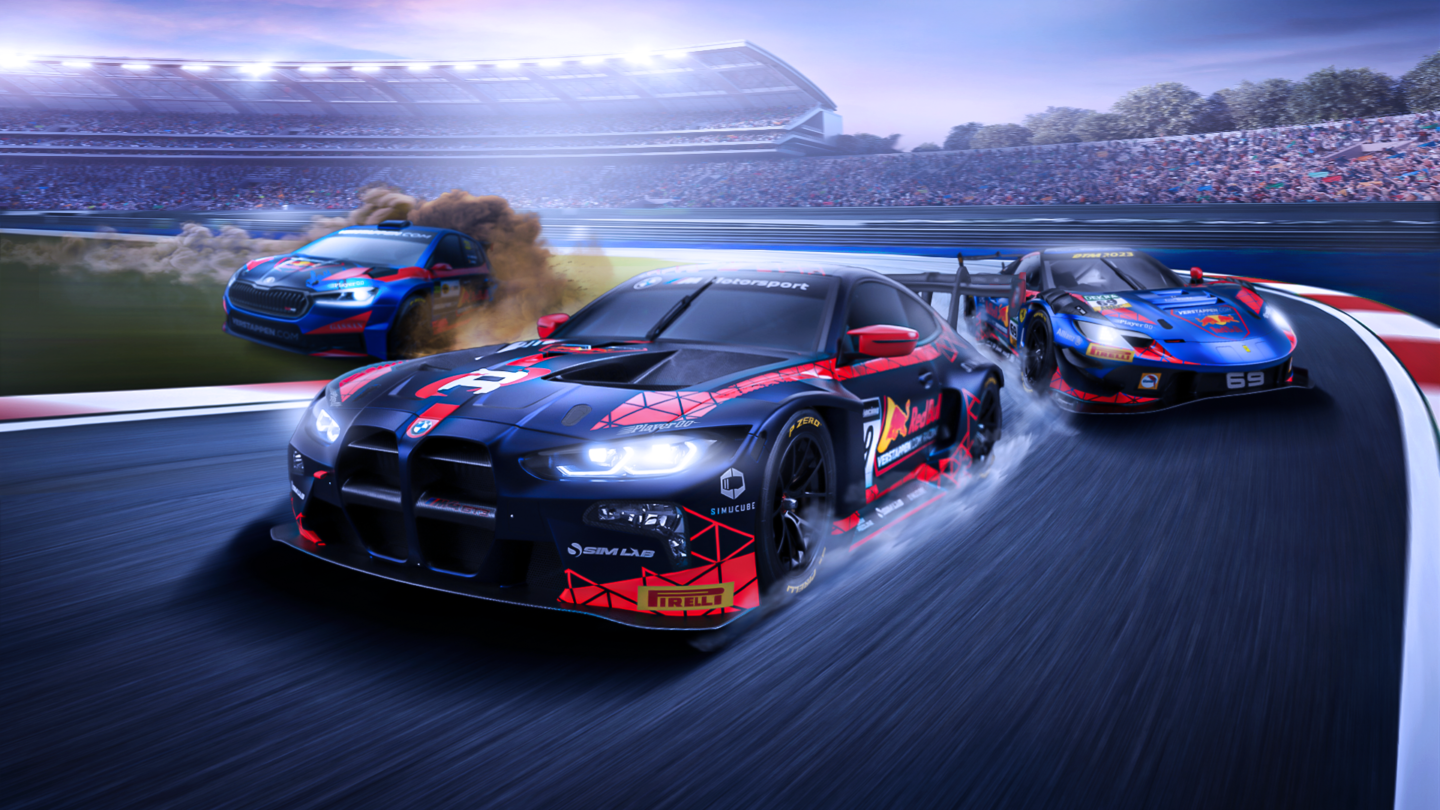
Max Verstappen has not announced a retirement date. He has not said Red Bull is finished. He has not promised Le Mans, the Nürburgring 24 Hours and a quiet life away from Formula 1.
What he has done is draw a sharper boundary around Verstappen Racing. In fresh coverage today, RacingNews365 Netherlands, Motorsport Week, RacingNews365’s English site and the Times of India all picked up comments from Verstappen in Formule 1 Magazine: his own racing operation is being built toward GT3 and endurance racing, not toward a future Formula 1 entry.
GearPulse’s view: this is today’s most interesting F1 story because the answer is more revealing than the question. Of course Verstappen Racing is not about to become the 12th F1 team. The useful part is why Verstappen rejects the idea. He does not frame it as impossible because of money, licensing or politics. He frames it as a workload and control problem.
That is a very Max Verstappen answer, and it says something uncomfortable about modern F1.
Why this rose today
This story cut through because it landed during the summer shutdown, when there are no practice times to hide behind and every driver-future signal gets louder.
The same-day source trail is unusually consistent. RacingNews365 Netherlands carried the fullest version of the Formule 1 Magazine remarks, including Verstappen’s point that a proper team owner cannot simply outsource the whole operation and disappear. Motorsport Week and RacingNews365’s English site repeated the core F1 denial for international F1 readers. The Times of India gave the story mainstream sports pickup, which is a useful trend signal even if it is not a specialist outlet.
There is also a primary-source foundation underneath the quote. Verstappen.com says Verstappen Racing’s 2026 Nürburgring 24 programme with Mercedes-AMG and Team Winward Racing was part of a longer-term GT3 and top-level endurance plan. A later Verstappen.com preview before his Nürburgring debut had Verstappen describing the team’s objective plainly: winning, not just participating.
The official Formula 1 calendar explains the pressure point. F1’s 2026 schedule is a 24-round championship, with the next race at Zandvoort on August 21-23 after the summer break. That size is now part of the story whenever a star driver talks about ownership, family time, alternative racing or life after the paddock.
This is not an exit rumour
The first caveat matters: Verstappen saying Verstappen Racing will not enter F1 is not the same as Verstappen saying he is done with F1.
He is still the central driver at Red Bull, still the sport’s most potent reference point when a car is difficult, and still a commercial force that F1 would rather keep close. GearPulse covered his Red Bull trust problem and exit-clause decision tree in July, but this is a different kind of signal. Those stories were about where Verstappen might race in F1. Today’s story is about what he refuses to make part of his racing life.
That distinction is why the story is worth taking seriously without turning it into a fake countdown clock.
Verstappen’s argument is almost managerial. Running an F1 team properly would pull him back into the same 24-race orbit he already criticizes as a driver. It would mean factories, sponsors, technical structures, recruitment, politics, travel, and the constant fear that the organisation is drifting while he is not there. For a driver who has always prized direct control, that does not sound like freedom. It sounds like a second version of the same machine.
Endurance gives him a different kind of control
Verstappen Racing’s real direction is more coherent than an F1-entry fantasy.
The official Nürburgring programme put Verstappen into a Mercedes-AMG GT3 with Dani Juncadella, Jules Gounon and Lucas Auer, supported by Red Bull and Mercedes-AMG Motorsport. That is not a vanity project. It is a serious endurance structure with professional drivers, established operational support and a route into races that reward preparation without demanding a grand prix team’s political scale.
The Nürburgring 24 is also a telling choice. At 25.3km, the Nordschleife is less like a modern F1 venue and more like a memory test at racing speed. It asks for traffic reading, darkness, changing grip, compromise setup and driver rotation. Verstappen’s sim-racing background becomes directly useful there, and his appetite for long-form competition makes more sense than another single-seater ladder.
That is the key comparison. F1 ownership would multiply complexity. Endurance ownership lets Verstappen shape a racing environment around performance standards, trusted people and categories where one well-run car or small programme can still feel personal.
The F1 calendar is the hidden villain
Formula 1’s 24-race calendar is not automatically too long for everyone. The sport has grown because more markets want races, promoters pay serious fees, and teams have learned to operate as global logistics companies.
But Verstappen’s answer exposes the human cost from a driver’s side. If running his own F1 team would feel like being dragged through another 24-race season, then the calendar is no longer just a sporting format. It is a deterrent to the kind of deep, hands-on involvement that racing people often say they want after driving.
There is a fun historical contrast here. Jackie Stewart built a Formula 1 team decades after retiring from the cockpit. Alain Prost bought into the old Ligier operation and carried the stress of being a champion turned team principal. Niki Lauda became a decisive senior figure at Mercedes without needing to own the whole structure. Verstappen’s path looks more modern: keep the racing, reduce the institutional drag, and build something that can win without becoming an F1 political actor.
That does not make him less ambitious. It makes the ambition more selective.
What it means for Red Bull
For Red Bull, the story is mildly awkward but not catastrophic.
Awkward, because Verstappen’s clearest long-term racing excitement keeps pointing outside Formula 1. His 2026 Red Bull season has already carried enough frustration around regulations, driveability and competitive momentum. Every endurance comment lands inside that wider mood, even when it is not meant as a direct threat.
Not catastrophic, because the practical read is simpler: Verstappen wants racing projects that give him energy, and an F1 team would not. That is not a Red Bull-specific rejection. It is a rejection of F1 ownership as a lifestyle.
The likelihood of Verstappen Racing ever entering Formula 1 now looks extremely low. GearPulse would put it below 10% as an editorial read, not a betting line. A larger GT3, Nürburgring, Spa 24 or eventual Le Mans-linked project looks much more plausible, especially if Verstappen can keep using his sim-racing and driver-development network as a pipeline.
The bottom line
Verstappen’s “no” to an F1 team is not a small administrative answer. It is a neat summary of how he seems to be designing his post-F1 world.
He still wants standards, pressure, elite drivers and races that matter. He just does not appear interested in recreating Formula 1’s calendar, politics and ownership burden under his own name.
That should matter to F1. When one of its defining drivers looks at team ownership and sees too much of the life he already has, the sport should hear more than a denial. It should hear a warning about how heavy the modern grand prix machine has become.