Stage 1 tuning has a funny reputation. Half the internet treats it like a harmless software update. The other half acts like one flash will turn your engine into a grenade with Bluetooth.
The truth is less dramatic and more useful: a Stage 1 tune is usually a request for the engine to use more of the margin it already has. On a modern turbo car, that often means more boost, different ignition timing, different torque limits, and sometimes revised throttle behavior. It can be excellent. It can also be lazy, hot, illegal, or expensive if the car underneath is not healthy.
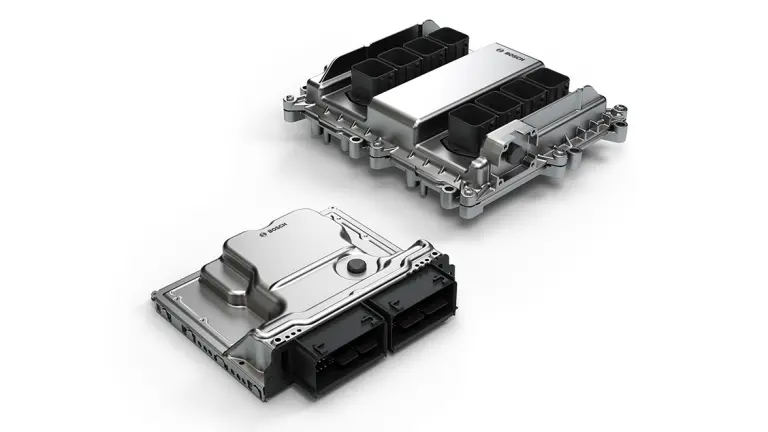
Bosch describes the engine control unit as the central controller of the engine management system. That is the important framing. A tune is not just “more fuel” or “more boost.” It changes the instructions being sent through the system that manages air, fuel, spark, torque, protection logic, and diagnostics.
What Stage 1 usually means
In normal tuning language, Stage 1 means software for an otherwise standard car. No bigger turbo, no upgraded fuel system, no built engine. On many turbo petrol and diesel cars, the tuner is mostly working with factory hardware and asking it to run a more aggressive calibration.
That can unlock real value because manufacturers leave room for fuel quality, hot climates, production variation, emissions targets, drivability targets, gearbox protection, and warranty buffers.
But margin is not the same as free power.
| Area | What changes | Why it matters |
|---|---|---|
| Boost target | Turbo is asked to make more pressure. | More torque, but also more heat and more turbo work. |
| Ignition timing | Spark timing may become more aggressive. | Better response if fuel quality is good, knock risk if it is not. |
| Torque limits | ECU or gearbox torque requests may be raised. | Stronger mid-range, but more clutch/gearbox load. |
| Fueling | Mixture targets may be adjusted. | Can protect parts under load, but poor calibration can run too hot or dirty. |
| Throttle mapping | Pedal response may be sharpened. | Feels faster even when peak power is not the main change. |
The best Stage 1 tune is not the one with the biggest dyno headline. It is the one that feels repeatable on a hot day, does not hide problems, and still behaves like a normal car in traffic.
ECU tune vs piggyback module
The two popular routes are a full ECU remap and a piggyback module. They are not the same thing.
| Choice | What it does | Strength | Trade-off |
|---|---|---|---|
| ECU tune/remap | Changes the calibration inside the ECU. | More complete control over boost, torque, timing, fueling, limiters, and diagnostics. | Usually harder to reverse cleanly, may be more visible to dealer diagnostics, and depends heavily on tuner quality. |
| Piggyback module | Sits between sensors and the ECU, modifying signals so the ECU reacts differently. | Easy to install/remove, often lower commitment, useful for conservative gains. | Less complete control, can rely on tricking sensor values, and may not integrate as cleanly with factory protection logic. |
Piggybacks have a place. They are not automatically “bad.” A conservative module on a healthy turbo car can give a useful bump without opening the ECU. That is why products like JB4-style and RaceChip-style modules exist.
But the weakness is also obvious: if the module is mainly changing what the ECU thinks it sees, it cannot always be as elegant as a calibration that directly edits the ECU’s torque, boost, fuel, timing, and thermal strategy.
Myths worth killing
“Stage 1 is always safe.”
No. Stage 1 can be safe-ish when the car is healthy, the tune is conservative, fuel quality matches the map, and maintenance is ahead of schedule. It is not safe by definition.
“The engine was detuned, so the power is free.”
Sometimes there is shared hardware across models, and sometimes there is real unused headroom. But the cheaper version may also have different cooling, clutch, injectors, turbo, gearbox software, emissions hardware, or quality targets.
“A piggyback leaves no trace.”
Removing the box is not the same as erasing history. Modern cars log faults, boost behavior, torque requests, temperatures, and adaptation data. Whether a dealer can prove anything depends on the car and situation, but “undetectable” is marketing language, not a guarantee.
“More boost means more power.”
Only until the system runs out of efficiency. Garrett’s turbo education material is a useful reminder that a turbo is a compressor driven by exhaust energy. Push it outside a comfortable range and you may get hotter air, more back pressure, and less repeatable power.
“A tune automatically voids the whole warranty.”
Warranty reality is more nuanced than forum shouting. A manufacturer generally has to connect a failure to a cause, but a tune gives them a very obvious thing to investigate. If the turbo, clutch, gearbox, catalyst, DPF, or engine fails after tuning, expect questions.
The value case
A good Stage 1 tune can be one of the best value upgrades on the right car. The reason is simple: software can improve the way existing hardware is used.
The best gains are usually not about top speed. They are about the 2,000-4,500 rpm zone where a daily driver actually lives. The car pulls harder without needing a downshift. Overtakes feel shorter. A heavy automatic feels less lazy. A turbo petrol hot hatch becomes more alert.
That is real value if the car is already healthy.
The wrong value calculation is looking only at the tune price. The honest budget includes:
- inspection before tuning
- fresh oil and filters
- spark plugs or coils if the engine is sensitive
- premium fuel if the map requires it
- gearbox/clutch margin
- better tyres if torque jumps noticeably
- diagnostic scans after a few weeks
If that makes the tune feel expensive, that is the point. Cheap power is only cheap when nothing else complains.
Safety checklist before tuning
Before any Stage 1 file or module, the car should earn it.
- Scan for stored faults.
- Check boost leaks, intake leaks, and vacuum lines.
- Confirm fuel quality expected by the map.
- Service oil, filters, plugs, and coolant if they are due soon.
- Check transmission behavior before adding torque.
- Ask whether emissions hardware remains functional.
- Ask for dyno logs or road logs, not just a peak number.
- Keep the stock file or removal path documented.
For diesels, be extra careful. Tunes that rely on deleting or disabling emissions equipment move from “performance upgrade” into a legal and environmental problem very quickly. The EPA is blunt about aftermarket defeat devices and tampering with emissions controls. Outside the U.S., the exact law changes, but the underlying risk is similar: if a tune disables required emissions systems, it is not just a harmless performance tweak.
A simple buyer rule
If the tuner talks only about horsepower, walk away.
The better questions are:
- What fuel is the map designed for?
- What torque limit is being requested?
- Is the gearbox calibration considered?
- Are catalyst, DPF, OPF, oxygen sensor, and EGR systems left working?
- Can I see before/after logs for boost, timing correction, intake temperature, and air-fuel behavior?
- What happens if the car underperforms or shows knock correction?
A serious tuner will not be offended by those questions. A serious tuner has heard them before.
Bottom line
Stage 1 tuning can be brilliant when it is boringly done: healthy car, known fuel, conservative calibration, working emissions equipment, and realistic expectations.
The goal is not to chase the biggest screenshot. The goal is a car that feels stronger on Monday morning, survives August traffic, passes inspection, and does not turn every service visit into a debate.
A tune is not magic. It is margin management. Treat the margin with respect and the upgrade can make sense. Pretend the margin is unlimited and the car will eventually correct that belief for you.
Support the site at buymeacoffee.com/gearpulse.site.