
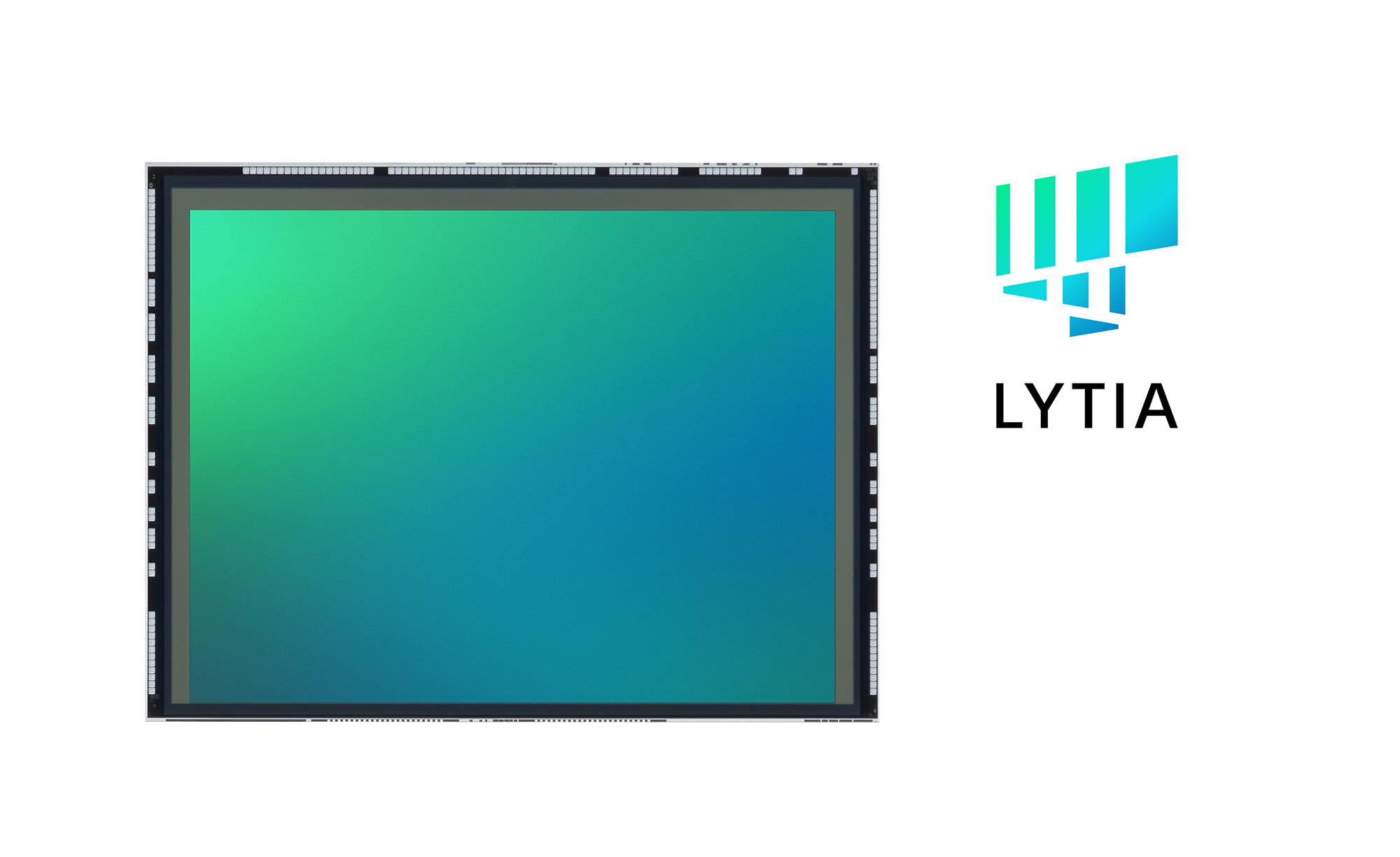
Sony’s LYTIA L910 sounds like another tiny camera part with a long spec sheet. It is more interesting than that.
The new sensor is a 1/1.28-type, roughly 50-megapixel mobile image sensor, but the headline is not the megapixels. It is Sony bringing LOFIC, or Lateral Overflow Integration Capacitor, into the LYTIA phone-camera line. In practical terms, Sony is trying to give smartphone cameras more room to hold bright and dark information in the same exposure, instead of leaning so heavily on multi-frame HDR tricks.
That matters because the hardest phone photos are rarely the clean, sunny ones. They are concerts, night streets, neon signs, sunsets, car headlights, windows, and moving subjects where one part of the frame wants to blow out while another part wants to disappear into noise.
What Sony announced
Sony Semiconductor Solutions says the LYTIA L910 can capture 100 dB dynamic range in a single exposure while keeping power consumption low enough for 4K HDR video at 60 fps.
The key specs look like this:
| Spec | Sony LYTIA L910 |
|---|---|
| Sensor class | Stacked CMOS for mobile |
| Optical format | 1/1.28-type, 12.49 mm diagonal |
| Resolution | Approx. 50 effective megapixels |
| Pixel size | 1.22 microns |
| Color filter | Quad Bayer Coding |
| HDR claim | 100 dB dynamic range in a single exposure |
| Video | 4K2K HDR up to 60 fps |
| Shipments | Planned for summer 2026 mass production |
Sony combines the LOFIC structure with Triple Conversion Gain HDR, which reads the charge from one exposure at three conversion gains. It also uses Ultra High Conversion Gain circuit technology, which Sony says cuts random noise by about 30 percent compared with its LYTIA 828 reference.
That is a lot of sensor jargon. The simpler version is this: Sony wants the sensor itself to carry more of the HDR workload.
Why single-exposure HDR matters
Most modern phone cameras already do HDR. The problem is how they do it.
Multi-frame HDR can look excellent when the scene is still. But when a person moves, lights flicker, or the phone has to merge frames quickly, artifacts can creep in. You get ghosting, smeared motion, weird halos, clipped highlights, or shadows that look over-processed.
Sony’s single-exposure pitch is different. By storing overflow charge and reading the same exposure in smarter ways, the LYTIA L910 should be better at preserving bright signs and dark streets at the same time. Android Authority framed the use case well: this is the sort of sensor that could help with difficult sunset and night scenes where today’s phones still sometimes look artificial.
This does not mean every future phone using the L910 will take brilliant photos. Lenses, stabilization, tuning, ISP processing, and the phone maker’s color science still matter. But the raw sensor foundation looks genuinely useful.
The video angle may be the bigger deal
Photos get the attention, but video is where this could be felt most.
Sony specifically calls out 4K HDR video at 60 fps with lower power consumption. That combination is hard because HDR video asks the sensor to keep dynamic range high while reading quickly and managing heat. If the LYTIA L910 can keep highlight detail, reduce flicker, and avoid burning battery as aggressively, it could be valuable for creators who shoot long clips, livestream, or record in city-night lighting.
It also fits where flagship phones are going. Phone makers already have enough resolution to market. The next useful camera war is consistency: fewer ruined shots, less overheating, better preview accuracy, and footage that does not collapse when the scene gets difficult.
What we do not know yet
Sony has not announced the first phone using the LYTIA L910. That is the missing piece.
The sensor is positioned for premium devices, and mass production shipments are planned for summer 2026. That timing means late-2026 and 2027 flagship phones are plausible candidates, but no specific Oppo, vivo, Xiaomi, Sony Xperia, or other model should be treated as confirmed until the manufacturer says so.
There is also the usual phone-camera reality check: a great sensor can be wasted by mediocre optics or messy processing. The LYTIA L910 gives phone makers a better tool. It does not guarantee a better camera app.
Bottom line
The LYTIA L910 is not exciting because it has 50 megapixels. That part is ordinary now.
It is exciting because Sony is attacking the part of phone photography that still feels least solved: high-contrast scenes with movement, bright lights, and dark detail. If LOFIC single-exposure HDR works as advertised in real phones, the upgrade should show up less as a spec-sheet brag and more as photos and videos that simply look less broken.
That is the good kind of camera improvement.