
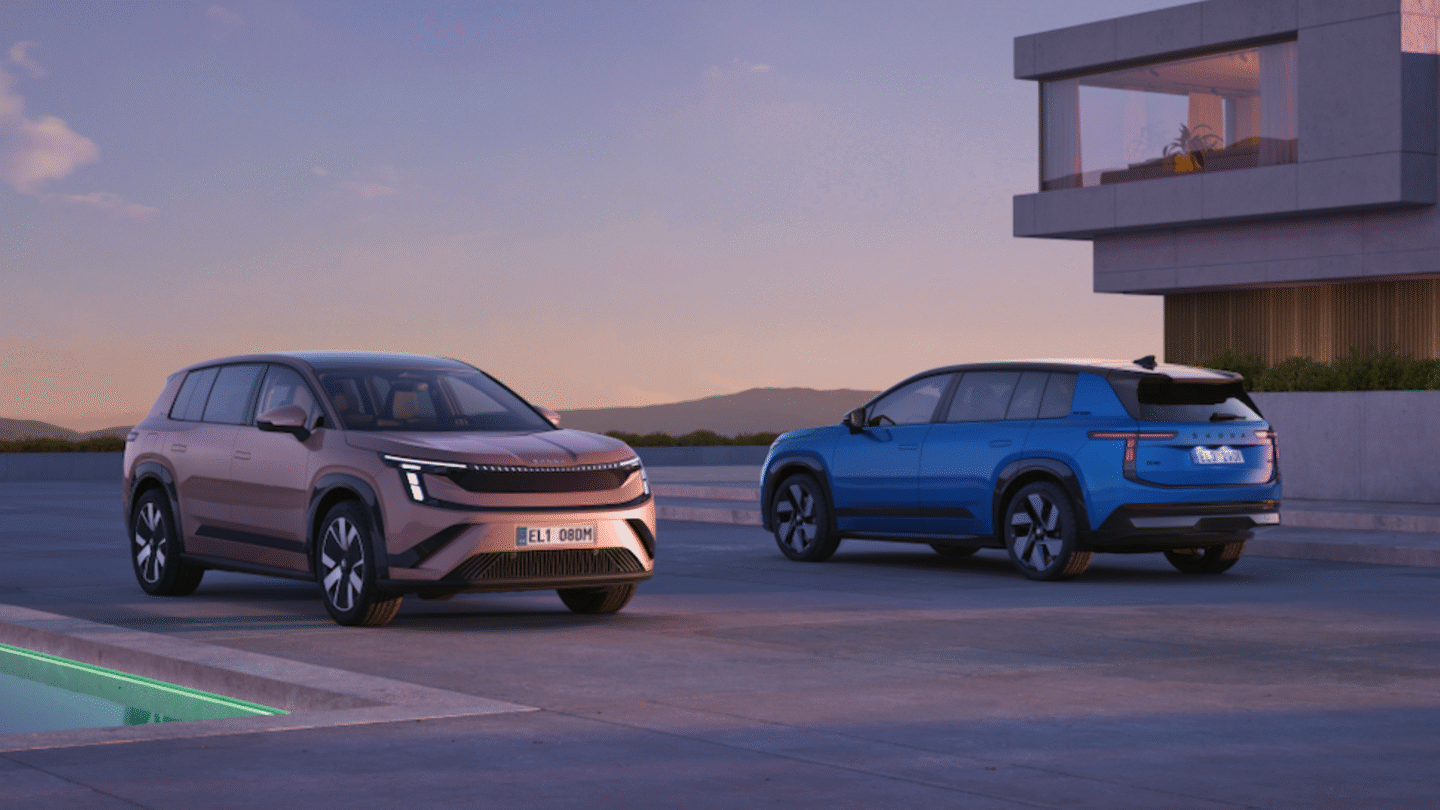
The Skoda Peaq is interesting because it is not trying to look like a spaceship.
That might sound like faint praise in 2026, but it matters. A lot of large electric SUVs still feel as if they are designed around the press image first and the family use case second. The Peaq goes the other way: seven seats, huge boot space, long range, real comfort features, and a shape that looks modern without becoming silly.
I like this car on paper. It looks good, and if Skoda keeps the ownership costs sensible, it could be one of the better big EV buys in Europe.
What Skoda actually revealed
Skoda positions the Peaq as its all-electric flagship SUV and the EV alternative to the Kodiaq. It is big by Skoda standards: 4,874 mm long, with a 2,965 mm wheelbase, seating for up to seven, and a much more lounge-like interior than the brand’s older family SUVs.
The practical numbers are the bit that make it feel like a Skoda rather than a badge exercise.
| Area | Official figure | Why it matters |
|---|---|---|
| Length | 4,874 mm | Nearly 4.9 metres, so this is a proper three-row SUV. |
| Wheelbase | 2,965 mm | More usable cabin length than a combustion platform can usually offer. |
| Boot, seven-seat layout | 299 litres | Enough that the third row does not destroy luggage space. |
| Boot, five-seat layout | Up to 935 litres | Estate-like practicality in a big SUV body. |
| Frunk | 37 litres | Useful for cables, wet gear, or dirty small items. |
| Claimed range | Over 600 km on larger-battery versions | Competitive if it survives normal motorway use. |
The powertrain range is also refreshingly straightforward. Skoda says the Peaq 60 uses a 63 kWh battery pack, with 59 kWh usable, and offers up to 440 km of range. The Peaq 90 and 90x use a 91 kWh pack, with 86 kWh usable. The rear-drive Peaq 90 gets a 210 kW motor, while the 90x adds a front motor for all-wheel drive.
That is not outrageous performance. Good. A big family EV does not need to pretend it is a sports car. It needs to be calm, efficient, comfortable, and easy to trust.
The design works because it is restrained
The front is the most important part of the Peaq. Skoda’s Tech-Deck Face, T-shaped lighting, and clean surfacing give it a recognisable EV identity without the overdone grille theatre some rivals still rely on.
The proportions help too. It looks tall and useful, but not boxy in a cheap way. It has enough shoulder and stance to feel like a flagship, yet the overall look is still functional. That is a hard balance to get right.
From the official reveal and the early walkaround videos, the interior seems to follow the same idea. There is a big 13.6-inch vertical screen, an augmented-reality head-up display, a 10-inch driver display, optional massage and ventilated seats, a Sonos sound system, and a huge segmented electrochromic panoramic roof.
The risk is that Skoda has moved too much into screen-first cabin logic. The Kodiaq and Superb’s clever physical Smart Dials are exactly the kind of thing a family car should keep. The Peaq appears to retain some physical controls, but this is one area I would want to test before calling the cabin a win.
It should be a very good buy, if Skoda prices it right
The UK page already lists Peaq Edition from GBP 55,130 and SportLine from GBP 58,280. That puts it into serious money territory, but not absurd money for a seven-seat EV with this much space.
The obvious rivals are the Kia EV9 and Hyundai Ioniq 9. Both have done the important work of proving that big, comfortable three-row EVs can be desirable without wearing luxury badges. The Skoda angle should be different: less showy, more practical, easier to live with, and hopefully cheaper to run.
That is why the Peaq could be compelling. If real-world range is strong, charging holds up, and the base trim is not stripped of the useful family features, this looks like the sort of EV people actually keep for years.
The caveats
There are still several things to watch.
| Question | Why it matters |
|---|---|
| Real motorway efficiency | A 600 km claim is useful only if long trips are not painful. |
| Third-row comfort | Skoda says it is spacious, but adult comfort needs real testing. |
| Software stability | A new Android-based infotainment stack must be fast and boringly reliable. |
| Price after options | The good version could drift too close to premium-brand money. |
| Charging curve | The 10 to 80 percent time is useful; the full curve matters more. |
Those are normal big-EV questions, not red flags.
Bottom line
The Skoda Peaq looks like the right kind of electric flagship: big, practical, clean, and clearly aimed at people who need space rather than people who want to perform wealth at a charging station.
My first reaction is positive. Very positive, actually. It looks good, the packaging looks clever, the range and boot numbers are strong, and the whole thing feels more useful than flashy.
If the real-world driving experience matches the spec sheet, the Peaq should be a very good buy for families who want a big EV without moving into luxury-brand nonsense.
Support the site at buymeacoffee.com/gearpulse.site.