
Formula 1’s summer break now has a calendar story big enough to compete with the Hungarian Grand Prix hangover.
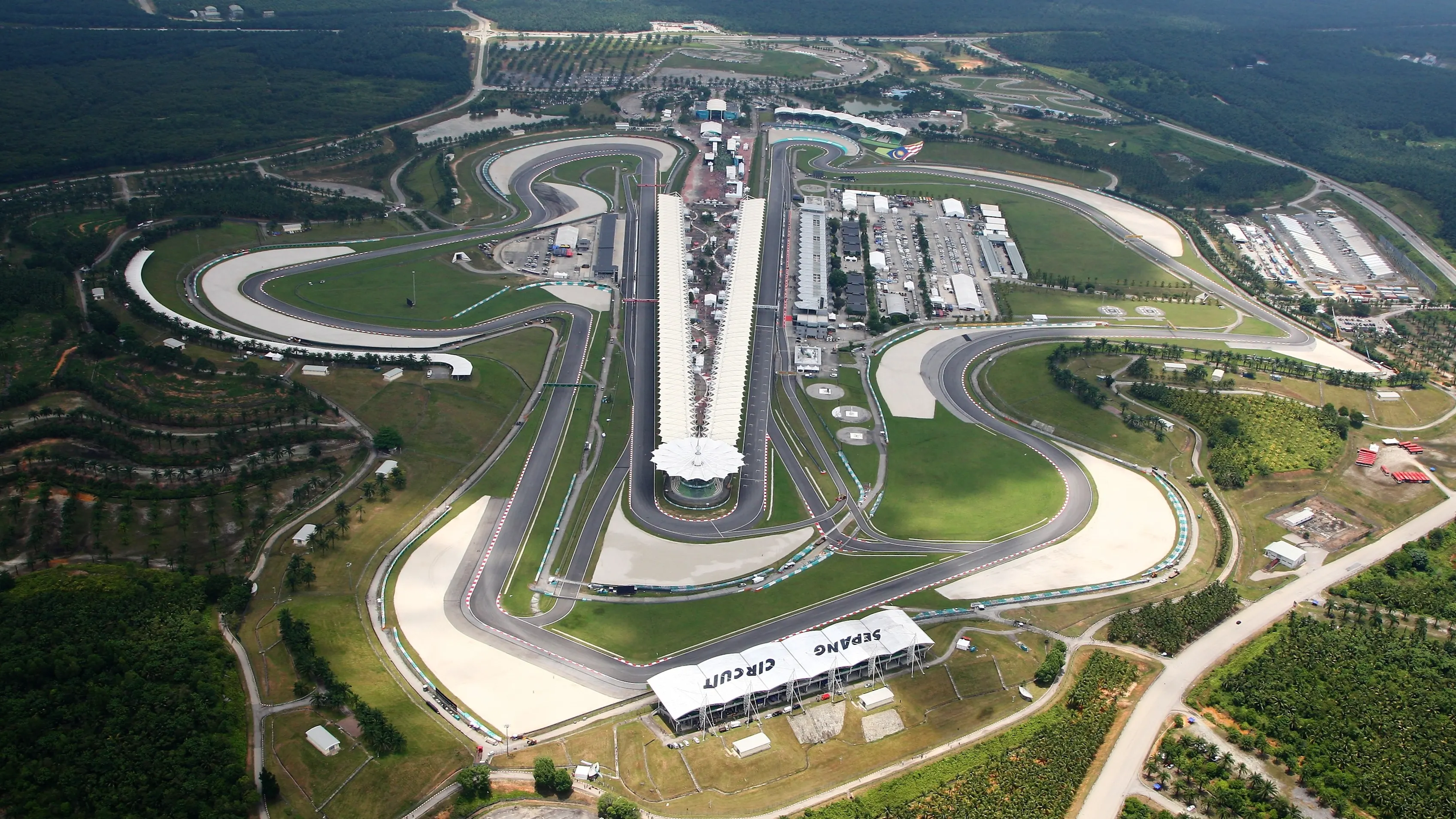
Formula 1 and the FIA have confirmed that Malaysia will host the 2026 Gulf Air Bahrain Grand Prix at Sepang International Circuit from October 2-4. The race slots between Azerbaijan and Singapore, keeps the Bahrain Grand Prix name, and still needs final agreements plus World Motor Sport Council approval before it is fully locked.
GearPulse’s view: this is the most interesting F1 story of July 27 because it is not just “Sepang is back.” It is F1 showing how it protects a global calendar when geopolitics, commercial commitments and race logistics collide. The upside is obvious: one of modern F1’s best circuit layouts returns for the first time since 2017. The caveat is just as important: a race called the Bahrain Grand Prix will happen in Malaysia because the original host window could not be safely recovered.
Why this rose above the rest
Yesterday, GearPulse skipped the Malaysia story because Lando Norris and McLaren’s Hungarian GP win had the stronger immediate sporting case. Today, that race result has already been covered, and the Sepang decision has become the cleanest non-duplicate story.
The source stack is strong. Formula 1 and the FIA published matching official confirmation. Mercedes republished the Formula 1 announcement for team audiences. Sky Sports F1, Speedcafe and Malaysian media picked up the same core facts, while Formula 1’s own social channels gave the return a visible fan-facing push. Sepang’s official site supplies the circuit fundamentals: 15 corners, eight straights and a 5.543 km lap.
That is enough substance for analysis because this decision touches three different F1 pressure points at once:
| Pressure point | What Sepang changes |
|---|---|
| Calendar stability | F1 keeps the Bahrain slot alive instead of losing another race. |
| Competitive texture | The grid gets a hot, humid, high-degradation circuit it has not raced since 2017. |
| Team logistics | Azerbaijan, Malaysia and Singapore become a demanding three-week run across very different tracks. |
It also has trend logic. The official announcement landed just before the post-Hungary break, was repeated by major F1 outlets, and has a built-in nostalgia hook: Sepang is not a generic replacement venue. It is a circuit many fans actively missed.
This is not a normal calendar addition
The wording matters. Formula 1 says Malaysia will host the Formula 1 Gulf Air Bahrain Grand Prix at Sepang, not that the Malaysian Grand Prix has returned as a standalone national race.
That makes the event unusual. The commercial identity remains tied to Bahrain, while the racing surface, weather, timezone and fan base shift to Malaysia. Sky Sports F1 reports that Bahrain is funding the race, while the FIA and F1 frame the move as a way to preserve a Grand Prix that otherwise would not have happened. Malaysian reporting adds another useful layer, saying Prime Minister Anwar Ibrahim described Malaysia’s main cost as Sepang upgrade and maintenance work rather than a conventional hosting fee.
The likely reading is pragmatic rather than romantic. F1 wants a full-looking calendar, Bahrain wants to protect its Grand Prix presence, Malaysia gets a high-profile return without taking on the same old cost structure, and teams get a real circuit instead of a blank weekend.
The caveat is approval. Formula 1’s own announcement says the event remains subject to final agreements and World Motor Sport Council sign-off. Sky calls that step close to a formality, but the official caveat should stay in the story until the calendar paperwork is completed.
Sepang is a serious sporting substitute
As a replacement venue, Sepang is not filler.
The circuit is long by current F1 standards at 5.543 km. It has 15 corners, eight straights, heavy braking into Turn 1, long loaded corners, big traction demands and the kind of heat-and-rain volatility that can turn a neat strategy model into guesswork. Formula 1’s official announcement describes it as challenging and weather-sensitive, which is the polite version of the old Sepang truth: the place punishes weak cooling, rough tyre use and hesitant setup work.
That is why this is more interesting than moving a race to a safer but blander layout. Sepang asks questions Bahrain would not ask in the same way.
| Factor | Bahrain International Circuit | Sepang International Circuit |
|---|---|---|
| Race identity in 2026 | Official Bahrain GP name and commercial structure. | Actual host venue and racing surface. |
| Track personality | Stop-start traction, rear tyre stress, desert conditions. | Fast corners, humidity, sudden weather and long straights. |
| Calendar placement | Original early-season race was lost. | October triple-header between Baku and Singapore. |
| Strategic risk | Degradation and braking stability. | Cooling, tyre temperature, rainfall timing and travel fatigue. |
For teams, that changes the second-half test. A car that works at Baku’s street layout and Singapore’s slow-speed, high-downforce night race is not automatically safe at Sepang. The Malaysia weekend can expose aero efficiency, ride compromise, cooling margin and tyre recovery across a much more open lap.
The triple-header is the hidden problem
The headline is Sepang’s return. The operational story is the Baku-Sepang-Singapore sequence.
Sky and Speedcafe both point out that Malaysia sits between Azerbaijan and Singapore, creating three consecutive race weekends. That is a tough route even before the sporting variables. Baku is a low-downforce street-circuit trap with long straights and close walls. Sepang is hot, fast and weather-exposed. Singapore is slow, humid, bumpy and physically draining.
That sequence will stress teams in ways a normal replacement race might not:
| Team area | Why the run is hard |
|---|---|
| Freight and spares | Street-circuit damage in Baku has to be absorbed before a long-haul Malaysia round. |
| Cooling packages | Sepang and Singapore both punish marginal thermal planning, but in different lap profiles. |
| Driver recovery | Three humid weekends in a row compress sleep, adaptation and physical reset time. |
| Upgrade validation | Teams have little breathing room to interpret Baku data before Sepang-specific decisions. |
GearPulse’s probability read is that the race happens as announced, because F1 and the FIA would not have gone public without strong political and commercial alignment. Call it an 80-90% likelihood from here, with the remaining risk sitting in formal approval, event delivery and regional-calendar uncertainty rather than sporting willingness. That is editorial analysis, not betting advice.
Who benefits most?
The easy answer is fans. Sepang is a better sporting gift than most emergency calendar substitutions.
The more useful F1 answer is less clear. McLaren should like a circuit with real aero and tyre-management content if its Hungary upgrade travels. Mercedes will care about whether its 2026 car can survive another hot, energy-sensitive weekend without turning reliability into driver frustration. Ferrari gets a layout where qualifying rhythm and long-corner balance can matter, but only if it stops converting pace into penalties and procedural damage. Red Bull and Max Verstappen get a venue where racecraft, weather and strategic patience can narrow a car deficit.
For the midfield, Sepang might be even more valuable. A hot, changeable circuit can lift teams that are good on tyres and expose teams that rely on clean qualifying more than race consistency. Aston Martin’s recent upgrade push, Williams’ correlation work, Audi’s long-term build and Cadillac’s learning season all get a less familiar measuring stick.
The October placement matters because the development race will be mature by then. Sepang will not be an early-season curiosity. It will arrive after teams have spent months learning the 2026 rules, just as championship pressure and parts limits start narrowing the options.
Fun facts
Sepang hosted 19 consecutive Formula 1 Malaysian Grands Prix from 1999 to 2017. Formula 1’s 2017 result sheet shows Max Verstappen as the last F1 winner there, ahead of Lewis Hamilton and Daniel Ricciardo.
The circuit was one of the defining early Hermann Tilke-era venues. Its wide layout, huge main complex and long straights became a template for a generation of modern permanent circuits, but Sepang always had one thing many later designs lacked: genuinely unpredictable tropical weather.
This also creates one of the oddest naming quirks of the 2026 season. If the plan is completed, the Bahrain Grand Prix will be held in Malaysia, one week before the Singapore Grand Prix.
Skipped candidates
Oscar Piastri’s Hungarian GP frustration had fresh Guardian and mainstream pickup after his race unravelled, but GearPulse already handled his traffic contact, gearbox retirement and McLaren pressure inside yesterday’s Norris article. A standalone Piastri piece today would risk repeating the same race angle without a new team decision.
Andrea Stella praising Norris’s maturity was a useful McLaren follow-up, but it was softer than the calendar story and too close to yesterday’s Norris/McLaren win analysis.
George Russell’s difficult first half remained a strong Mercedes subplot after another poor start sequence in Hungary. GearPulse has already published Russell diagnostic and software-fix pieces in the past week, so it needs a materially new Mercedes admission or technical update before another lead article.
Another Antonelli title-lead article would be defensible on sporting relevance, but recent Spa and Hungary coverage has already used Antonelli as a central reference. Today, Sepang offers the fresher angle.
Bottom line
Sepang’s return is good news for racing, but it is also a reminder that the 2026 calendar is being actively managed, not simply executed.
F1 has found a clever compromise: Bahrain keeps its Grand Prix identity, Malaysia gets a serious one-year return, and fans get a proper circuit instead of a missing weekend. The sport still needs final sign-off, ticket details and a clean operational run through a brutal Baku-Malaysia-Singapore triple-header.
GearPulse’s bottom line: Sepang is the right kind of emergency answer. It gives F1 a real race, not just a saved date.