
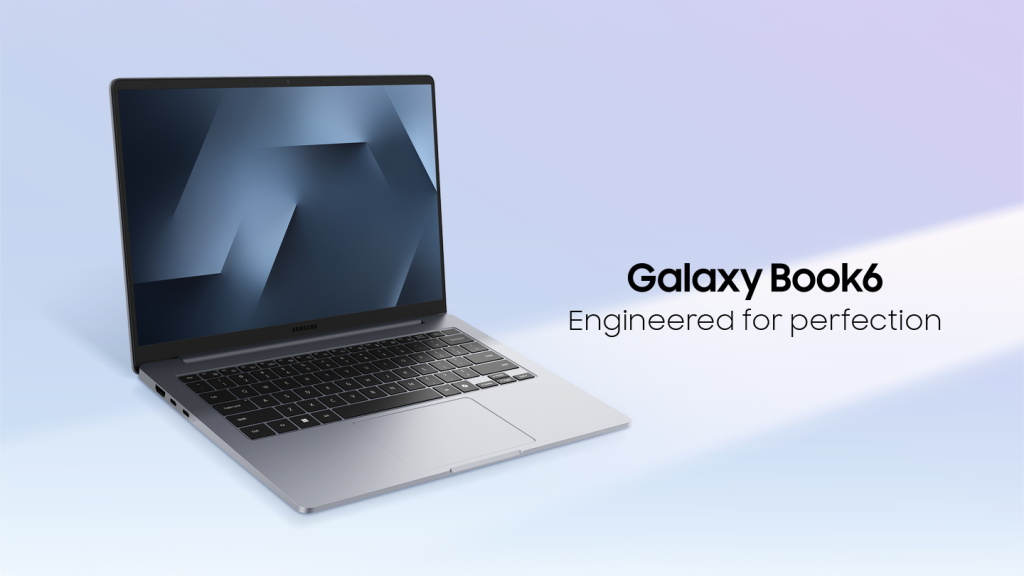
Budget laptops usually advertise the wrong virtues. They chase a heroic battery number, a fashionable AI label or an aggressively low price, then make the ordinary work of attaching a screen, flash drive or headphones feel like a tax on buying cheaply.
Samsung’s new Galaxy Book6 is interesting because it is deliberately less glamorous. Starting at £799 in the UK, it is a 14-inch Windows notebook built around the stuff a work-and-study machine should get right before it starts promising a new computing era: usable proportions, a non-reflective screen, and ports that do not require a backpack of adapters.
That is not enough to make every configuration a bargain. The entry model’s 8GB of memory is already a constraint for anyone who keeps lots of browser tabs, creative tools and video calls alive at once. But the Galaxy Book6 makes a credible case that the practical middle of the laptop market still deserves thoughtful hardware.
The spec sheet is modest in the useful places
Samsung lists a 14-inch, 1,920 × 1,200 LCD with a 16:10 aspect ratio, 350-nit brightness and an anti-reflective finish. That is plainly not an OLED showcase panel, nor is it a brightness champion. It should, however, show a little more of a document or web page than a conventional 16:9 screen, and the matte treatment is a welcome choice for trains, classrooms and bright rooms.
| Specification | Galaxy Book6 | Why it matters |
|---|---|---|
| Starting UK price | £799 RRP | A real entry point, though configuration and regional pricing vary. |
| Display | 14-inch LCD, 1,920 × 1,200, 350 nits | Good working shape; not a premium display specification. |
| Size and weight | 15.7mm, 1.35kg | Portable without pursuing an impractically thin design. |
| Memory and storage | 8GB/16GB LPDDR5X; 256GB/512GB PCIe in the UK | Choose 16GB if multitasking is part of the job. |
| Battery and charging | 61.2Wh; 45W USB-C | Samsung claims up to 25 hours of video playback, which will not equal mixed use. |
| Ports | 2× USB-C, USB-A, HDMI 1.4, 3.5mm audio | The unusually grown-up part of the package. |
Samsung says its two USB-C ports offer the same functionality. That sounds unremarkable until you remember how many inexpensive laptops make one port the “real” charging or display connection and leave buyers to find out afterward. Pair that symmetry with USB-A, full-size HDMI and a headphone jack, and the Book6 looks made for people who still need to plug into projectors, wired accessories and existing displays.
The battery claim deserves the right amount of skepticism
Samsung advertises up to 25 hours of video playback from the 61.2Wh battery. It is a useful directional promise—especially alongside a 45W USB-C charger—but it is not a full-day guarantee in every workload.
Video playback is a favorable battery test: fixed content, relatively predictable hardware use and often lower interaction than a browser-heavy workday. Web apps, video calls, display brightness, peripherals and background synchronization will all move the result. Windows Central, T3 and TechSpot each report the claim, while also treating the machine as an everyday laptop rather than a benchmark chaser. That is the right frame.
What matters more before independent testing arrives is that Samsung did not use the thin chassis as an excuse to strip the battery, ports or 16:10 display. The Book6 appears to make a sensible compromise: enough capacity to aim for endurance, no proprietary charging dependence, and no pretense that one test figure describes every owner’s day.
Galaxy AI is an extra, not the purchase decision
The Book6 includes Samsung features such as AI Select, AI Cut Out and Note Assist, plus the familiar Galaxy-device conveniences: Quick Share, Multi Control, Storage Share and second-screen support for a compatible Galaxy Tab.
Those integrations can be genuinely handy for someone already carrying a Galaxy phone or tablet. They are less persuasive as a reason to choose the laptop on their own. The Intel NPU is rated by Samsung at up to 15 TOPS; this is not a machine positioned as a Copilot+ PC or a local-AI workstation. Buyers should value the ordinary experience first—keyboard, memory, screen, ports and support—and treat the Galaxy extras as a bonus.
That distinction also keeps the comparison with a MacBook Neo honest. The Book6’s appeal is not that it has discovered a new category of performance. It is offering a larger 14-inch display, more built-in connectivity and a familiar Windows setup at an accessible starting price. Whether that is better depends on the software and devices already on your desk.
Who should choose it, and who should wait
The Book6 makes the most sense for a student, office worker or frequent traveler who needs a light Windows laptop that can connect directly to real-world equipment. The 16GB configuration is the safer purchase if it will be used for sustained multitasking; 8GB will feel restrictive sooner than Samsung’s polished product page suggests.
People editing high-resolution video, compiling large projects, gaming seriously or expecting a brilliant display should look higher in the range. The Core 5 processor, integrated graphics and 350-nit LCD point to a machine designed to be dependable, not dramatic.
Samsung says the Book6 is available in the UK now in Grey, with Violet Silver coming soon; availability and configurations vary by market. So do not import a spec sheet from another region and assume the same memory, storage or processor option applies locally.
Bottom line
The Galaxy Book6’s best idea is refreshingly unglamorous: a budget-friendly laptop should make everyday connections easy. Two equivalent USB-C ports, USB-A, HDMI and a headphone jack are more valuable than another vague AI promise when you are trying to finish actual work.
At £799, the caveats are real—especially the base 8GB memory and ordinary LCD. But Samsung has aimed its compromises in the right direction. Get the 16GB version if the price remains sensible, wait for independent battery testing, and the Book6 could be one of the more practical Windows choices in its class.