
Romania is starting to matter to SpaceX in a way that looks practical, not ceremonial.
The best evidence is not a rumor and not a politician’s vague tech-language promise. It is ANCOM’s paper trail.
The relationship started with regulation, not launch theatre
In July 2024, ANCOM and SpaceX/Starlink ran what the Romanian regulator described as a first-of-its-kind real-world test in Romania to revisit old satellite coordination rules. ANCOM said the test could demonstrate roughly an eight-times capacity increase for Starlink over the test area compared with today’s limits.
That is a serious sentence.
It means Romania was not only a market where Starlink could sell service. It was being used as a live proving ground for how non-geostationary satellite systems might be allowed to operate more efficiently under updated rules.
The 2026 signals got stronger
By March 2026, ANCOM said its delegation at Mobile World Congress had met with Gwynne Shotwell, President of SpaceX, and David Goldman, the company’s Vice President. According to ANCOM’s own release, the discussions focused on cooperation projects of mutual interest and on the opportunities Romania offers through its regulatory framework, skilled technical workforce, and facilities for foreign investment.
That reads less like a courtesy meeting and more like business development wrapped in regulation.
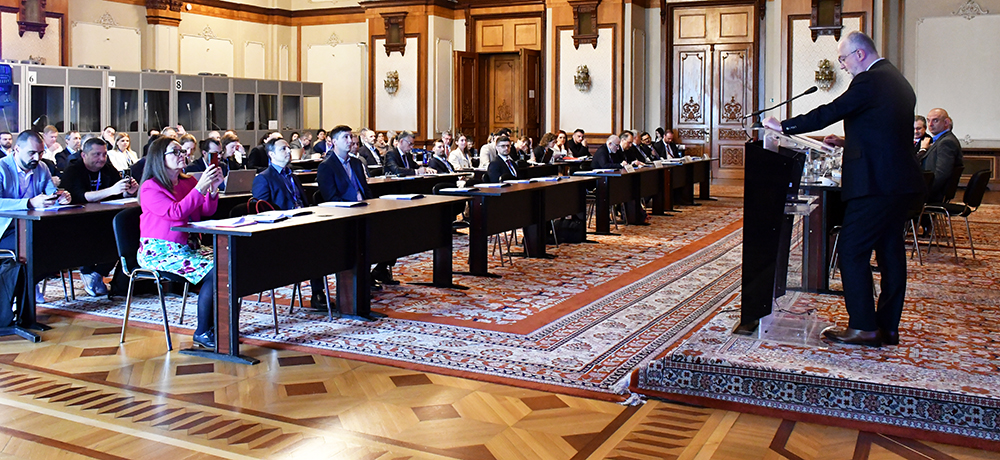
Then in May, ANCOM’s Digital Communications and Media Forum in Bucharest put satellite connectivity directly on the agenda again. ANCOM said the integration of space communications was a central topic and specifically listed SpaceX among contributors alongside Amazon, the Romanian Space Agency, and ANCOM itself.
What kind of partner Romania is becoming
| Signal | Why it matters |
|---|---|
| 2024 ANCOM-Starlink test | Romania became a live regulatory test site for satellite rule changes. |
| March 2026 MWC meetings | SpaceX and Romanian officials were discussing cooperation in formal business terms. |
| May 2026 forum participation | Space communications moved into Romania’s wider digital-policy conversation. |
| June 16, 2026 investment reporting | The local economic relationship may already be larger than many assumed. |
Romania is not becoming a SpaceX partner in the same way a launch state or manufacturing hub would. At least not yet. The evidence points to something narrower and still important: a country that gives SpaceX room to test regulatory assumptions, grow Starlink capacity, and deepen local ties where policy and infrastructure meet.
Why that matters beyond Romania
Satellite internet is now a policy problem as much as a technology product.
The real bottlenecks are spectrum rules, coexistence with older systems, national approvals, defense sensitivities, and how governments decide to balance incumbents with new entrants. A country willing to help stress-test those questions becomes more valuable than its market size alone might suggest.
Romania fits that role surprisingly well. It has technical talent, a regulator that wants a voice in next-generation connectivity debates, and enough geopolitical relevance that successful tests there are hard to ignore.
Bottom line
Saying Romania is becoming an important SpaceX partner is slightly too dramatic if it implies a grand strategic alliance.
Saying Romania is becoming a real SpaceX and Starlink testbed is more accurate, and the official record supports it. That may sound smaller, but for satellite connectivity policy in Europe, it is probably the more consequential story.