
Red Bull’s most important move of the summer break might not involve Max Verstappen’s contract, a new floor or another active-aero experiment.
It might be a talent scout.
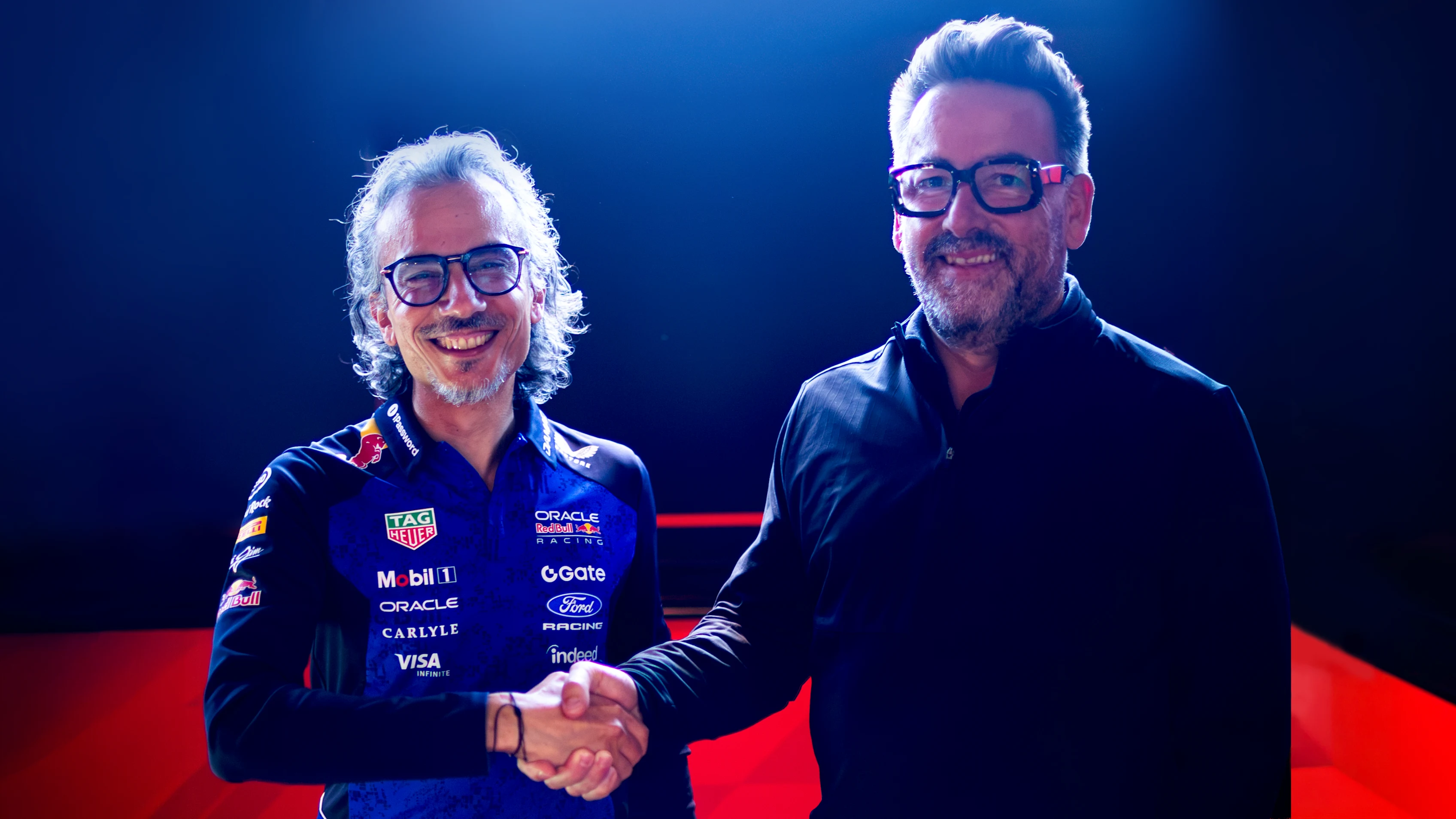
Oracle Red Bull Racing has announced that Gwen Lagrue will become Director of the Red Bull Junior Programme from 2027, reporting to CEO and team principal Laurent Mekies and joining the leadership team. Formula 1’s own report frames the move plainly: Lagrue is leaving Mercedes after more than a decade and will take over the pipeline space vacated by Helmut Marko’s departure at the end of 2025.
GearPulse’s view: this is the most interesting F1 story of July 28 because it is not a normal staff hire. Red Bull is borrowing one of Mercedes’ strongest quiet advantages just as Mercedes is leading the championship with two drivers developed through its own system. If Red Bull wants to stop depending on Verstappen to turn incomplete cars into big results, rebuilding the next-driver machine is not background work. It is strategy.
Why this rose above the rest
The story has the source stack a Daily Dose needs. Red Bull confirmed the appointment directly, named Lagrue’s 2027 role and placed him under Mekies. Formula 1 amplified the move and connected it to Marko’s exit. Motorsport.com and RacingNews365 reported the Mercedes departure and the Red Bull approach. The Race and AS added the wider significance: Red Bull has taken the scout most associated with Kimi Antonelli’s early identification and Mercedes’ modern junior ladder.
It also has good timing. The Hungarian Grand Prix fallout has already produced GearPulse articles on McLaren’s win, Ferrari’s execution problem and Mercedes’ software/energy questions. Yesterday’s piece handled the Sepang calendar return. A softer Norris or Piastri follow-up would risk repeating the same race conclusions. Lagrue’s move is fresher because it shifts the focus from one weekend to the next several seasons.
That matters in a 2026 grid where long-term talent planning is visible every Sunday:
| Team | Current signal | Why the Lagrue move matters |
|---|---|---|
| Mercedes | Kimi Antonelli leads the drivers’ standings and George Russell remains a front-line reference. | Both are proof that the Mercedes junior system produced real F1 value. |
| Red Bull | Max Verstappen remains the ceiling, but the team’s post-Marko structure is still settling. | Lagrue gives Mekies an experienced operator for the next generation. |
| Racing Bulls | Arvid Lindblad gives the Red Bull ladder a current F1-level output. | The question is whether the ladder can keep producing, not just promote once. |
| McLaren and Ferrari | Both are now real race-winning or title-pressure teams. | Red Bull cannot assume the market will hand it the next elite driver. |
The trend logic is strong enough too. Formula 1 carried the story prominently, specialist outlets repeated it quickly, and the social-media hook is obvious: the person credited with helping Mercedes shape Antonelli now joins the rival system trying to rebuild after Marko.
This is Mekies putting structure around the rebuild
Red Bull’s official announcement is careful, but the hierarchy is the important part.
Lagrue will report directly to Mekies and join the leadership team in 2027. That makes the appointment bigger than a back-office academy role. Red Bull is placing driver development inside the same organisational rebuild that has followed Christian Horner’s exit, Marko’s retirement and the team’s uneven first half under the 2026 regulations.
Mekies also knows Lagrue, and Red Bull says the pair share an established relationship. That matters because junior programmes are partly about judgement and partly about politics. Identifying a fast teenager is hard. Convincing families, sponsors, junior teams, F2/F3 operations and an F1 team principal that the plan is worth patience can be harder.
Helmut Marko’s old model was brutally simple: find rare speed early, apply pressure, promote quickly, and accept a high rejection rate. It produced Sebastian Vettel, Max Verstappen, Carlos Sainz, Daniel Ricciardo, Alex Albon, Pierre Gasly and many others, but it also created a reputation for sharp exits and limited emotional cushioning.
Lagrue’s Mercedes background points to a different operating style. Mercedes built a smaller, more managed programme that helped move Esteban Ocon, Russell and Antonelli into F1. It did not flood the grid every year, but when it landed, it landed with high-quality outcomes.
GearPulse’s read is that Red Bull is not trying to become Mercedes. It is trying to add Mercedes-style talent development discipline to a Red Bull ladder that already has reach, brand power and a proven path to F1 seats.
Mercedes loses more than a name
The Mercedes side should not be exaggerated. One person leaving does not empty a junior programme, and RacingNews365 reported Toto Wolff saying Mercedes had a broader team of roughly seven to nine people working on the programme. That caveat matters.
Still, Lagrue’s departure is not trivial. Motorsport.com notes that Mercedes credited him in its farewell message for helping develop young drivers including current F1 drivers Russell and Antonelli. Formula 1 says Lagrue helped discover Antonelli during his Mercedes tenure. Mercedes’ own older recruiting feature describes him as the person in charge of the junior programme for aspiring drivers.
That is why the timing is awkward for Mercedes. Antonelli is not a theoretical prospect anymore. He is the championship leader at the summer break, with a 50-point cushion after Hungary according to the post-race standings reported by AP and reflected in Formula 1’s race coverage. Russell is still a race winner this season, even if recent starts and energy-deployment problems have dented his side of the garage.
Mercedes can absorb the loss if its process is mature. But it has still lost a senior talent identifier to a rival that already has a direct promotion structure through Racing Bulls and Red Bull Racing.
The practical question is succession. If Mercedes has institutionalised Lagrue’s methods, the academy carries on. If too much of the judgement sat in one person’s network and feel, the loss may show up three or four years from now, not next weekend.
Why Red Bull needed this
Red Bull’s driver machine has not stopped working, but it has stopped feeling inevitable.
Verstappen remains elite. Isack Hadjar has given the team useful second-car evidence. Arvid Lindblad’s promotion through the Red Bull family keeps the ladder visible. Formula 1’s Lagrue article also points to Nikola Tsolov as a future top-tier prospect. There is talent in the system.
The issue is confidence in the system after Marko. Red Bull’s academy was not just a list of drivers. It was an identity: ruthless scouting, early contracts, clear pressure and a believable route to Formula 1. When the person most associated with that identity leaves, the team has to show the pipeline is bigger than one voice.
Lagrue helps answer that.
He gives Red Bull an external benchmark from the programme that produced its current title rival. He gives Mekies a senior operator who understands the karting-to-F1 pathway. He also gives Red Bull a less sentimental way to evaluate its own juniors: not “who looks like the next Verstappen,” but who has the technical feedback, adaptability, mental load and sponsor-free speed to survive modern F1.
That is especially important under the 2026 rules. These cars are not simple driver-confidence machines. They ask young drivers to learn active aero states, energy deployment, tyre temperature windows and software-driven race behaviour at the same time. A junior programme that only selects for raw speed can miss the drivers who think quickly enough to make the modern car usable.
The Red Bull probability read
This hire does not guarantee Red Bull’s next champion. It does make the team’s post-Marko rebuild more credible.
GearPulse’s editorial probability read: there is a 70-80% chance Lagrue materially changes Red Bull’s junior programme culture within two seasons, because he is being installed high in the structure and because Mekies is explicitly tying the role to the team’s future. That does not mean a new Red Bull race winner appears by 2028. Driver pipelines work on longer timelines, and the best prospects are already attached to rival academies years before F1 fans know their names.
The near-term effect is more likely to be selection discipline:
| Decision area | What Lagrue can change |
|---|---|
| Karting and F4 scouting | Earlier reads on who has adaptable technique, not just headline wins. |
| F3/F2 placement | Better matching of drivers to teams, engineers and pressure environments. |
| Racing Bulls promotions | Clearer criteria for when a junior is ready for F1 mileage. |
| Red Bull Racing succession | Less dependence on panic-buying the market if Verstappen ever leaves. |
The caveat is Red Bull’s internal pressure. A good academy leader still needs time, budget and patience from the senior team. If the F1 operation remains volatile, even strong junior planning can be forced into short-term driver churn.
Fun facts
Red Bull’s junior programme is one of the most productive in modern F1 history. Vettel, Verstappen, Sainz, Ricciardo, Albon and Gasly all came through the Red Bull system in different ways, even if their long-term careers took very different routes.
Mercedes’ modern academy is smaller but unusually efficient at the top end. Russell and Antonelli both reached the works team, while Ocon became a Grand Prix winner elsewhere after coming through the Mercedes-backed path.
The funny twist is that Lagrue joins Red Bull because Mercedes did its talent job too well. Antonelli’s rise has made the Mercedes academy look valuable enough for Red Bull to raid.
Skipped candidates
The Norris/Piastri Hungary follow-up had mainstream and specialist pickup, including Norris arguing that McLaren had the pace for a one-two. GearPulse already covered Norris’s win and Piastri’s retirement on July 26, so a standalone article today would mostly repeat the same McLaren performance-versus-reliability point.
Ferrari’s Hungarian GP execution criticism was tempting because Fred Vasseur’s post-race comments and Hamilton’s penalties kept the theme alive. GearPulse published Ferrari’s Hungary Friday-control test on July 25 and folded the Sunday damage into the Norris race article, so it needs a new team decision or technical explanation before leading again.
Mercedes’ Russell start/software data remained a strong technical thread, but GearPulse already ran Russell diagnostic and software-fix pieces on July 21 and July 23. Without a materially new Mercedes admission, another article would be too repetitive.
Verstappen’s Hungary second place and Red Bull strategy had good specialist analysis value. It lost out because Red Bull’s Lagrue hire is a broader, officially confirmed organisational story rather than another race execution review.
Bottom line
Red Bull hiring Gwen Lagrue is a quiet move with loud implications.
It does not fix the RB22, settle Verstappen’s future or make the next Red Bull champion appear on schedule. What it does do is give Laurent Mekies a credible post-Marko builder for the part of Red Bull that has historically mattered most: finding elite drivers before everyone else can buy them.
GearPulse’s bottom line: if Mercedes’ 2026 title bid is the proof that junior development can win at the front, Red Bull just hired someone who helped build that proof.