
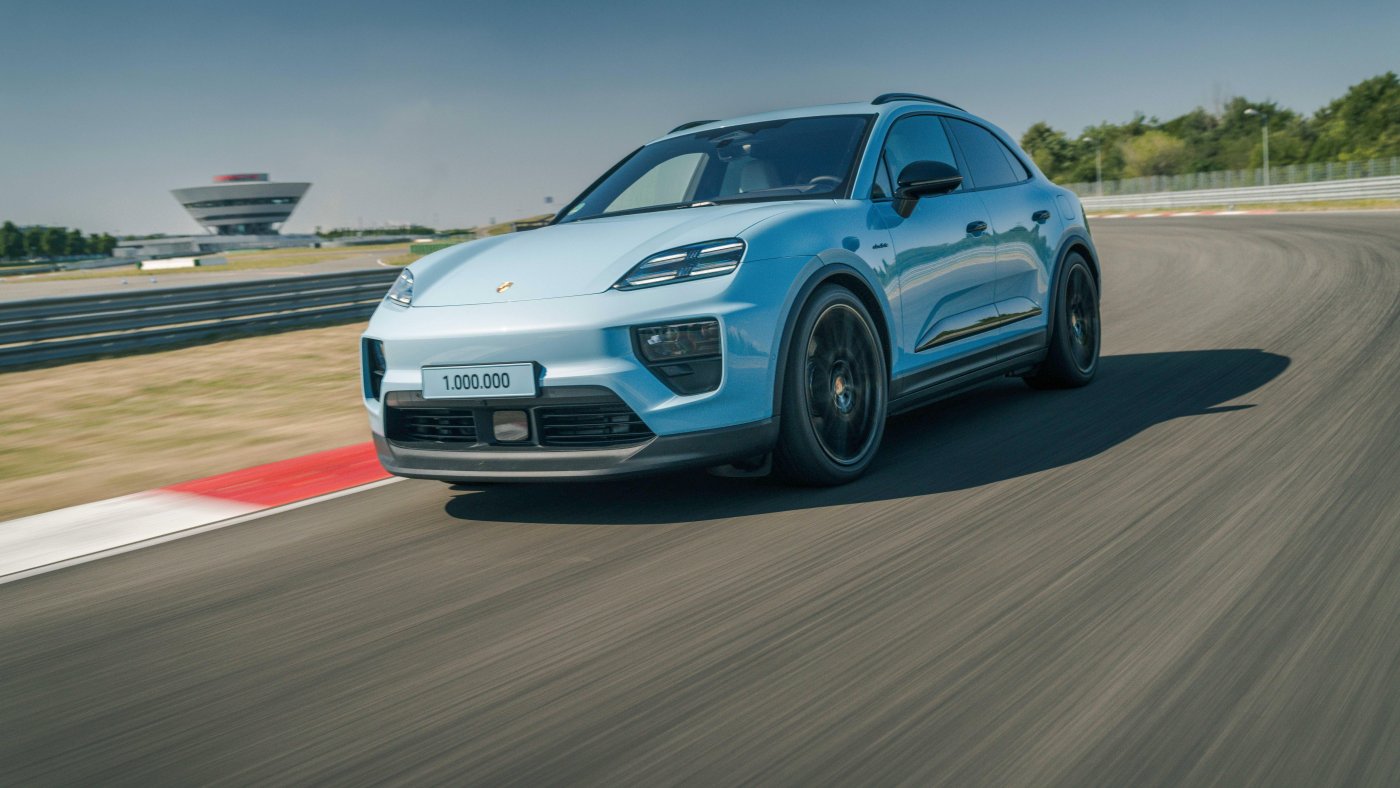
The gas-powered Porsche Macan is moving from showroom staple to last-call model.
Porsche has said combustion-engined Macan production will continue only until summer 2026, while the second-generation Macan has already moved to a fully electric architecture. The timing is awkward in the useful way: the old Macan is still emotionally and commercially important, but the market Porsche is pushing it into is no longer treating premium EVs as automatic wins.
GearPulse’s view: this matters because the Macan is not a vanity supercar. It is one of the models that made modern Porsche volume possible. If Porsche can electrify the Macan without making buyers feel pushed into a compromise, the transition looks credible. If it cannot, the gap between sports-car brand logic and SUV-buyer behavior gets very visible.
What Porsche has confirmed
Porsche’s first-quarter 2026 delivery update put the shift plainly. The company delivered 60,991 vehicles worldwide in Q1, down 15 percent from the prior year. Porsche attributed that decline partly to the end of combustion 718 production, last year’s strong all-electric Macan ramp-up effect, and the end of U.S. tax incentives for electric and hybrid vehicles.
More important for shoppers: Porsche said production of the combustion-engined Macan would continue until summer 2026. The company also said Q1 Macan deliveries totaled 18,209 units, split between 10,130 combustion variants and 8,079 all-electric models.
| Macan signal | Public figure or claim | Why it matters |
|---|---|---|
| Combustion Macan production | Continues until summer 2026 | The current gas model is entering its final production window. |
| Q1 2026 Macan deliveries | 18,209 total | The nameplate remains a major Porsche volume model. |
| Q1 combustion Macan deliveries | 10,130 | Gas demand is still meaningful outside the EU. |
| Q1 electric Macan deliveries | 8,079 | The EV version is real volume, not a concept-car footnote. |
| Leipzig milestone | One million Macans produced by July 2025 | This is a core Porsche business story, not a niche variant story. |
Kelley Blue Book and MotorTrend both framed the same practical takeaway: production is ending, but remaining inventory may keep gas Macans available after the factory stops building them. That distinction matters for buyers. “Production ends” does not always mean “you cannot buy one tomorrow.”
The Macan is Porsche’s difficult middle ground
The Macan lives in a tricky part of Porsche’s lineup. It is not the emotional icon that the 911 is. It is not the large-family flagship role that the Cayenne plays. It is the daily-driver Porsche: compact enough for cities, premium enough for status, and useful enough to justify itself to people who might never buy a two-seat sports car.
That is exactly why the switch to electric is so revealing.
An electric Macan can be quick, quiet and technically impressive. Porsche’s own production and milestone materials show the electric model is deeply integrated into Leipzig, where the factory can build combustion, hybrid and electric vehicles on one line. But buyers do not experience platform strategy. They experience price, charging access, residual values, range confidence and whether the car still feels like the thing they meant to buy.
| Buyer question | Why the gas-to-EV switch sharpens it |
|---|---|
| Do I have reliable charging? | A Macan often serves as the household’s practical car. |
| Will resale values hold? | Premium EV residual anxiety is still real. |
| Is the EV version priced like an upgrade or a replacement? | Porsche options can quickly move the car into a higher bracket. |
| Does it feel like a Porsche? | The Macan’s appeal is daily usability with brand character. |
| Is there a future gas successor? | Reports point to future combustion/hybrid thinking, but not an immediate one-to-one replacement. |
The audience relevance is simple: if you are shopping for a compact luxury SUV, this is one of the clearest moments yet where the old and new Porsche strategies overlap on dealer lots.
The EV transition is not running on hype anymore
A few years ago, a premium EV badge could carry a lot of the conversation. In 2026, that is harder. EV buyers are more informed, incentives are less dependable, charging expectations are higher, and luxury shoppers have more alternatives.
That does not make the electric Macan a mistake. It makes the job more honest.
Porsche’s own Q1 explanation points to the risk. The company cited the end of U.S. tax incentives for electric and hybrid vehicles as one reason for lower deliveries. That is not a Porsche-only problem. It is the broader premium-EV market learning that policy, charging and product timing all matter.
The gas Macan’s final stretch also creates a short-term buyer split.
| Buyer type | Likely reaction |
|---|---|
| Last combustion loyalist | Wants a final gas Macan before production ends. |
| Early EV adopter | Sees the electric Macan as the more future-proof model. |
| Used-market watcher | Waits to see how gas and EV residual values settle. |
| Porsche loyalist | Cares whether the electric model preserves steering, cabin and chassis character. |
| Practical family buyer | Compares charging reality against rival gas, hybrid and EV SUVs. |
GearPulse’s opinion: Porsche’s challenge is not convincing people that EVs can be fast. That argument is over. The harder task is convincing Macan buyers that the electric version is the normal one, not the experimental one.
What to watch next
The next useful signals are less dramatic than the production headline.
Watch how much gas Macan inventory reaches North America and how long it lasts. Watch whether dealers discount electric Macans or hold pricing. Watch lease terms, because leasing is often where premium EV uncertainty shows up first. Watch whether Porsche talks more openly about future combustion or hybrid compact SUVs, because a long gap can become a sales problem if EV demand softens.
Porsche has earned patience from enthusiasts, but not a free pass from practical buyers. The Macan built its reputation by being the Porsche that fit ordinary life. The electric Macan has to win the same argument under different conditions.
Bottom line
The end of gas Macan production is relevant because it turns Porsche’s EV transition from a future-tense strategy into a buyer-facing decision.
The combustion Macan is not disappearing because it failed. It is leaving after becoming one of Porsche’s most important modern nameplates. That raises the standard for its electric successor.
GearPulse’s read: the electric Macan does not need to imitate the old one perfectly. It does need to feel like the default answer for the same kind of customer. That is a harder test than acceleration numbers, and it is the test Porsche now has to pass.