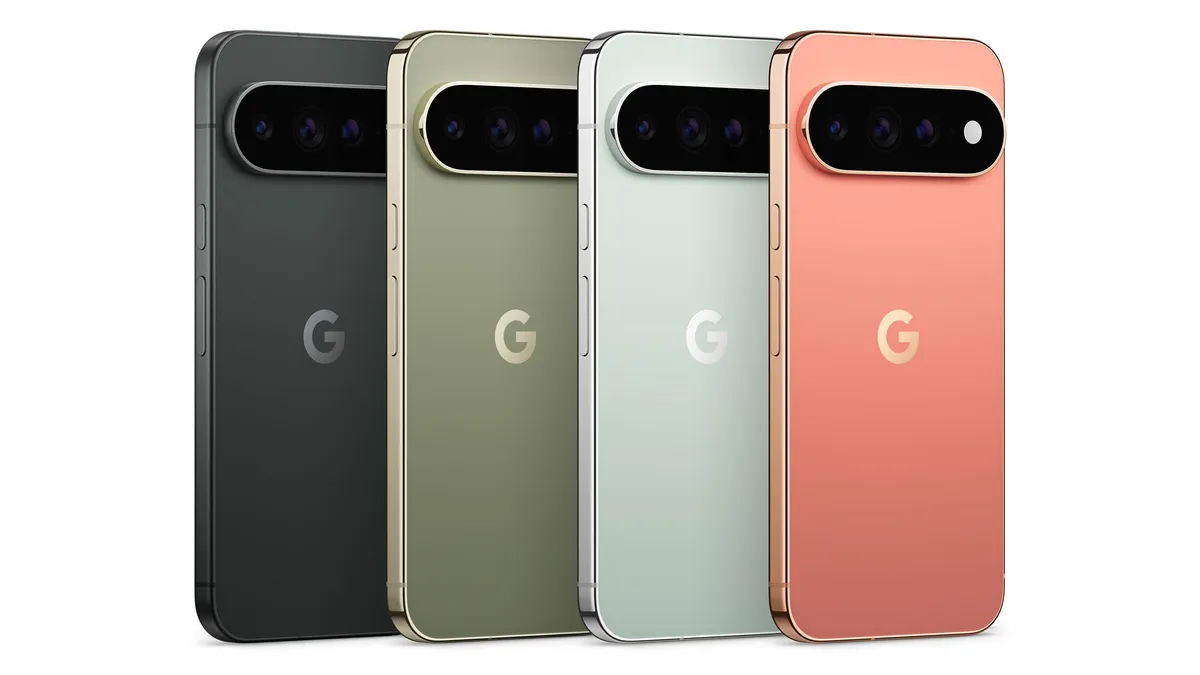
The Pixel 11 Pro has a funny problem: it is the serious Pixel, but the most memorable new thing may be a light.
Google’s Pro phones now get HiLight, a set of colored LED lights built around the camera flash. It can glow when Gemini is listening, thinking or responding, and Google says incoming calls can use custom colors for important contacts. Message notifications from favorite contacts are also planned for later.
That sounds small until you think about what Google is trying to do. Pixel 11 Pro is still the camera and display flagship, but HiLight gives the Pro a physical behavior that the regular Pixel 11 does not have. It makes the phone less like a silent slab and more like an object that can communicate without dragging your eyes back to the screen.
My read: this is the right kind of odd. The Pro phone market is packed with giant displays, long zoom claims and expensive titanium-adjacent confidence. A little colored camera-bar intelligence is more Pixel than another empty performance boast.
The official Pro story
Google sells Pixel 11 Pro and Pixel 11 Pro XL as the top slab phones in the lineup. The two sizes share the Pro identity, while the XL adds the bigger canvas and Google’s fastest wired charging claim in the family.
| Pixel 11 Pro detail | Official launch claim |
|---|---|
| Starting price | $1,099 for Pixel 11 Pro, $1,299 for Pixel 11 Pro XL |
| Availability | Pre-order August 12, on shelves August 20 |
| Storage floor | 256GB across the Pixel 11 phone lineup |
| Processor | Google Tensor G6 |
| Display | Super Actua, up to 3,600 nits peak brightness |
| Durability | More than double scratch resistance versus Pixel 10 Pro, per Google internal testing |
| Main camera | Brand-new main sensor, described by Google as Pixel’s best camera yet |
| Telephoto | Upgraded 48MP telephoto with 30% more light sensitivity |
| Zoom | Pro Zoom up to 120x |
| Pro-only hardware behavior | HiLight camera-bar LED notifications |
| Colors | Canyon, Fog, Olive and all-matte Obsidian |
Google’s fine print matters. Peak brightness is measured under specific conditions. Scratch-resistance claims come from internal testing on pre-production devices. Pro Zoom results may vary and are not available in every camera, app or mode. This is a launch article, not a review.
Why HiLight is more than a gimmick
I like HiLight because it admits something phone makers rarely say directly: not every notification deserves the full screen.
The last decade of phone design taught us to check glass constantly. Raise the phone, wake the screen, glance, unlock, swipe, get pulled somewhere else. A small LED around the camera flash will not fix attention economics. But it gives Google a physical surface for lower-friction signals.
| HiLight use | Why it could matter |
|---|---|
| Gemini status | You can tell whether the assistant is listening or responding without staring at the display. |
| Favorite callers | A color cue could separate a loved one from routine noise. |
| Future message alerts | The camera bar becomes a glanceable signal surface, not only a camera housing. |
| Face-down phone use | It encourages leaving the phone down without fully disconnecting. |
This also makes the Pro visually distinct in daily life. A brighter display is nice, but you stop noticing spec numbers. You notice when the back of the phone behaves differently on a desk.
The camera upgrades are the serious reason to care
Google says Pixel 11 Pro gets a brand-new main sensor and a redesigned 48MP telephoto with 30% more light sensitivity. It also brings 5x Portrait Mode, faster Night Sight and 120x Pro Zoom using Tensor G6 and updated imaging models.
The most useful upgrade may be speed, not reach. Google says Night Sight can now capture up to 4.5 times faster while maintaining quality. That is the kind of improvement that changes whether people actually use the feature. Nobody wants to hold a phone still forever while the moment evaporates.
120x zoom will get attention, and it should be judged carefully. Very long phone zoom is usually part optics, part computation, part hope. The real question is not whether you can read a sign from far away once. It is whether 10x, 20x and 30x shots look better more often, because those are the ranges normal people actually use.
The buying angle
Pixel 11 Pro is now a more expensive phone, and the Pro buyer should be more demanding because of it.
| You should look at Pixel 11 Pro if… | You may not need it if… |
|---|---|
| You care about the best Pixel camera hardware | Pixel 11’s new main camera and 30x zoom are already enough |
| You want a smaller Pro rather than a huge phone | Battery and charging expectations push you toward the XL |
| You want HiLight and the brightest Super Actua display | You mostly use a case and do not care about the back of the phone |
| You keep phones for years | Seven years of updates makes launch price easier to spread out |
The Pro XL is the practical temptation because Google says it can add 15 hours of battery life in 15 minutes with the 45W USB-C charger. The smaller Pro is the more interesting object: the high-end camera, display and HiLight idea without committing to the largest slab.
Bottom line
Pixel 11 Pro matters because Google gave its camera phone both better camera hardware and a small new language of attention.
The upgraded sensors, 120x Pro Zoom and faster Night Sight need retail testing. The $1,099 starting price needs good trade-in math. But HiLight gives the Pro something rare in 2026: a hardware feature that is not just faster, brighter or bigger.
For a Pixel, that kind of personality counts.
Support independent GearPulse articles at buymeacoffee.com/gearpulse.site.