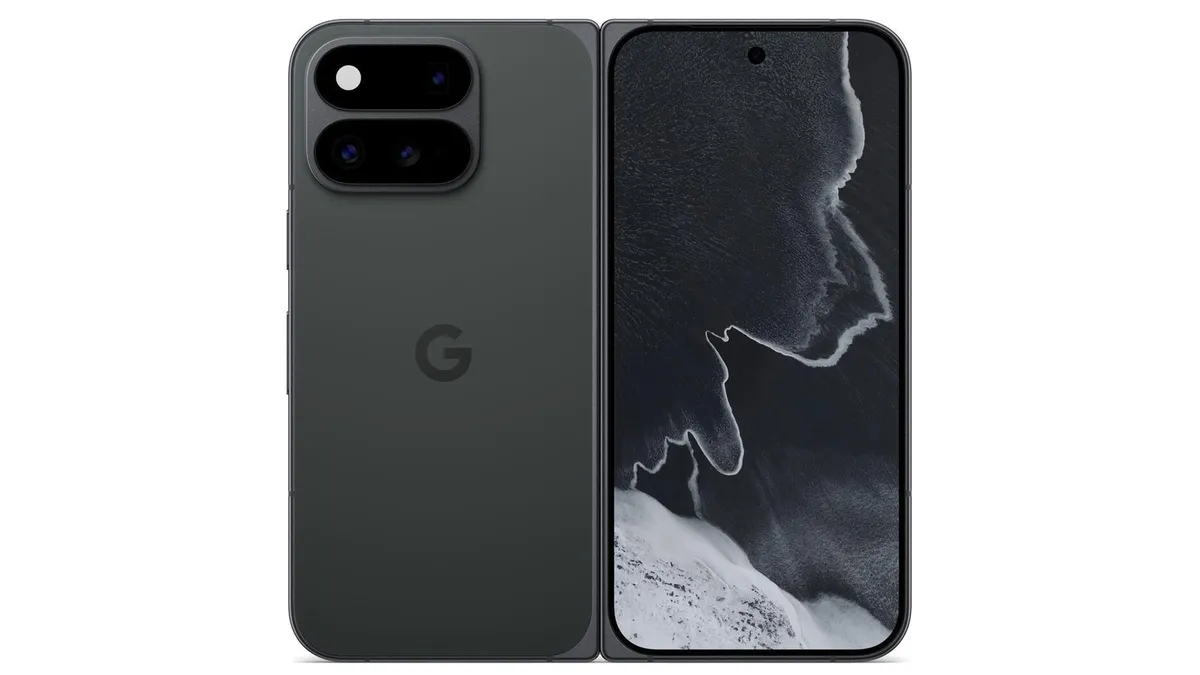
Pixel 11 Pro Fold is the phone Google had to make sturdier before making it cleverer.
Google launched the foldable on August 12, 2026, with a familiar broad shape but a stronger story around the parts that matter in daily use: less weight, less thickness, brighter displays, better durability, faster charging and a new 48MP main camera. It also gets Tensor G6, 16GB of RAM, HiLight, Fold-optimized multitasking and a new sign-to-text feature for American Sign Language through Live Transcribe and Gboard.
The price is the hard part. Google says Pixel 11 Pro Fold is available for pre-order now and hits shelves on August 20. AP, The Verge and WIRED put the U.S. starting price around $1,900. At that number, “improved” is not enough. The foldable has to feel genuinely dependable.
My read: this is Google’s most serious foldable, but it is not trying to win by being the wildest one. It is trying to make the Pixel Fold idea less fragile, less chunky and more useful. That is a valid lane, as long as the execution holds up.
The official Fold upgrades
Google’s own launch post is refreshingly specific on the design direction. Pixel 11 Pro Fold is almost 10% lighter and about 1mm thinner than Pixel 10 Pro Fold. It keeps IP68 dust and water protection, adds a glass fiber composite back cover, uses a new gearless hinge, improves crease performance and raises both displays to 3,600 nits peak brightness.
| Pixel 11 Pro Fold detail | Official launch claim |
|---|---|
| Starting price | About $1,900 in U.S. launch coverage |
| Availability | Pre-order August 12, on shelves August 20 |
| Design | Almost 10% lighter and about 1mm thinner than Pixel 10 Pro Fold |
| Durability | Three times more durable than last year’s device, per Google testing |
| Protection | IP68 dust and water protection rating |
| Displays | Both displays 20% brighter than last year, up to 3,600 nits |
| Charging | 50% in about 30 minutes with 30W wired charging |
| Wireless charging | Up to 25W Qi2.2 built in, 20% faster than last-gen Fold |
| Processor / memory | Tensor G6 with 16GB RAM |
| Camera | New 48MP main camera, telephoto, up to 30x Super Zoom |
| Colors | Obsidian and Olive |
The caveats are important. Google’s durability language is based on internal testing using pre-production devices, and the company still says the phone is not scratch-proof, drop-proof, tumble-proof, shatter-proof or crack-proof. Foldables remain mechanical devices with expensive consequences.
Sign-to-text is the feature with a soul
The most interesting software feature is not another AI summary. It is sign-to-text.
Google says Pixel 11 Pro Fold can use its hands-free form factor so a person can sign American Sign Language to the front camera while translations appear on the outer display in Live Transcribe and Gboard. Google says the feature was developed in partnership with the Deaf community and supports one-handed and two-handed signing.
That is exactly the kind of foldable feature that makes the form factor feel justified. A big inner screen is nice for maps and videos. Dual screens become more meaningful when one side can help two people communicate.
| Fold feature | Why it matters |
|---|---|
| Sign-to-text | Uses the foldable shape for real-time communication, not just entertainment. |
| Optimized bubbles | Makes quick multitasking more natural on the inner display. |
| Drag and Drop / Split Screen | Keeps the small-tablet promise alive. |
| Instant View | Uses both screens during photo capture. |
| Made You Look animations | Makes the outer display useful when photographing kids. |
This is the kind of article where it is easy to get cynical about price and thickness, then forget that software can still make the hinge earn its keep.
The physical comparison still hurts
Engadget’s launch hands-on is blunt: the Pixel 11 Pro Fold is improved, but still heavy and thick next to Samsung’s newest foldables. That criticism matters because foldables are worn as much as they are used. They sit in pockets, bags and hands all day.
Google is not winning the thinness race. It may be choosing not to. The Pixel foldable pitch is more about Pixel software, cameras, durability claims and a familiar outer-screen shape than pure hardware minimalism.
That is fine, but the $1,900 buyer will compare everything. Weight. Crease. Camera quality. App layouts. Repair costs. Case bulk. Trade-in value. How confidently it opens after six months. Whether the hinge cover case feels necessary or annoying.
The camera finally sounds less compromised
Google says the Fold now has a new 48MP main camera and up to 30x Super Zoom. That does not automatically make it equal to Pixel 11 Pro. Foldables have tighter physical limits, and small sensor differences matter. But a new main camera is the right move because Pixel buyers expect the camera to be a reason for the badge, not an apology.
The best outcome is not spec-sheet dominance. It is consistency: quick indoor photos, usable portraits, better low-light shots, and fewer moments where the most expensive Pixel feels behind the slab Pro.
Bottom line
Pixel 11 Pro Fold is relevant because Google is finally treating foldable durability, accessibility and camera confidence as one product problem.
It is thinner, lighter, brighter and tougher on paper. It has the kind of software idea, sign-to-text, that actually uses the foldable shape for something human. But at roughly $1,900, the phone has to be judged hard.
The promise is credible. The verdict has to wait for retail-device reviews.
Support independent GearPulse articles at buymeacoffee.com/gearpulse.site.