
The important part of NVIDIA’s new Claude-on-GB300 announcement is not that a large AI model can run on expensive new hardware. Of course it can.
The useful story is that the newest AI hardware cycle is moving straight into rental infrastructure. NVIDIA says Anthropic’s Claude models are now running on NVIDIA GB300 systems in Microsoft Azure. That puts one of the most visible frontier-model providers, one of the dominant AI chip vendors, and one of the largest cloud platforms in the same sentence.
For readers, the question is simple: does this make AI noticeably better, or just more expensive behind the scenes?
The honest answer is both possible. Blackwell Ultra systems should give model providers more room for faster inference, larger context workloads, and denser serving. But the public announcement does not turn into a consumer promise by itself. It is infrastructure news, and infrastructure news matters because every chat response, coding-agent run, voice session, image edit, and enterprise workflow has to be served somewhere.
What changed
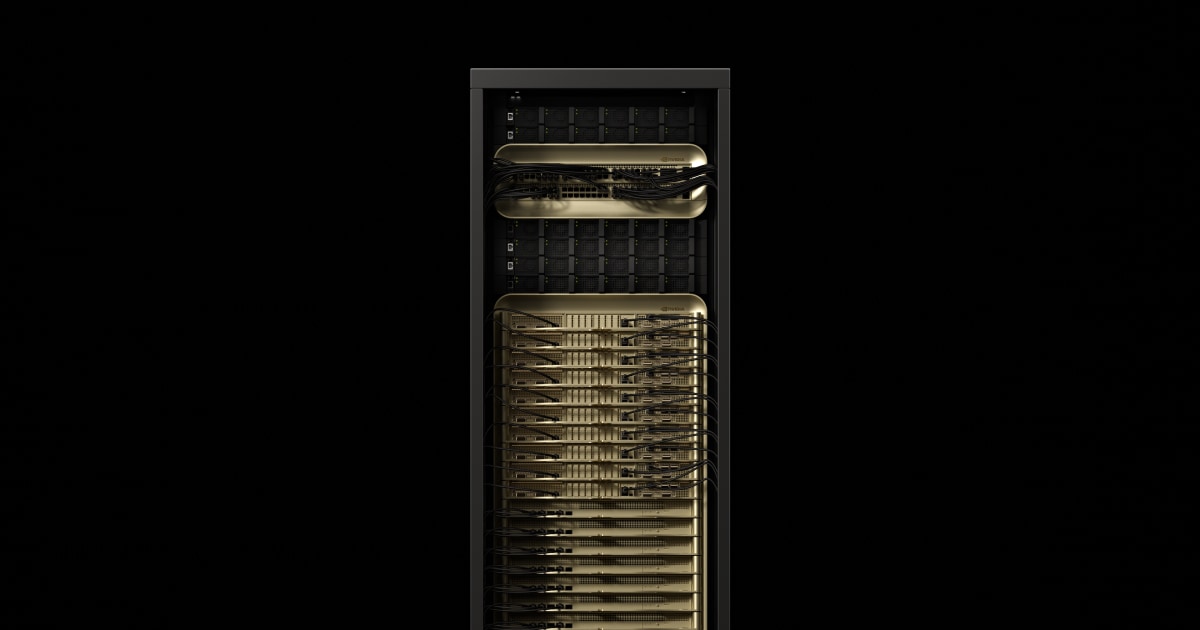
NVIDIA’s blog frames the move as Anthropic’s Claude models running on GB300 in Azure. The official GB300 NVL72 product page describes a rack-scale system built around 72 Blackwell Ultra GPUs connected as a single high-bandwidth platform. NVIDIA also points to networking such as Quantum-X800 InfiniBand as part of the larger cluster story.
That tells you the shape of the upgrade.
| Layer | What the official material points to | Why it matters |
|---|---|---|
| Model provider | Anthropic Claude models | Demand is coming from frontier AI workloads, not only research demos |
| Accelerator | NVIDIA GB300 NVL72 | More dense rack-scale compute for inference and training-style workloads |
| Cloud platform | Microsoft Azure | Customers can access the hardware through rented cloud capacity |
| Networking | NVIDIA Quantum-X800 InfiniBand | Large AI systems need fast GPU-to-GPU and rack-to-rack communication |
| Practical result | More headroom for serving AI | Speed, cost, and availability become cloud-infrastructure questions |
That last row is the one most people will actually feel. If the newest GPUs stay locked inside a few private labs, they change the market slowly. If cloud platforms can offer them to model providers and enterprise customers, they become part of the service layer more quickly.
Why GB300 matters for Claude
Claude is not a small local assistant running on a laptop NPU. It is a hosted model family that depends on huge compute pools, careful scheduling, and enough memory bandwidth to serve real customers without turning every request into a queue.
That is where hardware like GB300 becomes relevant. NVIDIA’s GB300 NVL72 positioning is not “one faster graphics card.” It is a rack-scale design meant to make many GPUs behave like a tightly connected AI machine. The official NVIDIA specs emphasize Blackwell Ultra GPUs, NVLink connectivity, high-bandwidth memory, and cluster networking.
Those details matter because modern AI bottlenecks are not only raw math. A model can be limited by memory capacity, memory bandwidth, communication between GPUs, and how efficiently a cloud provider can keep the hardware loaded. For a product like Claude, better infrastructure can show up as shorter wait times, higher throughput, larger workloads, or more predictable enterprise availability.
It does not automatically mean every Claude user gets a visible jump overnight. Model providers can use new capacity in several ways: serve more users, reduce latency, handle longer requests, support heavier enterprise workloads, or keep margins from collapsing as usage grows.
The cloud angle is the real product
Microsoft’s role is crucial because most businesses will not buy a GB300 rack. They will buy access to AI services that sit on top of it, or they will run their own workloads through a cloud account.
That is why this announcement reads less like a chip launch and more like a supply-chain signal. Anthropic needs high-end compute. NVIDIA wants Blackwell Ultra to become the default AI infrastructure layer. Microsoft wants Azure to be one of the places where that compute is available.
The result is a new version of an old cloud promise: do not own the machine, rent the capability.
For enterprise customers, that can be appealing. It means teams can evaluate advanced AI workloads without building a data center, signing chip-supply deals, or hiring specialists to operate GPU clusters. It also means the cost and availability of AI will be shaped by cloud pricing, regional capacity, service quotas, and provider relationships.
That is not a small caveat. The most powerful AI hardware in the world is still not useful if customers cannot access it when they need it, in the region they need, under terms they can budget.
What this does not prove yet
There are two traps to avoid.
First, this is not an independent benchmark of Claude quality. A faster infrastructure stack can improve the way a model is served, but it does not by itself make the model smarter, safer, or more reliable. Those are model-design and evaluation questions.
Second, official infrastructure claims are not the same as customer-facing service guarantees. NVIDIA can accurately describe the GB300 system. Microsoft can offer AI infrastructure. Anthropic can run Claude on that infrastructure. None of that tells an ordinary user exactly how much faster their next prompt will be.
The better reading is directional: the frontier AI market is still compute constrained, and the companies building it are racing to secure the newest racks before demand catches up again.
Why readers should care
If you use AI casually, this may sound remote. It is not.
Every hosted AI feature has an infrastructure bill. Better hardware can make powerful features feel normal instead of exotic. It can make long-document analysis less painful. It can make coding agents run more steps before slowing down. It can help enterprises move from pilots to production because the service layer has more capacity.
But it can also concentrate power. If the best models require the newest cloud GPU clusters, then access depends on a small group of chip vendors, cloud providers, and model companies. That is efficient, but it is not especially open.
The local-AI movement is pushing in the other direction, trying to make smaller models useful on personal hardware. GB300 is the opposite end of the market: maximum-scale AI as a rentable utility.
Bottom line
Claude running on NVIDIA GB300 in Azure is not a consumer feature launch. It is a signal that the next AI race is being fought in racks, networks, power budgets, and cloud contracts.
If the partnership works, users may eventually notice faster and more available AI services. The caveat is that those gains will arrive through cloud economics, not magic. The smartest thing to watch now is not a single benchmark. It is whether the newest AI capacity becomes broadly rentable, reliable, and affordable enough to change what companies actually build.