
NVIDIA’s Alpamayo 2 Super is not a robotaxi launch. That is exactly why it is interesting.
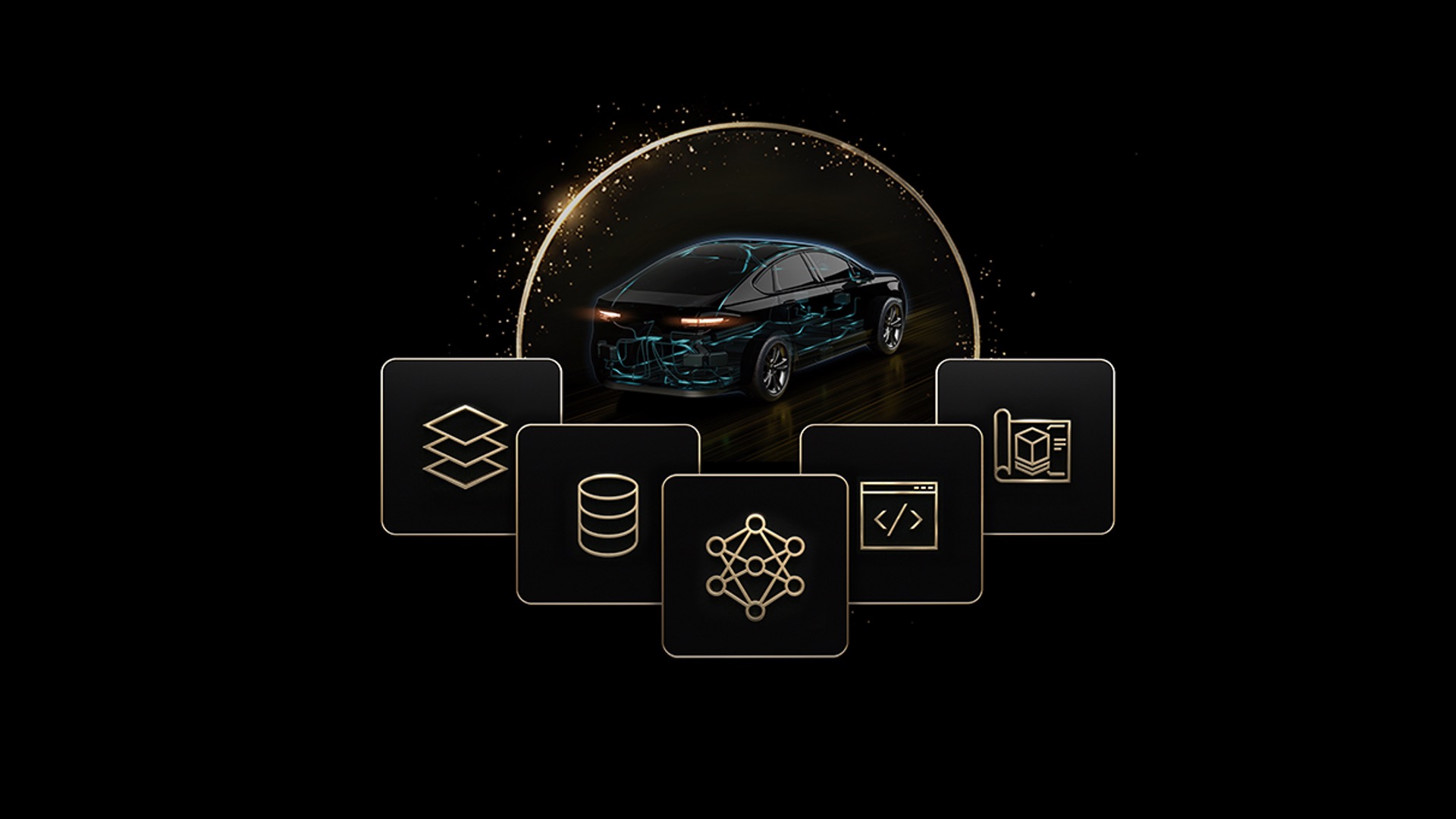
The company says Alpamayo 2 Super is now available for commercial use as an open 34-billion-parameter reasoning vision-language-action model for autonomous-vehicle development. In plain English, it is a driving AI model meant to look at multi-camera road scenes, reason about what is happening, propose trajectories and produce explanations or labels that developers can inspect.
GearPulse’s view: this matters because autonomy has suffered from too many magical demos and not enough visible reasoning. The public does not need another video of a car gliding through a perfect intersection. Engineers need better ways to ask why a system wanted to yield, stop, merge or keep going before that decision becomes a real curbside problem.
What NVIDIA actually released
NVIDIA’s official blog frames Alpamayo 2 Super around two things: open commercial licensing and stronger multitask capability for autonomous driving. The technical post adds the architecture: a 32-billion-parameter NVIDIA Cosmos 3 Super Reasoner combined with a 2-billion-parameter diffusion-based Action Expert, post-trained with reinforcement learning.
The licensing point is more important than it sounds. NVIDIA says the model is available on Hugging Face under OpenMDW-1.1, a Linux Foundation permissive license for open model distributions, covering fine-tuning, derivative models and commercial redistribution. That gives automakers, suppliers and AV developers a clearer route to adapt the model instead of treating it as a locked demo.
| Alpamayo 2 Super detail | NVIDIA’s claim | Why it matters |
|---|---|---|
| Model size | 34 billion parameters | Large enough to serve as a frontier-scale cloud model for AV development. |
| Backbone | Cosmos 3 Super Reasoner plus Action Expert | Combines scene reasoning with trajectory generation. |
| Perception | Up to seven cameras and 360-degree context | Better fit for messy real driving scenes than a single-view demo. |
| License | OpenMDW-1.1 | Supports commercial adaptation and redistribution under the license terms. |
| Outputs | Trajectory, reasoning trace, meta-action, VQA and auto-labels | Gives teams more than a black-box steering suggestion. |
| Deployment idea | Cloud reasoning, then distilled vehicle models | Keeps the heaviest model out of the car while using it to train smaller systems. |
That last point is the key. NVIDIA is not saying every production car should run a 34B model locally. It is describing a cloud-to-car workflow: use the larger model to reason, label, critique and teach; then distill smaller models that can run efficiently in production systems.
Why reasoning traces matter
Autonomous driving is full of edge cases that look obvious only after the fact. A pedestrian hesitates. A cyclist drifts. A truck blocks sight lines. A driver waves someone through. A lane marking disappears under glare. The difference between “safe” and “awkward” can live in one second of context.
NVIDIA says Alpamayo 2 Super can produce a future trajectory, a Chain-of-Causation reasoning trace, high-level meta-actions such as yield or lane change, grounded visual question-answering responses and reasoning auto-labels. That sounds dense, but the practical value is simple: it gives engineers artifacts they can review.
| Output | Useful question it can help answer |
|---|---|
| Trajectory | Where did the model expect the vehicle to go next? |
| Reasoning trace | What did the model think caused that decision? |
| Meta-action | Was the intent to yield, stop, merge, change lanes or continue? |
| Grounded VQA | Which part of the camera scene supported the answer? |
| Auto-labels | Can fleet footage be turned into better training data faster? |
This is where Alpamayo connects to recent GearPulse coverage of Uber’s robotaxi supply-chain strategy and Waymo’s city-level operating discipline. Deployment is not one problem. It is vehicle sourcing, mapping, remote assistance, safety validation, insurance, rider support, regulator trust and local street instincts. A more inspectable model does not solve all of that. It gives the technical layer a better audit trail.
The benchmark claims need context
NVIDIA says Alpamayo 2 Super ranks first on LingoQA among nearly 40 evaluated models and, in its own testing with Lingo-Judge, beat Qwen2.5-VL 72B, Gemini 2.5 Pro and GPT-4o by notable margins on driving-centric reasoning. The developer post lists additional metrics across trajectory prediction, meta-action prediction, visual question answering, grounding and closed-loop simulation.
Those are useful signals, not consumer guarantees. Benchmark leadership does not mean a robotaxi can handle your street, your weather, your construction zone or your city’s weirdest four-way stop. It means researchers and developers have a stronger candidate to test against specific AV workflows.
That distinction matters because autonomy hype usually collapses different tasks into one fuzzy promise. A model that labels scenes well is not automatically a safe driver. A model that explains a decision is not automatically correct. A model that performs strongly in simulation still has to survive hardware, sensors, latency, fleet operations, safety cases and regulation.
Why open commercial use changes the mood
The exciting part is not “open model” as a slogan. It is the pressure it puts on the AV stack.
If a serious driving foundation model is available for commercial adaptation, smaller teams can experiment with richer reasoning, suppliers can build tooling around it, and automakers can evaluate autonomy workflows without waiting for one closed provider to bless every step. NVIDIA also benefits, of course. A more open AV model family can pull developers toward its Cosmos, Halos, simulation and compute ecosystem.
That is the strategic trade. Openness gives developers more control, but the surrounding platform can still be deeply NVIDIA-shaped. For many companies, that may be acceptable. The important thing is to notice both halves: more accessible model weights and a powerful vendor trying to make its toolchain the default workbench for physical AI.
What to watch next
The next stage should be less about launch claims and more about independent use.
Watch whether researchers can reproduce strong results outside NVIDIA’s preferred evaluations. Watch whether developers can fine-tune it on messy proprietary fleet data without heroic infrastructure. Watch whether distilled models preserve enough useful behavior to fit real vehicle constraints. Watch whether safety teams find the reasoning traces helpful or merely plausible-looking. And watch whether automakers treat this as an ingredient, not a replacement for disciplined validation.
That last point is the one I care about most. Roads do not reward confident demos. They reward systems that handle dull repetition, strange exceptions and public accountability.
Bottom line
NVIDIA Alpamayo 2 Super is relevant because it gives autonomous-driving developers a more open, inspectable model to test, adapt and challenge. It is a better story than another promise that robotaxis are right around the corner.
My take: the best version of this release is not a shortcut to autonomy. It is a better workbench. If Alpamayo helps engineers turn raw driving clips into explainable trajectories, labels and stress tests, it can make the robotaxi race more measurable and less theatrical.
That is the kind of progress the category needs: fewer miracles, more evidence.
Support independent GearPulse articles at buymeacoffee.com/gearpulse.site.