
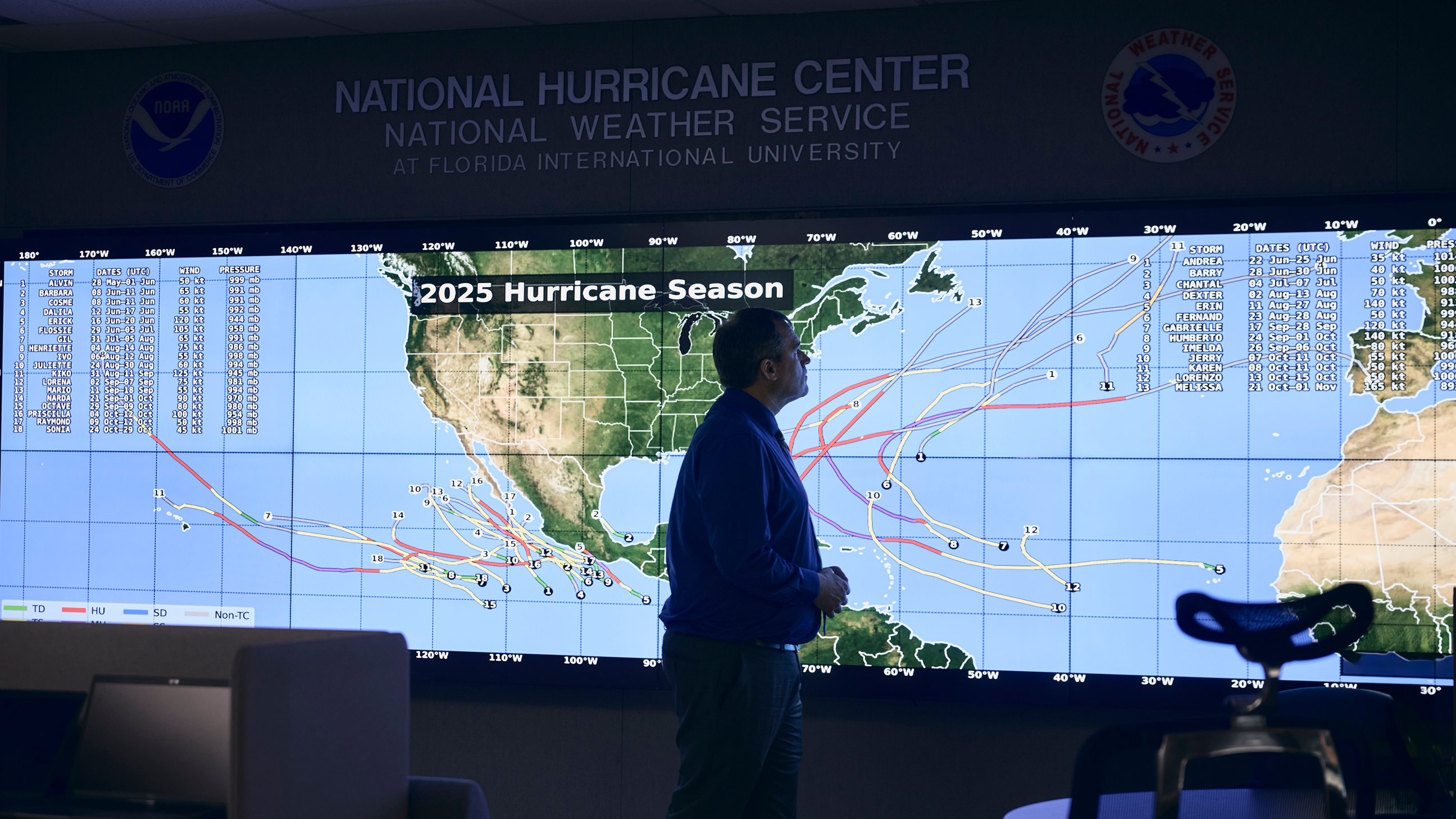
Weather forecasting has always been a race against the clock. The new part is where the clock lives.
NOAA says its use of cloud infrastructure is expanding to include weather prediction models, with Google Cloud selected as the primary high-performance-computing provider for the Weather and Climate Operational Supercomputing System, better known as WCOSS. Google Cloud’s announcement frames the move as a way to modernize operational forecasting with scalable infrastructure, AI tooling and faster access to compute.
That can sound like procurement language. It is more personal than that. Better forecasting is the difference between charging batteries before a storm, moving a car out of a flood zone, delaying a flight, protecting a construction crew, or getting an evacuation message early enough to act calmly.
The relevant question is not whether the cloud sounds modern. It is whether the new compute path helps forecasters turn more data into better warnings when time is tight.
Why WCOSS matters
WCOSS is not a side project. NOAA describes the Weather and Climate Operational Supercomputing System as the system that stores forecast data generated by operational weather models and supports the National Weather Service’s forecasting mission.
The old mental picture of a weather supercomputer is a big dedicated machine in a government facility. That picture is not disappearing overnight, but it is changing. Numerical weather prediction now has to handle enormous data volumes, higher-resolution models, ensemble runs, satellite inputs, radar data, ocean and land coupling, and an emerging layer of AI-driven forecasting.
| Forecasting pressure | Why compute matters |
|---|---|
| Higher resolution | Smaller grid cells can catch local extremes better, but they cost more to simulate. |
| Ensemble forecasting | Running many model variations helps show uncertainty, but multiplies compute demand. |
| Faster cycles | Severe weather decisions are time-sensitive, so late model output loses value. |
| AI weather models | Data-driven models need training, validation and operational integration, not just clever demos. |
| Public communication | Forecasts have to move from model output to warnings people can use. |
This is why the Google Cloud deal is worth attention. It moves a core weather-computing workload toward infrastructure that can scale differently from a fixed machine room.
The upside is speed, flexibility and AI plumbing
Google Cloud says NOAA will use its high-performance computing infrastructure for WCOSS and points to H4D virtual machines, large-scale storage, networking and AI capabilities. The official framing is not just “rent servers.” It is a cloud version of a forecasting platform.
The possible upside is obvious. Weather workloads are bursty. A hurricane threat, atmospheric river, wildfire outbreak or winter storm can make extra model runs more valuable. Cloud infrastructure, if engineered correctly, can add capacity, move data to analysis tools and support newer AI workflows without waiting for the next long hardware refresh cycle.
There is also a software angle. The rise of data-driven weather forecasting has shown that machine-learning systems can produce useful forecasts quickly, but research models are not the same thing as operational public warnings. NOAA still needs verification, human expertise, continuity, uptime and explainability. Cloud infrastructure can help, but it does not replace meteorology.
That distinction matters. I am excited by AI weather models, but I trust them more when they are treated as instruments inside a serious forecasting operation rather than magic replacements for forecasters.
The caveats are not small
Weather forecasting is mission-critical public infrastructure. Moving more of it into commercial cloud raises serious questions, even when the partner is technically capable.
| Question | Why it matters |
|---|---|
| Resilience | Forecasting systems must survive outages, regional failures and emergency demand spikes. |
| Cost control | Elastic compute is powerful, but badly governed cloud spending can drift. |
| Data access | Public weather data has huge downstream value for researchers, businesses and local agencies. |
| Vendor dependence | A core national capability should avoid becoming hard to move or audit. |
| Human oversight | Faster models still need expert interpretation and clear warning decisions. |
None of those caveats make the move wrong. They make execution the whole story.
The best outcome is a more flexible weather stack that keeps public-service values intact: open data where appropriate, transparent performance, resilient operations, and forecasters with better tools instead of fewer tools.
Why readers should care
Weather is one of the rare technologies almost everyone uses without thinking about it as technology. Your phone warning, your car route, your airline delay, your power company planning, your insurer’s risk model and your local emergency manager’s decision all depend on forecasting infrastructure.
When that infrastructure improves, the benefit is quiet. A warning arrives sooner. A model captures a local flood risk. A forecast office gets a clearer uncertainty range. A grid operator prepares for heat demand. You may never know the compute system mattered.
That is exactly why it matters.
GearPulse has been following the hidden infrastructure behind visible technology, from AI data centers to wildfire satellite systems. NOAA’s Google Cloud move belongs in that same category. It is not shiny consumer tech. It is the machinery behind decisions people feel in their actual day.
Bottom line
NOAA choosing Google Cloud for WCOSS is important because weather forecasting is becoming a compute race as much as a science race.
The promise is faster, more flexible modeling that can absorb AI advances without breaking the public mission. The risk is that critical forecasting becomes more dependent on commercial infrastructure than the public can easily see. The right stance is optimism with accountability: more compute is welcome, but the proof will be better warnings, resilient operations and forecasts people can trust when the sky turns ugly.