
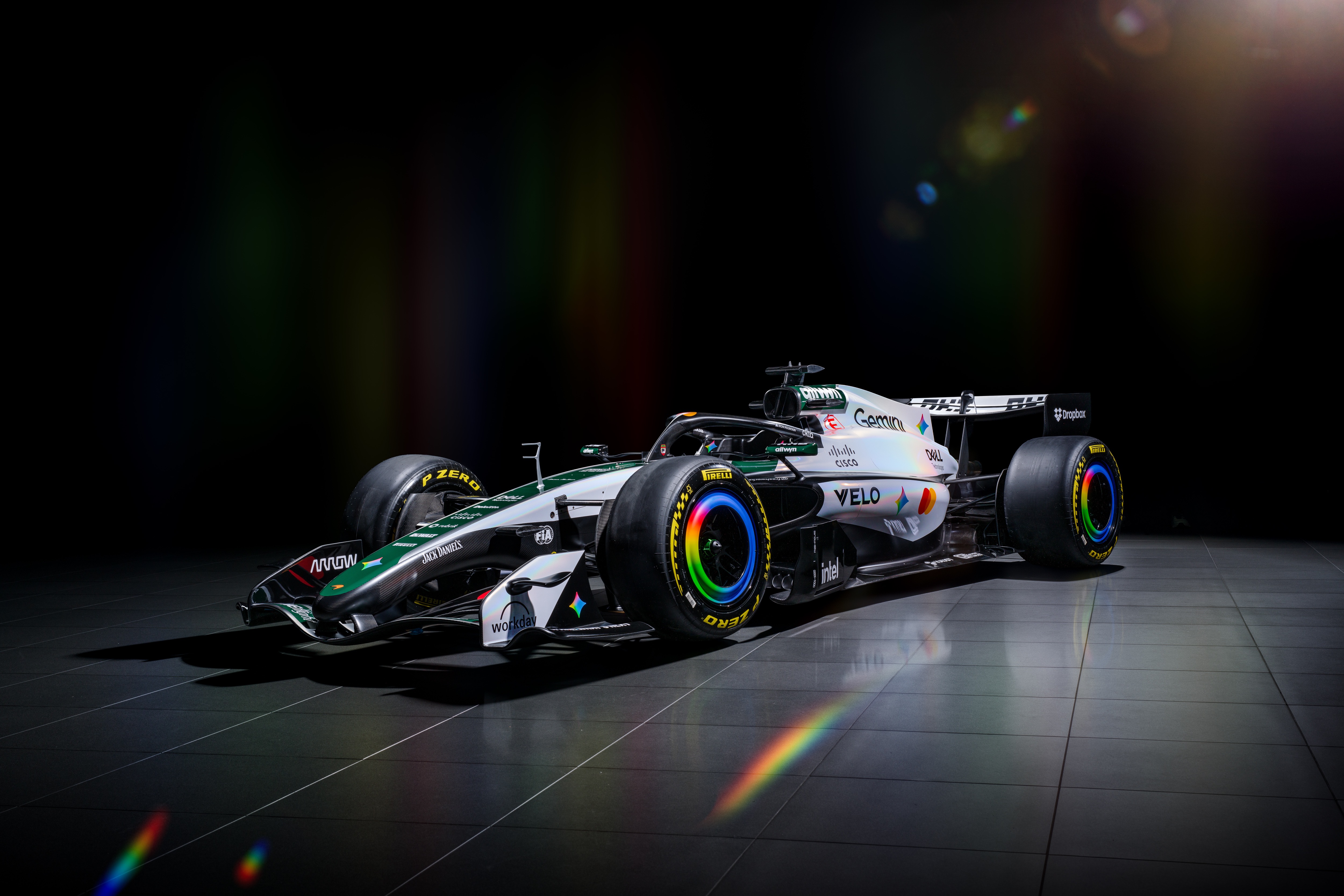
McLaren has brought a heritage livery to Silverstone, and the timing is doing most of the work.
The team says its 2026 British Grand Prix design is inspired by the McLaren M2B, the car that began Bruce McLaren Motor Racing’s Formula 1 story in 1966. Formula 1’s own coverage picked up the launch, while Motorsport.com, PlanetF1 and RacingNews365 all treated it as one of the visible race-week stories heading into Silverstone.
That is enough for today’s Daily Dose of F1 because this is not just a paint story. It is a pressure story. A special livery is harmless when the car is anonymous. It becomes sharper when the team is expected to perform, when Lando Norris is racing at home, and when Silverstone already has a crowded 2026 narrative around British drivers, energy management and Mercedes versus Red Bull momentum.
GearPulse’s view: McLaren has made the right visual move. Now it has to avoid the classic home-race trap, where the weekend becomes big before the stopwatch agrees.
Why this was the day’s strongest F1 story
The news cleared the selection bar because it had a clean primary source, official Formula 1 pickup and multiple specialist outlets covering the same reveal. It also had obvious fan traction: special liveries are among the few F1 stories that travel beyond timing screens, because they are instantly legible in photos, launch posts and paddock clips.
The story also avoids duplicating GearPulse’s recent F1 coverage. Yesterday’s article focused on Max Verstappen’s Silverstone energy-management warning and the 2026 power-unit debate. This one sits in a different lane: McLaren’s identity play, the British Grand Prix audience, and whether a confident visual statement can coexist with a clean competitive weekend.
The sponsor wrapper is worth acknowledging rather than pretending it is not there. McLaren describes the project as a Google Gemini livery, and the official launch leans into that partnership. But the reason the story works for readers is the historical reference. The M2B link gives the design an actual McLaren idea underneath the marketing surface.
The M2B reference is doing real work
McLaren’s first Formula 1 car, the M2B, raced in 1966. Its white-and-green identity is not the papaya orange most modern fans associate with the team, which makes the 2026 reference more interesting. It reaches past the current brand color and back to the origin story.
That matters because McLaren is not a novelty entrant borrowing history for a weekend. It is one of F1’s central constructors, with eras defined by Bruce McLaren, Emerson Fittipaldi, James Hunt, Niki Lauda, Ayrton Senna, Mika Hakkinen, Lewis Hamilton and the modern papaya rebuild. A Silverstone livery that points to the beginning is a subtle way of saying the team sees itself as back in a serious chapter, not simply enjoying a good spell.
Fun fact: McLaren’s first world championship Grand Prix win came at Spa in 1968, when Bruce McLaren won the Belgian Grand Prix. The team is now using a 1966 reference at Silverstone, but the broader point is the same: McLaren’s F1 identity was built by constructors, drivers and race teams rather than by a single marketing era.
What the livery says about McLaren’s 2026 mood
Special liveries can feel hollow when a team is struggling. McLaren’s does not, because the current car has enough relevance for the look to carry expectation.
The interesting comparison is not whether a livery makes the car faster. It does not. The comparison is how different teams use a home-race week.
| Team/storyline | Silverstone signal | Risk |
|---|---|---|
| McLaren | Heritage livery, British fan pull, Norris home attention | Weekend becomes about image if pace or execution slips |
| Mercedes | Fresh Austria win and two podium-relevant drivers | Higher expectations after recent momentum |
| Red Bull | Verstappen’s simulator warning about Silverstone energy demand | Track may expose the 2026 package in a less friendly way |
| Ferrari | Needs a cleaner race-day conversion after Austria | Another promising Saturday would not be enough |
McLaren’s visual message is therefore bolder than it first looks. The team is choosing to be noticed at a race where attention is already heavy. That can be smart if the car is balanced, the pit wall is tidy and both drivers turn the weekend into substance. It can also backfire if the special look becomes the most memorable part of the British GP.
Norris, Piastri and the home-weekend split
For Lando Norris, Silverstone is naturally personal. A British driver in a McLaren at the British Grand Prix is exactly the kind of image F1 likes to amplify, and the new livery makes that image even cleaner.
Oscar Piastri’s role is different. He does not carry the same home-race pressure, which can be useful. In weekends overloaded with ceremony, Piastri’s value is that he often makes the sporting part look unemotional. If McLaren wants this livery to be remembered as more than a launch post, it needs both versions of performance: Norris feeding the crowd without overdriving, Piastri keeping the weekend clinically honest.
That is the driver comparison to watch. Norris has the bigger story if McLaren is competitive. Piastri may have the calmer route through it.
The caveat: liveries do not answer setup questions
This is still a livery story, not a technical upgrade story. McLaren has not said the British GP design changes performance, and there is no reason to treat it that way. The meaningful competitive questions remain familiar: high-speed balance, tyre life through Silverstone’s long loaded corners, energy deployment on the straights, and clean execution in qualifying traffic.
The probability board, as editorial analysis rather than betting advice:
| Silverstone outcome | Likelihood | GearPulse read |
|---|---|---|
| McLaren’s livery becomes one of the most-shared visuals of the weekend | 75-85% | It is official, distinctive and tied to a recognizable heritage hook. |
| The story adds useful pressure rather than distraction | 55-65% | McLaren has enough competitive credibility for the launch to feel earned. |
| Norris becomes the main McLaren storyline | 50-60% | Home attention and the British GP setting naturally tilt the spotlight toward him. |
| Piastri quietly has the cleaner weekend | 35-45% | His lower emotional load could matter if Silverstone gets messy. |
| The livery is remembered more than McLaren’s result | 25-35% | That only happens if pace, strategy or reliability underdelivers. |
Bottom line
McLaren’s Silverstone livery is the right F1 story today because it blends three useful ingredients: an official reveal, real heritage and immediate British GP relevance. It is not a coupon, a tech demo or a pretend performance update. It is a team using its past to frame a weekend where its present needs to look convincing.
GearPulse’s read: the M2B reference is smart because it gives the design meaning beyond the sponsor activation. But the real test starts when the car leaves the garage. If McLaren is quick, the livery becomes part of a proper Silverstone chapter. If it is not, the weekend risks becoming another reminder that in F1, looking historically important is easier than being competitively important.
Support the site at buymeacoffee.com/gearpulse.site.