
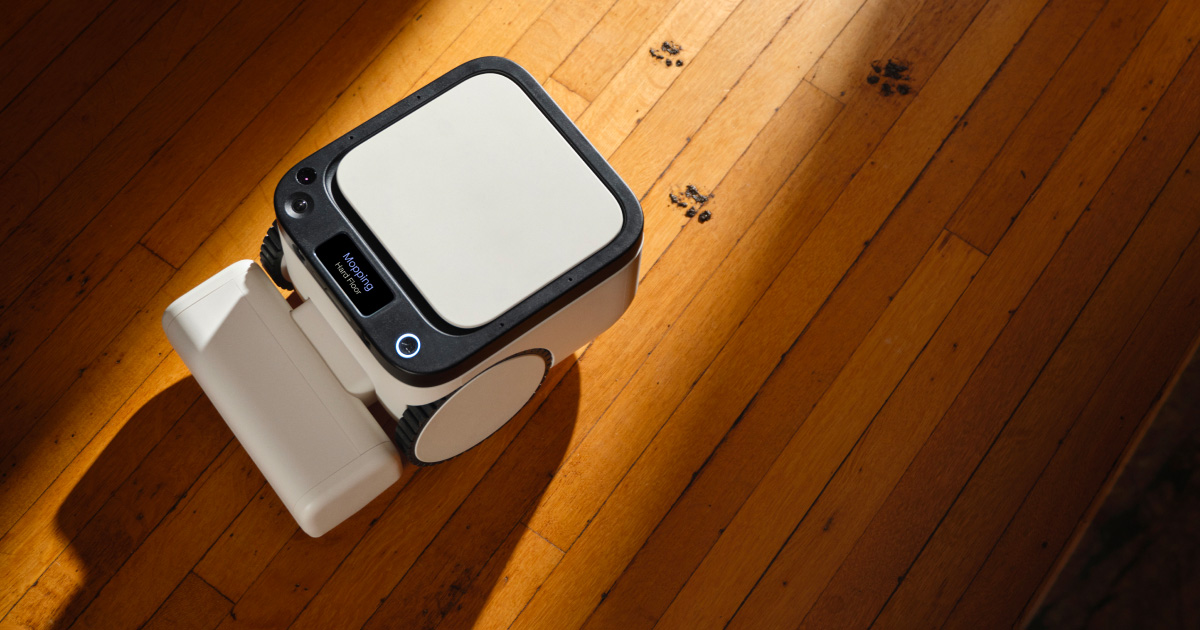
Matic’s robot vacuum price is doing something useful for shoppers: it is forcing the decision into the open.
The company’s own product page lists Matic at $1,495 with a current $1,245 price “until September 9th.” The Verge reports the same $250 increase and notes the current direct-buy bundle includes an annual bag pass worth $96 and a longer return window than the older 60-day policy.
GearPulse’s view: this is relevant because Matic is selling more than suction. It is selling trust. A $1,245 robot vacuum is already a premium purchase. A $1,495 robot vacuum has to make an even stronger case that its privacy model, navigation and maintenance design solve problems that cheaper robots still make annoying.
What changes on September 9
The headline change is simple: buy before September 9 and the listed direct price is $1,245; wait until after and the official price becomes $1,495, assuming the page and current report hold.
That does not automatically mean everyone should rush. It means the value calculation needs to be explicit.
| Item | Current official detail | Why it matters |
|---|---|---|
| Current direct price | $1,245 | Still premium, but $250 below the listed future price. |
| Future listed price | $1,495 | Moves Matic into very expensive smart-home territory. |
| Trial window | 6 months risk-free | Helpful because navigation claims vary by home layout. |
| Warranty | 1 year | Standard for a product this complex, not unusually generous. |
| Availability | United States shipping | International buyers should not assume local support yet. |
| July bundle | Annual Bag Pass listed as free | Consumables matter because Matic uses HEPA bags. |
The important caveat: this article is based on official specs and published reviews, not GearPulse hands-on testing. Robot vacuums are unusually home-dependent. A layout with kids, pets, rugs, stairs and thresholds can expose weaknesses that a spec table cannot.
Matic’s pitch is not just cleaning
Matic’s official page leans hard on navigation, quiet operation and privacy. It says the robot uses camera-based, self-driving-style navigation, can automatically switch between vacuuming and mopping, and keeps intelligence local on the device rather than sending audio or video data to the cloud.
That privacy claim is the most interesting part. Smart-home cameras in a floor robot make people nervous for good reasons. If Matic’s local-processing approach works as described, it gives the product a cleaner answer than many cloud-connected home devices: the robot can see enough to navigate without turning your home into a remote data source.
The official specs also make clear that Matic is not a tiny puck. The FAQ lists the robot at 15 x 9.4 x 7.8 inches and about 25 pounds, with 2.5 hours of vacuuming or 3 hours of mopping on a full battery. The water tank is listed at 600 ml, enough to mop 800 square feet, and the company says Matic operates at 55 dB while vacuuming and 52 dB while mopping.
That is a strong smart-home story if it works in your rooms. It is also why the return window matters. A robot vacuum can be excellent in one house and frustrating in another.
The buyer question is whether premium robotics beats a cheaper dock
Most high-end robot vacuums now sell the fantasy of less intervention: auto-empty docks, mop washing, obstacle avoidance, app maps and scheduled rooms. Matic takes a different route. Its body carries the cleaning system, its bag handles wet and dry waste, and its visual navigation is the center of the product.
That makes the comparison less straightforward than “which robot has the biggest dock?”
| If you care about… | Matic’s argument | The caveat |
|---|---|---|
| Privacy | Local intelligence and no cloud processing for audio/video | You still need to trust the app, updates and company policy. |
| Navigation | Vision-based mapping and obstacle handling | Camera navigation depends on lighting, clutter and floor layout. |
| Noise | Official 55 dB vacuuming claim | Real-world sound varies by floor, debris and cleaning mode. |
| Mopping | Self-cleaning roller mop and 600 ml tank | It is not the same as a full dock that washes pads externally. |
| Maintenance | HEPA bags and consumables shipped through Matic | Bag cost becomes part of the ownership math. |
The Verge’s review context has been unusually positive about Matic’s navigation and cleaning behavior, while Vacuum Wars’ spec-focused coverage is useful for grounding the basics. Still, even positive reviews should not be treated like a universal promise. Pets, thresholds, black rugs, cables and chair legs are where robot vacuums earn or lose trust.
Why the price hike feels like a confidence test
A $250 increase is not just inflation theater. It changes how forgiving shoppers are allowed to be.
At $1,245, Matic can be framed as an expensive but interesting alternative to dock-heavy flagship robots. At $1,495, the product is asking to be judged as a serious home appliance, not a clever startup gadget. The six-month return window helps, but buyers still need to be comfortable with a newer company, consumables and a software-driven product that may keep changing after purchase.
The good argument for buying before September 9 is not fear of missing out. It is that the current price, free annual bag pass and long trial window reduce the risk for people who were already considering a privacy-first robot vacuum.
The weak argument is buying only because a countdown exists. If your current vacuum works, if you want an auto-wash dock, or if you dislike app-controlled appliances, the discount does not fix that.
Bottom line
Matic’s price increase is relevant because it turns a premium robot vacuum into a clearer value test. The product has a distinct pitch: local intelligence, camera-based navigation, quiet operation and a body that handles both vacuuming and mopping without a giant dock.
GearPulse’s read: the current $1,245 price is the more interesting version of that bet. At $1,495, Matic has less room for startup rough edges and more pressure to feel like a polished appliance from day one.
If you were already waiting for a reason to try Matic, the September 9 date is real enough to matter. If you were not, the smarter move is to treat the price hike as a prompt to compare ownership costs, privacy tradeoffs and return policies, not as a command to buy.