
The phrase “recursive self-improvement” usually arrives wearing a sci-fi coat. It suggests a model waking up, rewriting itself, and sprinting away from human control. Lilian Weng’s new essay is more useful because it is much less theatrical.
Weng’s argument is that the practical near-term action is in the harness: the software system around the model that decides how it plans, calls tools, stores memory, checks results, delegates work and learns from traces. The base model still matters enormously. But the scaffolding around it is becoming an engineering surface in its own right.
GearPulse’s view: this is relevant because it explains why coding agents have suddenly started to feel like products rather than demos. The model is only part of the experience. The rest is workflow discipline: files, tools, tests, permissions, logs, subagents, evaluation and a memory of what already failed.
That connects directly to our recent Yegge agentic coding warning and SQLite-utils Claude Fable piece. The common thread is not that agents remove engineering judgment. It is that good agents need more engineering around them.
What a harness really means
In Weng’s framing, a harness is not just a prompt template. It is closer to a small operating environment for an AI worker.
| Harness piece | Plain-English job | Why developers should care |
|---|---|---|
| Workflow loop | Plan, act, observe, test, revise | Turns one-shot answers into iterative work. |
| Tool interface | Lets the model read files, edit code, search, run commands or call APIs | Defines what the agent can actually do. |
| Persistent memory | Stores artifacts, logs, traces and decisions outside the prompt window | Makes long tasks recoverable and auditable. |
| Evaluation | Checks whether the work improved or broke something | Keeps “looks plausible” from becoming the finish line. |
| Permissions | Limits risky actions and asks for approval when needed | Separates autonomy from recklessness. |
| Subagents and jobs | Lets work split into inspectable parallel paths | Useful only when the parent can merge and judge results. |
This is why the essay lands. Anyone who has used a serious coding agent has felt the difference between a model that can answer a question and a system that can operate inside a repository. The second one needs memory, tools and a test loop. Otherwise it is just autocomplete with confidence.
The self-improvement part is narrower than the myth
Weng is careful about the boundary. Near-term recursive self-improvement probably does not start with a model editing its own weights. It starts with the system improving the methods that produce better work.
That could mean better context management, cleaner tool descriptions, more reliable evaluation, stronger rollback behavior, smarter use of subagents or better ways to preserve failed attempts. In software terms, the agent starts optimizing its own development environment before it optimizes the model itself.
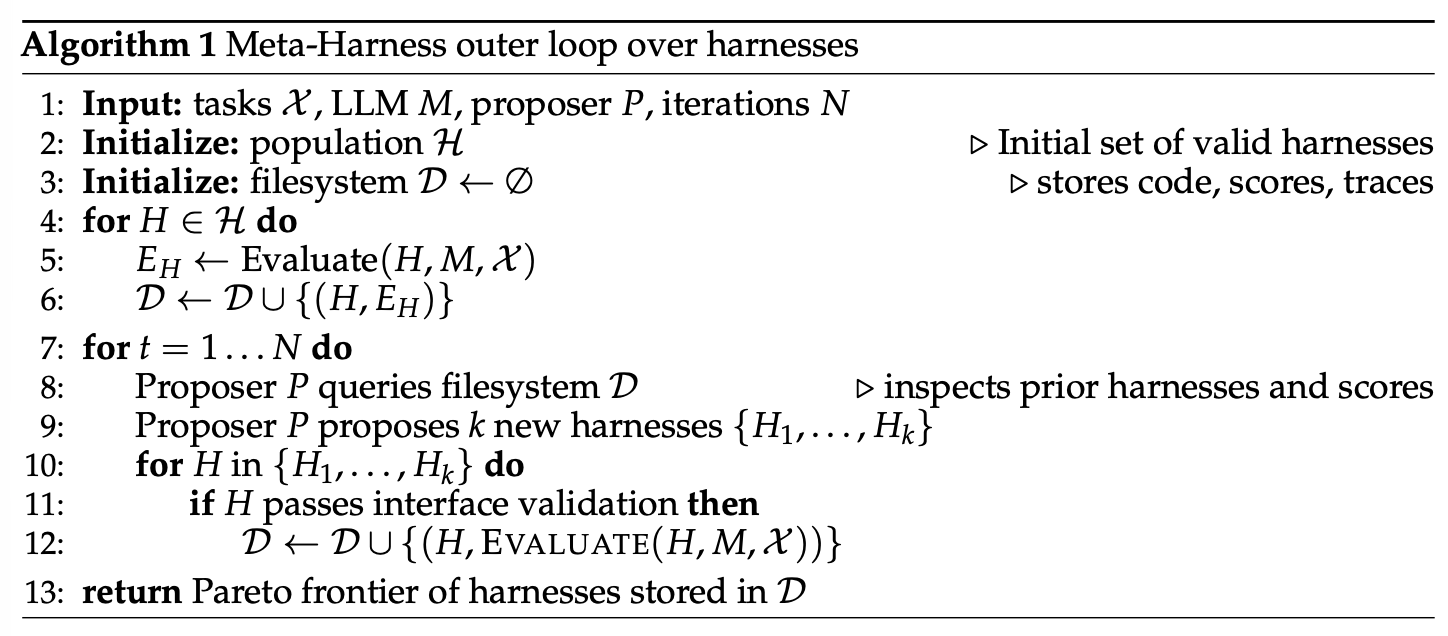
That is less magical, but more believable. It also maps to what researchers are publishing. VentureBeat’s coverage of Self-Harness described agents that can revise parts of their own operating rules and reported performance gains in controlled settings. Weng’s essay places that work beside Meta-Harness, AFlow, ADAS, AlphaEvolve and other systems that treat prompts, workflows or agent code as searchable design space.
The caveat is just as important. Better harnesses do not make weak models brilliant by default. Weng points to research where weaker models did not reliably benefit from recursive scaffolding. The base model still has to be capable enough to understand failure, propose useful changes and use the improved system.
Why Weng’s OpenAI move adds context
Business Insider reported in late July that Weng is returning to OpenAI to lead work tied to accelerating internal research and recursive self-improvement. That does not mean her public essay is an OpenAI roadmap. It does mean the topic is moving from blog discourse into the center of frontier-lab operations.
The more interesting takeaway for regular builders is simpler: the same patterns are already visible in public tools. Codex, Claude Code, OpenCode and Cursor-style agents all depend on a loop where the model sees tool output, updates its plan and edits artifacts. The winners will not be the ones with the flashiest chat window. They will be the ones with the best harness discipline.
What could go wrong
Harness engineering can sound like a clean answer to agent reliability. It is not that simple.
| Risk | What it looks like in practice |
|---|---|
| Bad evaluators | The agent optimizes for tests or metrics that miss the actual goal. |
| Memory rot | Old traces and rules accumulate until the system follows outdated lessons. |
| Permission drift | A tool that was safe in one context becomes dangerous in another. |
| Diversity collapse | The system keeps refining one style of answer and stops exploring alternatives. |
| False research confidence | Automated paper or experiment loops produce impressive structure without real discovery. |
That last point matters. Weng’s future-challenges section is refreshingly sober about automated research. Writing a plausible paper is not the same as finding something true. If a system cannot preserve negative results, verify claims and abandon bad hypotheses, it is not doing science. It is doing paperwork.
The builder takeaway
For developers, the lesson is practical:
| If you are building with agents | Start here |
|---|---|
| Long-running coding work | Persist state in files, not just chat history. |
| Risky commands | Make permissions explicit and reviewable. |
| Research or analysis tasks | Store sources, failed paths and verification notes. |
| Multi-agent workflows | Keep subagent outputs inspectable and merge them deliberately. |
| Self-improving prompts | Evaluate against real tasks, not vibes. |
The boring parts are the product. Logs, permissions, tests and context hygiene do not make a glamorous demo, but they are what separate a helpful agent from a tireless mistake generator.
Bottom line
Lilian Weng’s harness-engineering essay is compelling because it pulls AI self-improvement out of the fog.
The near future is probably not a model secretly rewriting itself overnight. It is agents getting better because the systems around them can observe work, preserve lessons, test changes and improve the machinery of doing the next task. That is still powerful. It is also something engineers can reason about, measure and build.