
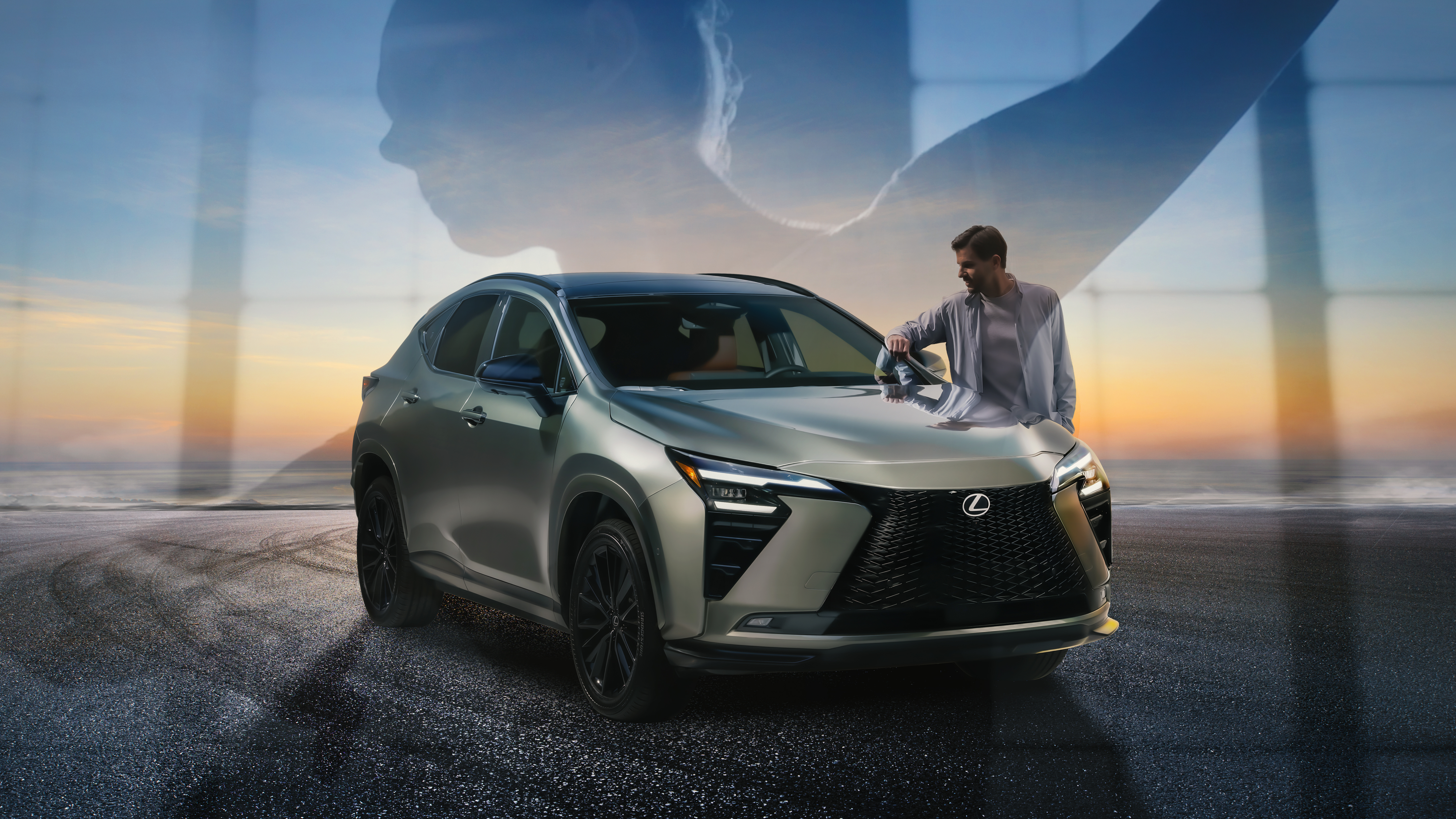
The refreshed Lexus NX arrives with more than the usual new grille, screen and trim names. Lexus has made the plug-in hybrid version more capable in the part of the ownership experience that actually decides whether a PHEV is useful: how far it goes on electricity, and how readily it can recharge away from home.
For the new NX 450h+, Lexus Europe claims more than 100 km of combined WLTP electric range, up by almost 40%, plus DC fast-charging compatibility. The U.S. version is expected to offer about 40 miles of electric range, according to Lexus material reported by Car and Driver. Those figures cannot be compared one-for-one—WLTP and EPA use different tests—but they point in the same direction: this is an attempt to make the NX plug-in less dependent on a perfect overnight-charging routine.
That is the real story. Lexus can keep the mood lighting, fragrance and new hidden controls. For someone choosing between a conventional hybrid and a plug-in, the useful question is whether the NX 450h+ now covers enough ordinary trips electrically without making the occasional longer trip inconvenient.
The powertrain change that matters
Lexus says the NX 450h+ combines a new battery with a more compact e-axle and faster charging support. In Europe, the claimed output is 307 DIN hp, and the company rates the vehicle for more than 100 km of combined WLTP EV driving; those are provisional pre-homologation figures. Car and Driver reports 322 hp and an estimated 40 miles of all-electric range for the U.S. model, with the publication noting the regional specification difference.
| Detail | NX 350h | NX 450h+ | Why it matters |
|---|---|---|---|
| Powertrain | Full hybrid | Plug-in hybrid | The 350h does not need a charging plan; the 450h+ can displace more petrol trips if it is charged. |
| Electric range | Not a plug-in EV range claim | More than 100 km WLTP in Europe; about 40 miles estimated in the U.S. | Test cycles and markets differ, so treat the figures as directional—not interchangeable. |
| Public charging | N/A | DC fast-charging compatibility announced for the new PHEV | A potentially meaningful improvement for drivers who cannot always charge at home or work. |
| U.S. lineup | Available | Available | Lexus is dropping the gasoline-only NX there, making electrification the default choice. |
The latest NX 350h is still the sensible answer for many people. It delivers the no-cable ease that makes a conventional hybrid compelling, and it avoids buying charging capability that might rarely be used. But a PHEV used only as a heavy hybrid is an expensive compromise. Lexus has improved the NX 450h+ most where that compromise hurts: electric range and flexibility at a charger.
A better PHEV is still not a battery EV
The important caveat is that fast-charge capability does not erase PHEV physics. A plug-in hybrid has a smaller battery than a dedicated EV and it still carries an engine, fuel system and exhaust hardware. On a regular commute with dependable charging, that combination can be exactly right. On repeated long drives, a full battery-electric SUV may make more sense; with no convenient charging, the NX 350h is probably the cleaner decision.
Lexus itself labels the European range data as tentative before homologation. Real electric distance also changes with speed, temperature, elevation, cabin conditioning and wheel choice. The right buying discipline is to compare the final market-specific range and charging specification with a week’s worth of actual driving—not to choose a plug-in because its brochure number looks heroic.
The cabin has become more digital, with one useful restraint
The redesign brings a 14-inch multimedia screen and 12.3-inch instrument display, while the dashboard shifts to illuminated, touch-responsive hidden switches. Lexus calls its new Sensory Concierge an orchestration of lighting, audio, climate, seat temperature and fragrance. It will be standard only on higher grades in Europe, and equipment will differ elsewhere.
That flourish is unlikely to decide an NX purchase. The more practical cabin change is the cleaner horizontal layout and the effort to keep physical feedback in the concealed controls. A touch-sensitive surface is not automatically better than a button; it needs to be discoverable without stealing attention from the road. That remains a real-world usability question until independent driving impressions arrive.
The same caution applies to Lexus’s handling claims. The company cites a stiffer body, revised suspension and braking, and changes intended to reduce noise and vibration. Those are promising engineering details, but they are not a substitute for a road test. The NX has traditionally sold calmness well; the update needs to preserve that composure while making the extra electrified performance feel natural.
What shoppers should wait to confirm
| Before ordering | Why it changes the decision |
|---|---|
| Local price and trim equipment | Lexus has announced the update, but pricing and standard equipment are market-specific. |
| Final certified EV range | The European figure is provisional, and EPA and WLTP ratings will not match. |
| DC charging specification | Connector, peak rate and regional availability determine whether the new feature is genuinely useful. |
| Charging access at home or work | This matters more than any claimed plug-in range number. |
Europe is due to open NX pre-sales in autumn 2026, with arrivals from early spring 2027, according to Lexus Europe. Car and Driver reports that the U.S. model is expected before the end of 2026. Neither timing is a universal delivery promise, so shoppers should check their local Lexus market rather than treating the global reveal as a showroom date.
Bottom line
The new NX does not need its fragrance settings to be interesting. The better reason to watch it is that Lexus has finally made a concrete case for the plug-in version: longer claimed electric driving, a redesigned battery system and fast-charging compatibility.
That will not turn every NX buyer into a PHEV buyer. The regular hybrid remains the uncomplicated choice when charging is uncertain. But for a driver who can charge routinely and wants one vehicle to cover electric daily use plus longer trips, the 2027 NX 450h+ looks materially more credible than a cosmetic refresh has any right to be. Wait for final local figures, then judge it as a charging routine—not a spec sheet.