
Formula 1’s most useful Silverstone story today is not another lap-time prediction. It is the return of the LEGO drivers’ parade.
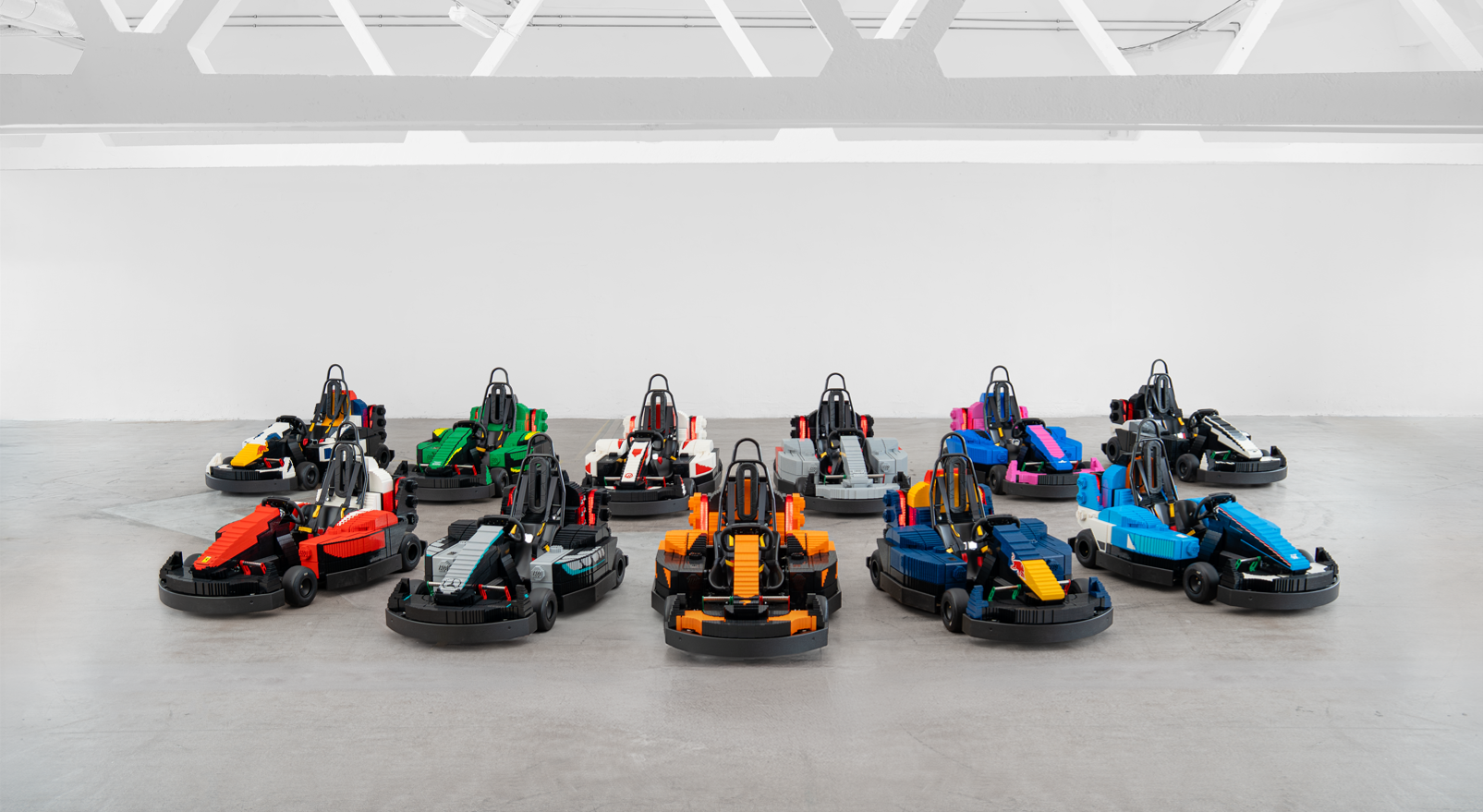
Formula 1 and the LEGO Group have confirmed that all 22 current F1 drivers are due to take a lap of Silverstone before Sunday’s British Grand Prix in individual drivable LEGO minicars. Each car uses more than 28,000 LEGO bricks, weighs around 280 kg, rides on standard go-kart wheels and is capped at about 25 km/h. Sky Sports F1, ESPN and The Race all picked up the story quickly, while F1’s own social channels turned it into exactly the kind of visual race-week content that travels before any competitive session begins.
That is why this clears the Daily Dose of F1 bar. It is not a championship-deciding technical bulletin, and it should not be dressed up as one. It is something more revealing about modern F1: the sport is learning that the hours around a Grand Prix can be programmed almost like the race itself.
GearPulse’s view: the LEGO parade matters because it tests whether F1 can make fan service feel additive rather than gimmicky.
Why this is more than a cute pre-race clip
The easy read is that F1 and LEGO found a harmless way to fill a drivers’ parade. That is true, but incomplete.
Drivers’ parades are traditional, valuable and often awkward on television. They put the grid in front of fans, but the format can feel static: drivers standing on a truck, waving, answering a few questions and waiting for the real show. At Silverstone, F1 is turning that same window into a moving event with obvious visual hooks: team-colored minicars, driver numbers, potential chaos at low speed and a clear callback to the viral 2025 Miami parade.
That last part matters. The Miami LEGO cars worked because they gave fans something rare: elite drivers looking unscripted and slightly ridiculous without compromising the actual competition. The Silverstone version scales that idea up. Miami used 10 team-style builds. Silverstone gives every driver a single-seater minicar of their own.
The useful question is not whether the cars are fast. They are not. The useful question is whether this makes the race weekend feel more accessible without turning F1 into a theme-park version of itself.
The numbers are silly, which is the point
The build details are part of the appeal because they are almost anti-F1. Grand Prix cars live in a world of carbon fiber, software locks, simulator correlation and grams of weight saving. These minicars are openly chunky, slow and playful.
| LEGO Silverstone minicar detail | Confirmed figure | Why it matters |
|---|---|---|
| Cars built | 22 | Every current F1 driver gets a dedicated single-seater rather than sharing a team car. |
| LEGO bricks per car | 28,000-plus | Big enough to feel like a real engineering build, not a static display prop. |
| Total development and construction time | 6,400-plus hours | The activation is substantial enough to be planned content, not a last-minute stunt. |
| Build team | 20 specialists | LEGO frames this as design and engineering work, not just marketing dressing. |
| Approximate car weight | 280 kg | Heavy enough to need proper driven-car packaging and go-kart components. |
| Top speed | Up to 25 km/h | Slow enough for comedy, quick enough to produce motion and mistakes. |
That contrast gives the parade its charm. F1 spends the rest of the weekend explaining why a tenth of a second matters. This is a 25 km/h lap in toy-like cars before the 3pm local start. Done badly, it would be cringe. Done well, it gives casual fans a reason to tune in earlier and gives committed fans a rare look at drivers behaving like competitive adults who still understand play.
Why Silverstone is the right place for it
Silverstone already has enough sporting weight. It does not need a gimmick to matter. That is exactly why this activation has room to breathe.
The British Grand Prix has been carrying several serious threads this week: the Sprint format, dry-weather tyre pressure, five full-time British drivers, Mercedes’ title momentum, Ferrari’s Hamilton story, McLaren’s home-race visibility and the 2026 energy-management debate. A LEGO parade does not replace those stories. It changes the texture around them.
It also fits Silverstone’s crowd. The British GP is one of F1’s loudest and most family-heavy events, and the circuit has a habit of turning pre-race moments into part of the weekend’s identity. A parade that children immediately understand, parents can photograph and social media can clip is not a distraction from that audience. It is audience design.
The caveat: the race still has to be the race. If F1 leans too hard into branded spectacle, fans will notice. The line between “fun before the Grand Prix” and “the Grand Prix as content platform” is thin. Silverstone gives F1 a good stress test because the venue’s history protects the sporting core, but the crowd is broad enough to reward something playful.
What F1 is really optimizing
F1’s current commercial problem is not simply attracting attention. It is holding attention across a weekend where only a few sessions decide the result.
That is especially true on a Sprint weekend. Friday and Saturday already have competitive stakes, but Sunday still has a long pre-race runway. Broadcasters want texture. Circuits want fans in seats early. Sponsors want moments that do not depend on who wins. Teams want exposure without risking the car. Drivers want to look human, within reason.
The LEGO parade sits in the middle of those incentives.
| Stakeholder | What the LEGO parade gives them | Risk |
|---|---|---|
| Formula 1 | A globally shareable pre-race moment | Too many branded activations can make the sport feel overpackaged |
| LEGO | A live demonstration of its F1 partnership | The build has to look premium, not like a toy-store display |
| Silverstone | More reason for fans to arrive and watch early | It cannot clog or cheapen the core race-day ceremony |
| Broadcasters | Easy visual storytelling before lights out | If it runs long or chaotic, it can irritate serious viewers |
| Drivers | A low-stakes personality moment | Competitive instincts can make even slow cars messy |
The key is that this is not pretending to be performance. Nobody should confuse a LEGO minicar lap with racing analysis. Its value is that it admits it is entertainment, then uses F1’s real grid and real circuit to make that entertainment feel connected to the weekend.
The Miami lesson
The official Formula 1 and LEGO releases both point back to Miami 2025, and that is the correct reference point. Miami proved that the idea worked because it was funny in a way F1 often struggles to be.
F1 drivers are heavily managed during race weekends. Their media appearances can blur together because everyone is trying to say something useful without giving anything away. Put them in LEGO-built cars that can bump, wobble and shed a few pieces, and the script loosens. Fans get something human. The sport gets a clip. The brand partner gets a memory instead of just a logo.
Silverstone’s upgrade is scale and personalization. Each driver has a car. The cars carry team colors and driver numbers. That makes the parade easier for fans to follow and easier for F1 to package in short-form video.
GearPulse probability board, as editorial analysis rather than betting advice:
| Silverstone LEGO read | Likelihood | GearPulse view |
|---|---|---|
| The parade becomes one of Sunday’s most shared pre-race clips | 80-90% | The format is built for short video, and F1 has already primed its social channels. |
| At least one driver treats it like a race | 70-80% | F1 drivers rarely switch off the instinct, even at 25 km/h. |
| The broadcast uses it to broaden the audience before the race | 75-85% | Sky is already promoting live coverage of the parade window. |
| Some purists complain that it is too gimmicky | 50-60% | That is the predictable cost of any branded spectacle around a historic race. |
| F1 repeats the format at another major event | 65-75% | If Silverstone lands cleanly, the activation is too reusable to stay isolated. |
What would make it fail?
The obvious failure mode is overproduction. If the parade becomes too polished, it loses the reason people liked Miami. The charm is not seeing perfect miniature show cars. It is seeing serious racing drivers navigate something intentionally absurd.
The second risk is timing. A pre-race activation has to respect the race-day rhythm. Fans will accept a playful parade if it feels like part of the build-up. They will reject it if it delays meaningful ceremony, crowds out driver interviews or feels like an ad break with wheels.
The third risk is authenticity. These cars are designed in 2026 team colors and carry driver numbers, but they are still brand-led objects. The moment works if drivers buy into it. It gets flatter if they look like they have been placed in a corporate skit.
That is why Lewis Hamilton’s reported nervous joking after the Miami chaos is useful rather than damaging. A little reluctance makes the thing feel less sanitized. Lando Norris wanting more horsepower, Arvid Lindblad leaning into possible mischief, or any driver taking it far too seriously would all help the clip because they make it feel like a real grid moment in miniature.
Fun facts that explain the appeal
LEGO says the cars were developed at its Kladno factory in the Czech Republic, a major hub for specialist model building. That matters because these are not just oversized kits. They need structure, steering, rolling components and enough durability to survive F1 drivers doing F1-driver things.
The 25 km/h top speed is also funnier than it first sounds. Around a 5.891 km Silverstone lap, a car traveling at that speed would need roughly 14 minutes to complete the circuit if it held the limit throughout. The actual parade flow will not be a normal timed lap, but the comparison shows how intentionally far this sits from Grand Prix pace.
And the weight number is quietly excellent. At about 280 kg each, a LEGO minicar is far lighter than an F1 car but heavy enough to be closer to a small kart-like machine than a rolling sculpture. In other words, it has just enough seriousness to make the unseriousness work.
Bottom line
The LEGO Silverstone parade is the right F1 story today because it is official, widely picked up, visually sticky and different from the recent performance-heavy Silverstone conversation. It will not decide the British Grand Prix, but it says something about how F1 is building the modern race weekend around more than qualifying and race pace.
GearPulse’s view: this is smart if F1 treats it as seasoning, not the meal. The British GP already has sporting weight. The LEGO parade gives the weekend a human, family-friendly, shareable moment before the serious work starts.
The best version is simple: 22 drivers, 22 tiny cars, one slow lap, a few bruised egos and no attempt to pretend it is anything deeper than a clever way to make the pre-race window feel alive. That is enough. Sometimes the sport can let the carbon fiber rest and let the bricks do the talking.
Support the site at buymeacoffee.com/gearpulse.site.