
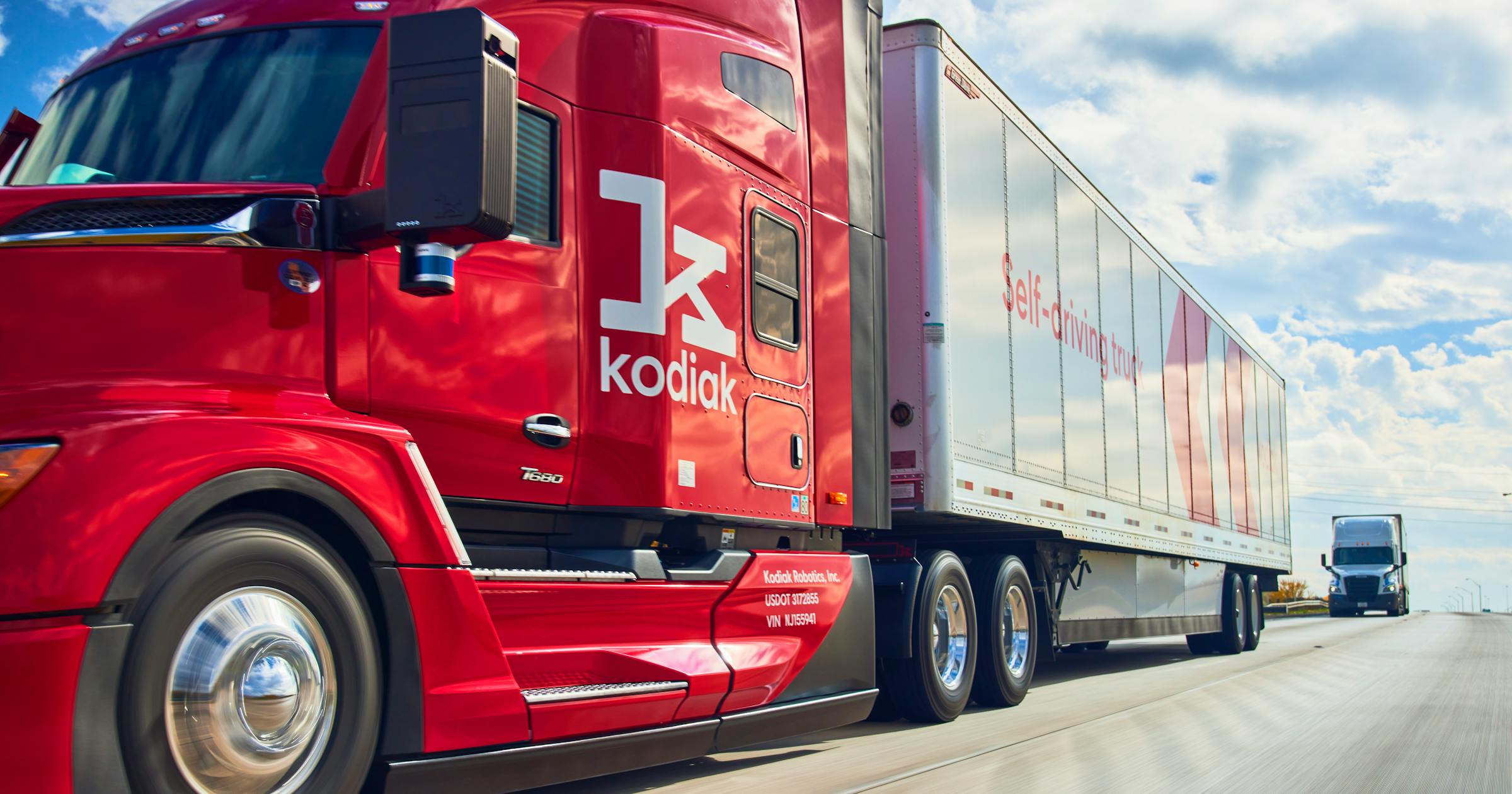
California has been the spiritual home of autonomous driving and an awkward place for autonomous trucks. Robotaxis became familiar on Bay Area streets, while heavy-duty self-driving freight companies spent much of their serious highway work in friendlier states.
That is changing. Kodiak AI says it received a California Department of Motor Vehicles permit on August 13, 2026, allowing it to test heavy-duty autonomous trucks on California public roads with a human safety driver behind the wheel. TechCrunch reports that Aurora Innovation and Kodiak received permits, with Kodiak already starting around its Mountain View office.
My read: this is the most practical kind of autonomy milestone. It is not a flashy promise that driverless semis will flood Interstate 5 tomorrow. It is California letting a staged, supervised version of autonomous freight back onto its own roads, with rules that make the companies prove they can behave before they scale.
That makes it a useful companion to GearPulse’s recent Zoox and Waymo coverage. Passenger robotaxis are asking cities to trust fleets in dense urban situations. Autonomous trucks are asking regulators to trust heavier machines on freight corridors where reliability, incident response and operating discipline matter as much as the driving stack.
What Kodiak received
Kodiak says the permit is a drivered testing permit under California’s expanded Autonomous Vehicle Tester program. The company can operate in California with a safety driver behind the wheel.
That distinction matters. This is not driver-out testing, and it is not commercial driverless deployment. It is the first step in California’s phased process for heavy-duty AVs.
California DMV’s April 28 regulation release explains the broader framework. The rules allow manufacturers to apply for permits to test and deploy heavy-duty autonomous vehicle technology on California roads. They also add new oversight, including moving-violation notices for AV companies, first-responder response requirements, emergency geofencing directives and broader data reporting.
| Stage or rule | What it means | Why it matters |
|---|---|---|
| Drivered testing | Safety driver remains aboard | Lets companies collect California miles under supervision. |
| Heavy-duty threshold | Vehicles over 10,001 pounds are no longer categorically blocked | Opens the door for freight and transit AV work. |
| Mileage gates | DMV highlights 500,000 miles for heavy-duty phases | Slows hype and forces operating history. |
| First responder links | Two-way communication with 30-second response times | Addresses one of cities’ biggest robotaxi complaints. |
| Emergency geofencing | Fleets must leave restricted areas after directives | Makes AVs fit emergency scenes instead of improvising around them. |
Kodiak calls the permit the first phase of scaling autonomous trucking coast-to-coast. The company also says its Kodiak Driver already operates in long-haul trucking, industrial trucking and defense, and that it has commercial partners including Atlas Energy Solutions, IKEA, J.B. Hunt, Bridgestone, Werner Enterprises, C.R. England, General Dynamics Land Systems and Roehl Transport.
California is not Texas, and that is the point
Autonomous trucking has often looked more advanced outside California. Texas, Arizona and other states gave companies room to test and pilot freight routes while California kept heavy-duty AVs off public roads.
FreightWaves’ May analysis framed California’s new rulebook as a “crawl, walk, run” approach. Heavy-duty AV developers face a high bar, including large mileage requirements and a structured safety case before driverless testing and deployment.
That may frustrate companies that want speed. It should reassure everyone else.
There is a temptation to read autonomy through a Silicon Valley lens: if the technology works, regulations are just drag. Trucks make that argument harder. A Class 8 autonomous truck is not a phone app, and a highway freight failure is not a bad user session. The rules need to prove that the vehicle, remote operations, human fallback, first-responder communication and fleet behavior are all part of one system.
The labor argument will not disappear
California’s move remains politically charged. The Teamsters have opposed driverless heavy-duty truck testing and deployment, arguing that the technology threatens jobs and public safety. FreightWaves noted union opposition when the regulations were adopted, and ABC7’s earlier coverage showed the same tension in local terms.
That is not just background noise. Freight automation has a different social weight than a robotaxi in a tourist district. Trucks are jobs, supply chains, roadside safety risks and local political issues all at once.
Kodiak’s strongest argument is not that automation is inevitable. It is that supervised testing in California is better than pretending the technology will mature somewhere else and then arrive fully formed. If California wants influence over AV trucking behavior, data and emergency-response standards, it needs a pathway that companies can actually use.
The buyer’s-eye view
For fleets, the permit is not a reason to rip up procurement plans. It is a sign that California may eventually become part of autonomous freight networks rather than a regulatory blank space between other states.
The practical questions are still open:
| Question | Why it matters |
|---|---|
| Which California routes will companies validate first? | Freight economics depend on repeatable, high-value corridors. |
| How often will safety drivers intervene? | Intervention quality matters more than press-release confidence. |
| What happens during work zones, smoke, fog or emergency closures? | California roads rarely behave like perfect test loops. |
| How transparent will companies be with incident data? | Public trust will depend on more than aggregate miles. |
| When will driver-out permits be realistic? | The current permit is a start, not the final product. |
Bottom line
Kodiak’s California DMV permit is important because it moves autonomous trucking from policy argument back into supervised road experience in the state where many of these companies were born.
The milestone is deliberately limited: safety driver aboard, phased rules, heavy reporting and bigger gates before driverless deployment. That is exactly why it is worth taking seriously. Autonomous freight will earn trust mile by mile, not announcement by announcement.