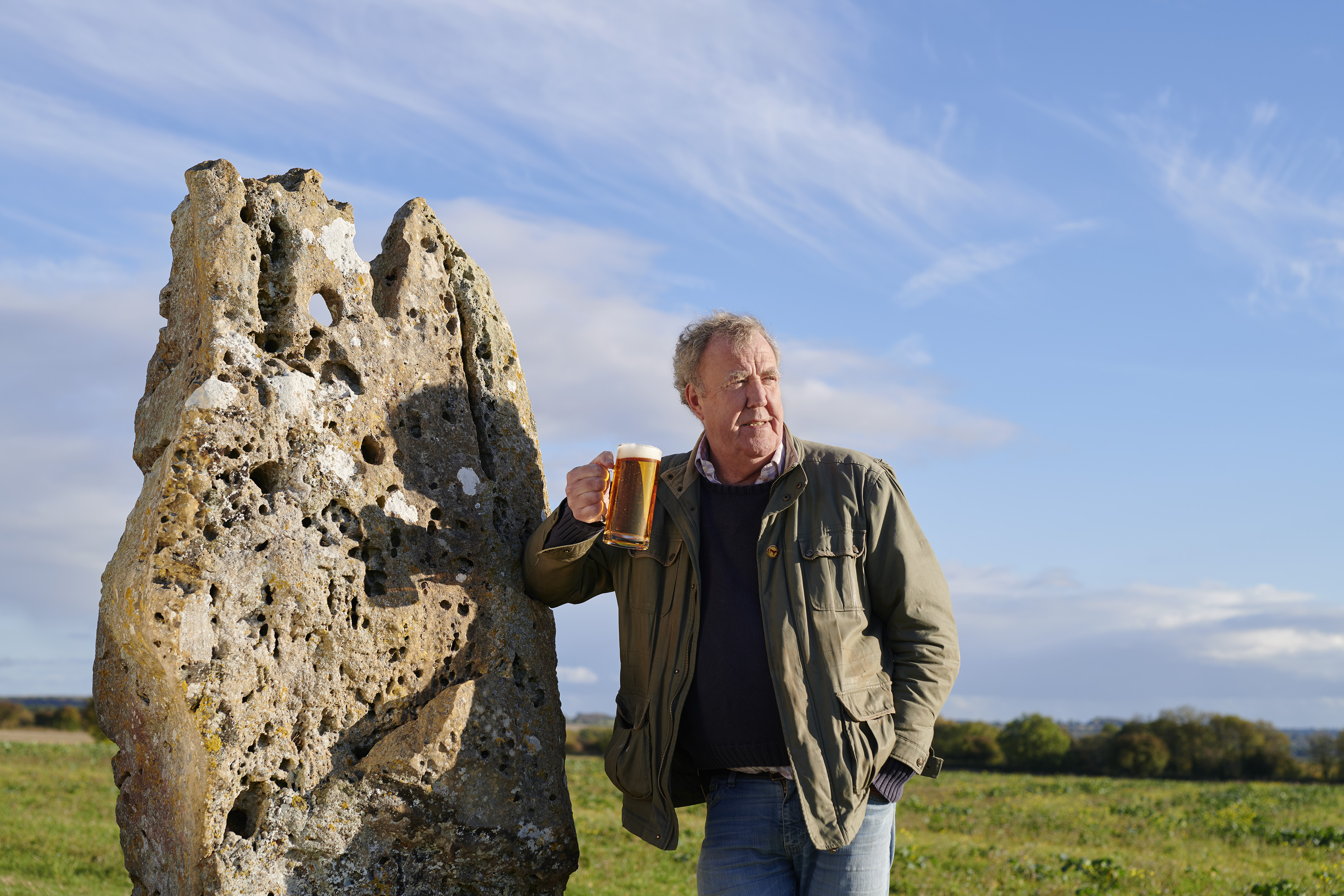
Jeremy Clarkson has spent most of his public life making serious machinery feel unserious.
He made supercars look like toys. He made bad ideas look like television gold. He made three middle-aged men arguing in deserts, jungles and broken-down estate cars feel like appointment viewing. Then, much later, he somehow made farming — actual farming, with mud, invoices, sheep, bureaucracy and disappointment — one of the most watchable shows on streaming.
That is why the latest Clarkson news lands differently.
In the final episodes of Clarkson’s Farm season 5, Clarkson reveals that he was diagnosed with an aggressive form of prostate cancer. The scenes were filmed last year and released on Prime Video on June 17, 2026. According to Reuters, Clarkson says the disease was caught “really early” and that he later had an operation involving 10% of his prostate. He also uses the moment to make a direct point about getting checked, saying early detection may have made the difference between this being a frightening chapter and something much worse.
This is serious news. But the positive part is just as important: the diagnosis was found early, Clarkson is talking about it publicly, and the message is unusually clear for someone whose career has often been built on noise, sarcasm and controlled chaos.
For once, the Clarkson punchline is not about speed, power or a terrible idea involving a hammer.
It is about going to the doctor.
The Clarkson’s Farm moment
The revelation comes in the final two episodes of Clarkson’s Farm season 5, a season already shaped by a difficult year at Diddly Squat. The show had also covered Clarkson’s earlier heart problems, after he underwent surgery for blocked arteries.
In the cancer scene, Clarkson tells farm regulars Kaleb Cooper and Charlie Ireland that he had a medical check, then a biopsy, and that the result was cancer. Reuters reports that Clarkson described it as aggressive but caught very early. He later appears from a hospital bed and signs off with a typically blunt but hopeful line about returning for season 6 if treatment is successful.
That combination — emotional honesty, farm-office awkwardness, dark humour and stubborn optimism — is exactly why Clarkson’s Farm works. It is not a clean celebrity project where everything is inspirational and polished. It is messy, sometimes funny, sometimes uncomfortable, and very human.
The most useful message from the episode is also the simplest one: early detection matters. The NHS says a PSA blood test checks prostate specific antigen levels in the blood, and high levels can be a sign of a prostate condition. The NHS also notes that finding cancer early may make it easier to treat. By openly discussing his own experience, Clarkson has arguably done more for men’s health awareness in a single episode than years of traditional public health campaigns. The “Clarkson Effect” is very real, and thousands of men will likely book a PSA test this week directly because of it.
From Top Gear to global car culture
For many people, Jeremy Clarkson is still first and foremost the man from Top Gear.
The modern Top Gear era, especially the Clarkson-Hammond-May years, changed what a car show could be. It was not only road tests and boot space. It was a travel show, a comedy format, a friendship simulator, a car magazine, a stunt department and a rolling argument about whether something needed more power.
The formula was simple only from a distance. Clarkson brought the scale and the absurdity. Richard Hammond brought enthusiasm and danger. James May brought knowledge, patience and the energy of a man constantly regretting his friends. Together, they made cars feel like characters and road trips feel like mythology.
The Grand Tour: three men, many continents, very few sensible decisions
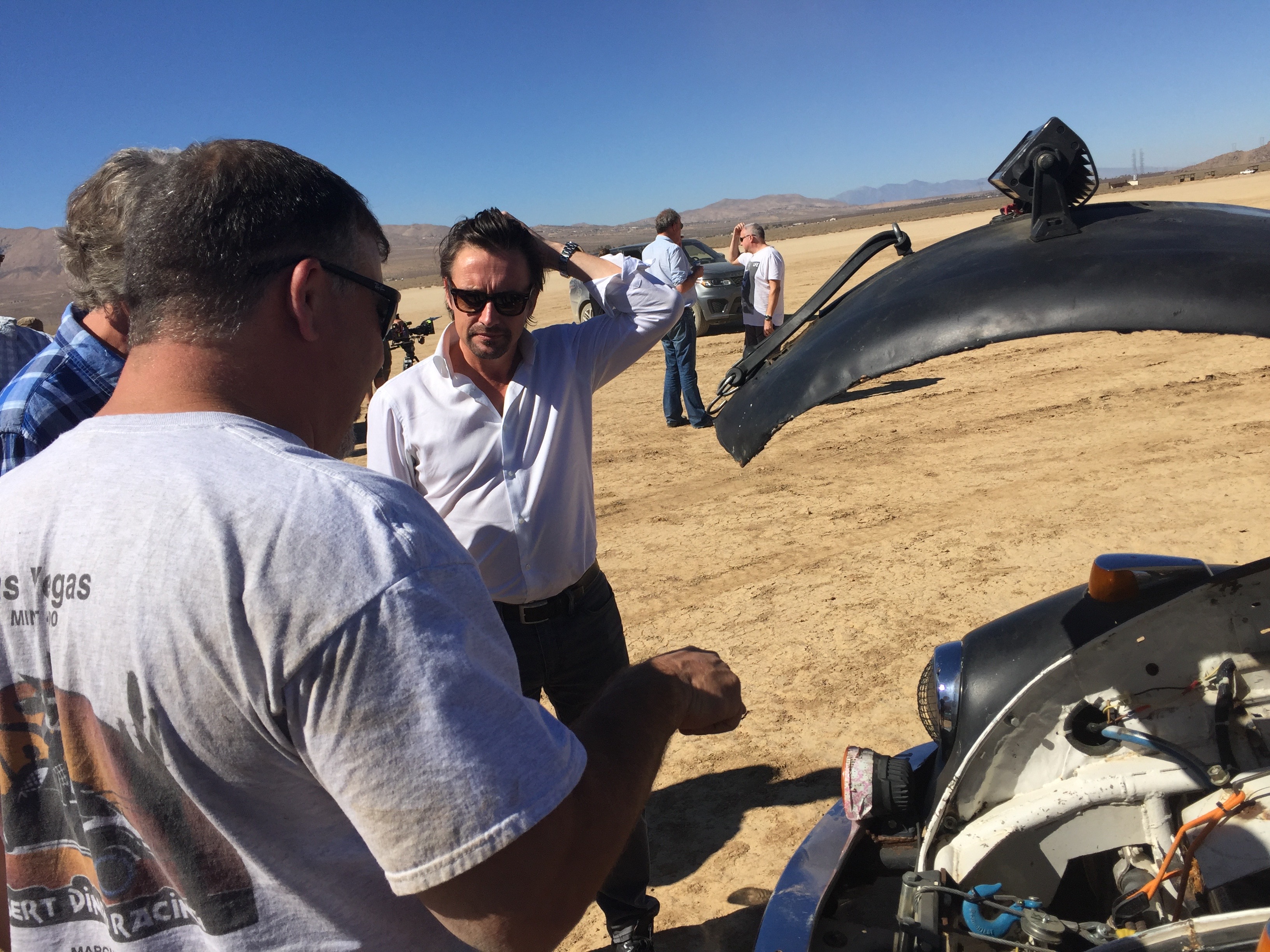
After Top Gear, Clarkson, Hammond, May and producer Andy Wilman moved to Amazon and created The Grand Tour.
Prime Video describes it as a show about “adventure, excitement and friendship” — with the important caveat that friends are also the people you find extremely annoying. That may be the most accurate official description ever written for the trio.
The Grand Tour kept the chemistry but expanded the map. The tent, the supercars, the specials, the explosions, the deliberately bad planning — it all carried the old spirit forward. By the time the final Clarkson-Hammond-May special arrived in 2024, it felt less like a normal TV finale and more like the end of a long automotive friendship that viewers had been allowed to sit inside for more than two decades.
Clarkson’s Farm: the accidental masterpiece
Then came the twist nobody expected: the car man became a farmer.
Clarkson’s Farm could have been a vanity project. Instead, it became the best thing Clarkson had done in years. The reason is simple: farming is the rare subject big enough to defeat his ego.
At Diddly Squat Farm, Clarkson is not the expert. He is the learner, the problem, the enthusiastic amateur and often the most expensive moving part on the property. Kaleb Cooper became the perfect counterweight: younger, local, practical, unimpressed, and somehow capable of telling one of Britain’s loudest presenters that he is being stupid without the show ever feeling cruel.
The result is warm television with dirt under its nails.
Why this news feels different
Celebrity health news can easily become intrusive or grim. This case is different because Clarkson chose to put it inside the show and connect it to a practical message.
The positive angle is not that cancer is somehow softened by celebrity. It is not. The positive angle is that early detection, treatment and public honesty give the story a sense of direction. Clarkson’s own framing, as reported by Reuters, is that if he had not been checked, it could have been his last harvest. Because it was caught early, he expressed hope that he will keep harvesting for many years.
That is a very Clarkson way to put it: mortality translated into farm seasons.
It also fits the bigger arc of his late career. The man who once made his name by making cars louder is now making farming visible, making bureaucracy entertaining, making rural economics understandable, and now making prostate checks a little less embarrassing to discuss.
That might be one of the more useful things he has done.
The oddly optimistic Clarkson legacy
Jeremy Clarkson’s legacy is not tidy.
He has been brilliant, funny, abrasive, controversial, childish, sharp, excessive and occasionally wrong in ways only Clarkson can be wrong. But very few presenters have shaped popular car culture as much. Fewer still have successfully reinvented themselves after leaving one of the biggest TV formats in the world.
The latest health news adds another layer. It does not turn him into a saint, and it does not need to. It simply shows a familiar figure facing something frightening and using the platform he has to say something useful.
Get checked. Ask questions. Do not ignore the warning lights.
For a man who spent decades telling viewers that speed and power solve everything, it is strangely fitting that one of his most important messages may be about maintenance.
Not for a car.
For the driver.