
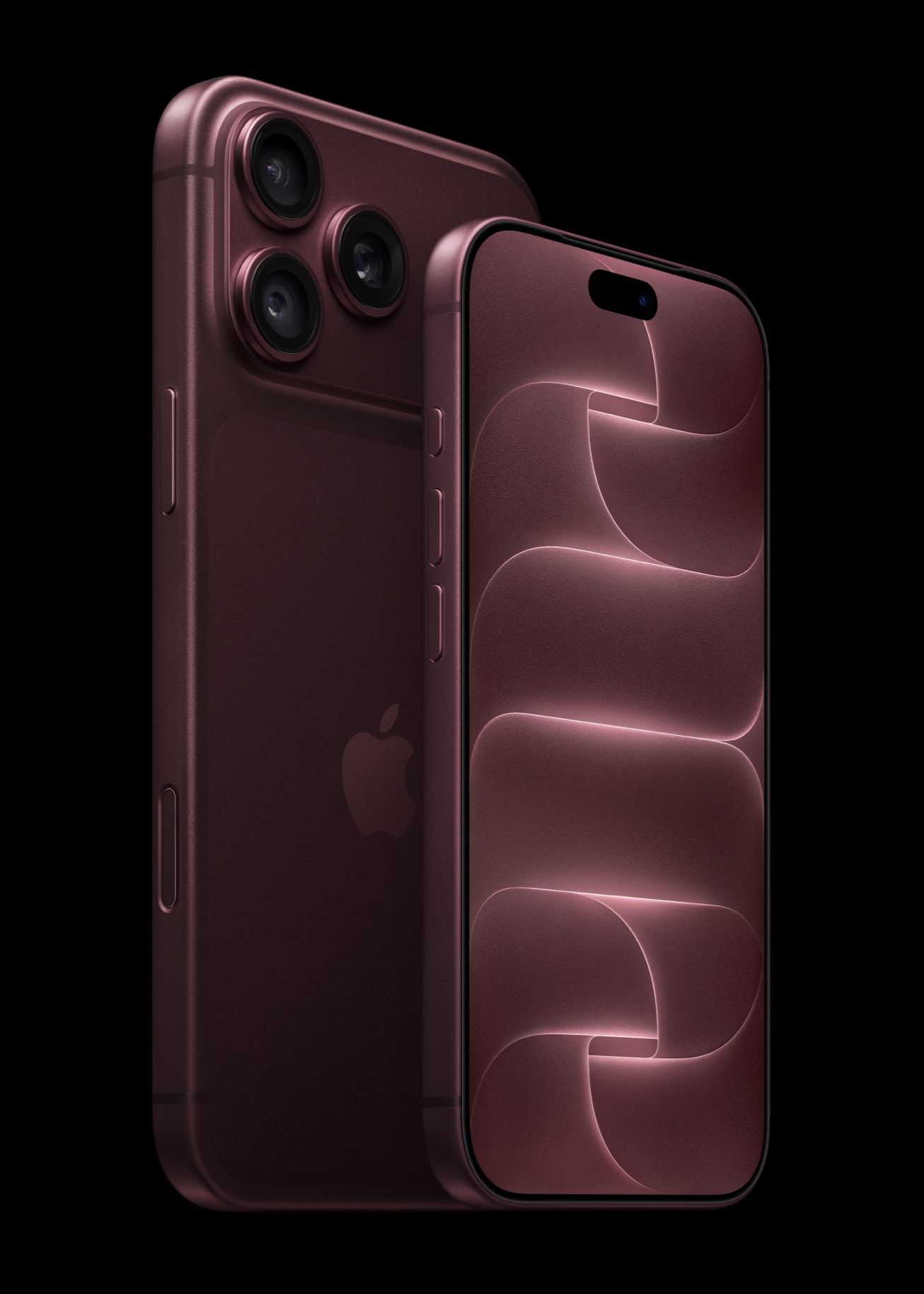
Apple’s iPhone 18 Pro announcement is a camera-and-compute launch first. The attention-grabbing change is a new 48MP Fusion Main camera with variable aperture; underneath it are the A20 Pro chip, a redesigned vapor chamber, a smaller Dynamic Island, and more aggressive battery-life claims.
The pair arrives in black, silver, glacier, and burgundy, with preorders opening September 12 and availability beginning September 18. U.S. pricing starts at $1,199 for iPhone 18 Pro and $1,299 for iPhone 18 Pro Max, each with 256GB, 512GB, 1TB, and 2TB options.
A real camera control, not another portrait-mode preset
The new main camera uses six laser-cut blades to move through four aperture settings. In plain English, it can open up to prioritize low-light capture or narrow down to keep more of a group or scene acceptably sharp. Apple is also exposing aperture control to third-party developers through an API.
That is a meaningful hardware change because it gives the phone a physical route to changing depth of field and light gathering, rather than asking software to infer every choice after the fact. The Camera app’s new Pro controls add manual aperture, shutter speed, white balance, and a histogram. Apple also says Cinematic effects can be applied after capture to video shot at up to 60 fps, while Time-lapse can record in 4K Dolby Vision HDR.
The front camera is an 18MP Center Stage camera. The Pro models also add Apple Reference Image, which captures signed sensor data for an unalterable reference image intended to help establish what the sensor saw before edits. It is an interesting authenticity tool, though its usefulness will depend on how broadly apps and publishing workflows adopt it.
A20 Pro and cooling are the other half of the story
A20 Pro is built on a 2-nanometer process and has a 6-core CPU, 7-core GPU, and Dual 16-core Neural Engine. Apple claims 50 percent more memory bandwidth than A19 Pro, up to 40 percent faster graphics performance, and twice the AI processing power.
Just as important is the thermal design. Apple says the chip’s package moves memory out of the thermal path and attaches the silicon directly to a larger vapor chamber with three times the surface area of the previous generation. That is why Apple’s sustained-performance claim is more interesting than the peak figures: prolonged gaming, video work, and on-device AI are where a phone typically gets uncomfortable or slows down.
N1 supplies Wi-Fi 7, Bluetooth 6, and Thread. C2 is Apple’s next-generation cellular modem system; Apple says it improves uploads, uses 15 percent less energy than C1X, and supports mmWave in the U.S.
Size, battery, and the Pro/Pro Max split
| iPhone 18 Pro | iPhone 18 Pro Max | |
|---|---|---|
| Display | 6.3-inch OLED | 6.9-inch OLED |
| Size | 150.0 × 71.9 × 8.75 mm | 163.4 × 78.0 × 8.75 mm |
| Weight | 211 g | 249 g |
| Typical-use claim | Up to 24 hours | Up to 30 hours |
| Video-playback claim | Up to 36 hours | Up to 45 hours |
| U.S. starting price | $1,199 | $1,299 |
Apple says both models can reach 50 percent charge in about 15 minutes with a compatible 60W-capable USB-C power adapter and cable, or 50 percent in 30 minutes with a 35W-or-higher MagSafe setup. As always, battery figures are vendor lab estimates, so the useful comparison will be real-world testing after release.
Bottom line
The variable aperture is the feature to watch. It gives photographers a more direct creative control than the usual computational-photography update, while the A20 Pro and vapor chamber aim to keep demanding work sustainable rather than merely fast for a benchmark run.
Choose the regular Pro if its 6.3-inch size works for you; the Pro Max is the battery-first option. Neither deserves a recommendation on claims alone, but this is a more substantial Pro update than a yearly camera-number bump.