
The most refreshing consumer software story this week is not another app promising to automate your entire life. It is a group of smaller apps trying to make ordinary human taste easier to act on.
TechCrunch’s latest App Store roundup highlights Albo, Coop, PI.FYI and several other small products that are trying to solve real mobile annoyances: saved videos you never revisit, neighborhood commerce that gets buried under national marketplaces, recommendation feeds that feel more algorithmic than personal, and lightweight diaries or social tools with a more specific reason to exist.
GearPulse’s view: this is relevant because the app world has spent the AI boom talking as if agents will swallow the home screen. Maybe they will take over some chores. But the apps that stick with people usually have a smaller, warmer job: remember what I cared about, help me do something with it, and do not make me feel like I am feeding another engagement machine.
That makes this a softer companion to our recent doomscrolling apps piece. The doomscrolling story was about putting friction in front of bad habits. This one is about giving saved intent somewhere better to go.
Albo understands the camera-roll problem
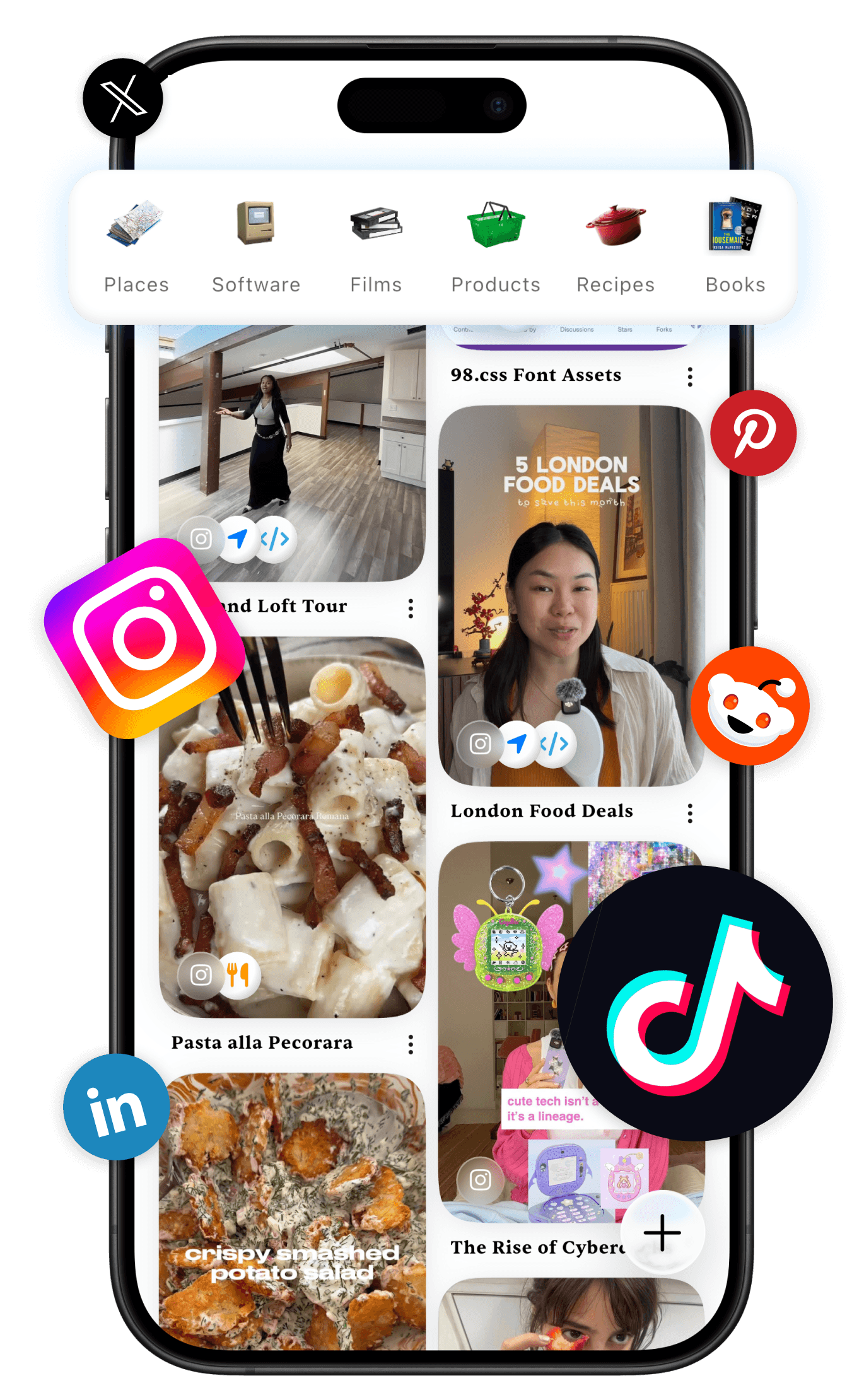
Albo is the cleanest example. Its official site says the app is built to save Instagram posts, TikToks, screenshots, recipes, products and notes so you can find them later. The App Store listing frames it as a universal save-for-later app for links, videos, books, recipes, workouts, tools and places, with collections, maps and sharing.
That may sound modest. It is not. One of the strangest habits of modern phones is that we save things compulsively, then bury them in the exact feeds that made us distracted in the first place. The result is digital intention without follow-through. A restaurant, workout, movie, recipe or travel idea becomes a tiny guilt pile.
Albo’s interesting move is that it treats saved content as a task for later life, not just a bookmark. Recent App Store version notes point to recipe nutrition details, cook mode, grocery-list work, multilingual search, expanded import sources and screenshot shortcuts. That is a product growing around behavior, not just around “AI search” as a label.
The caveat is right there in user reviews and privacy labels. Some users praise the single place for saved reels and recommendations; others complain about glitches, processing failures or sorting misses. The App Store privacy section also lists several categories of data tied to personalization and functionality. For an app that organizes your taste and places, that deserves a sober read before you dump your entire life into it.
Coop and PI.FYI point in the same direction
Coop’s App Store pitch is a neighborhood marketplace for real, handmade and homegrown goods from nearby sellers. PI.FYI, from Perfectly Imperfect, is positioned around friend-shaped recommendations rather than algorithmic feeds.
Those are very different products, but the emotional pitch is similar: let me find something from people, not just from a ranking system.
| App | Public pitch | Why it stands out | Caveat to check |
|---|---|---|---|
| Albo | Save and organize reels, screenshots, links, recipes, products and places | Turns scattered intent into a usable personal library | Privacy labels, glitches and AI extraction accuracy matter. |
| Coop | Buy local handmade or homegrown goods nearby | Makes the phone a local-discovery tool instead of a warehouse portal | Value depends heavily on seller density where you live. |
| PI.FYI | Share favorites and recommendations around taste | Pushes back against anonymous recommendation feeds | Social apps live or die by community quality. |
This is the part I find compelling. AI may help these apps sort, search, summarize or recommend. But the emotional center is not “the model knows best.” It is “my saved things, my neighborhood, my friends, my taste.”
That is a healthier starting point for consumer software.
Why small apps still matter
The boring take would be that small apps are cute but doomed because the platform companies can copy them. Sometimes that is true. Apple, Google, Meta and TikTok can absorb features with terrifying speed.
But small apps still have one advantage: they can be opinionated without waiting for a billion-user compromise. Albo can decide that the unit of organization is something you might actually do. Coop can decide that distance and locality are the point. PI.FYI can decide that recommendation culture should feel more like a friend’s notebook than an SEO surface.
That kind of taste is difficult for giant platforms. Big platforms tend to sand down oddness because oddness does not always scale cleanly.
For readers, the practical takeaway is not “download every hidden gem.” It is to judge new apps by whether they reduce psychic clutter. Does the app make a habit easier, more intentional and less noisy? Or does it just create another inbox?
What to watch before installing
I have not tested these apps hands-on, so the right stance is curiosity with guardrails.
| Before you commit | Why it matters |
|---|---|
| Check the privacy label | Taste, location, saves and screenshots can become sensitive data quickly. |
| Read recent reviews, not just the star rating | Small apps can improve fast, but bugs can also linger. |
| Look for export options | A personal library should not become a trap. |
| Start with one category | Try recipes, places or movies before importing everything. |
| Watch subscription limits | The useful version may not be the free version. |
There is also a personal test I like: after a week, did the app make me do something I already wanted to do? If the answer is yes, it has earned space on the phone.
Bottom line
The interesting thing about this App Store wave is not that apps survived AI. It is that the best ones seem to understand what AI cannot fix by itself.
People do not need another assistant with a blank text box. They need fewer loose ends. If indie apps can turn saved intent, local trust and friend recommendations into calmer software, the home screen still has room for products with a pulse.