
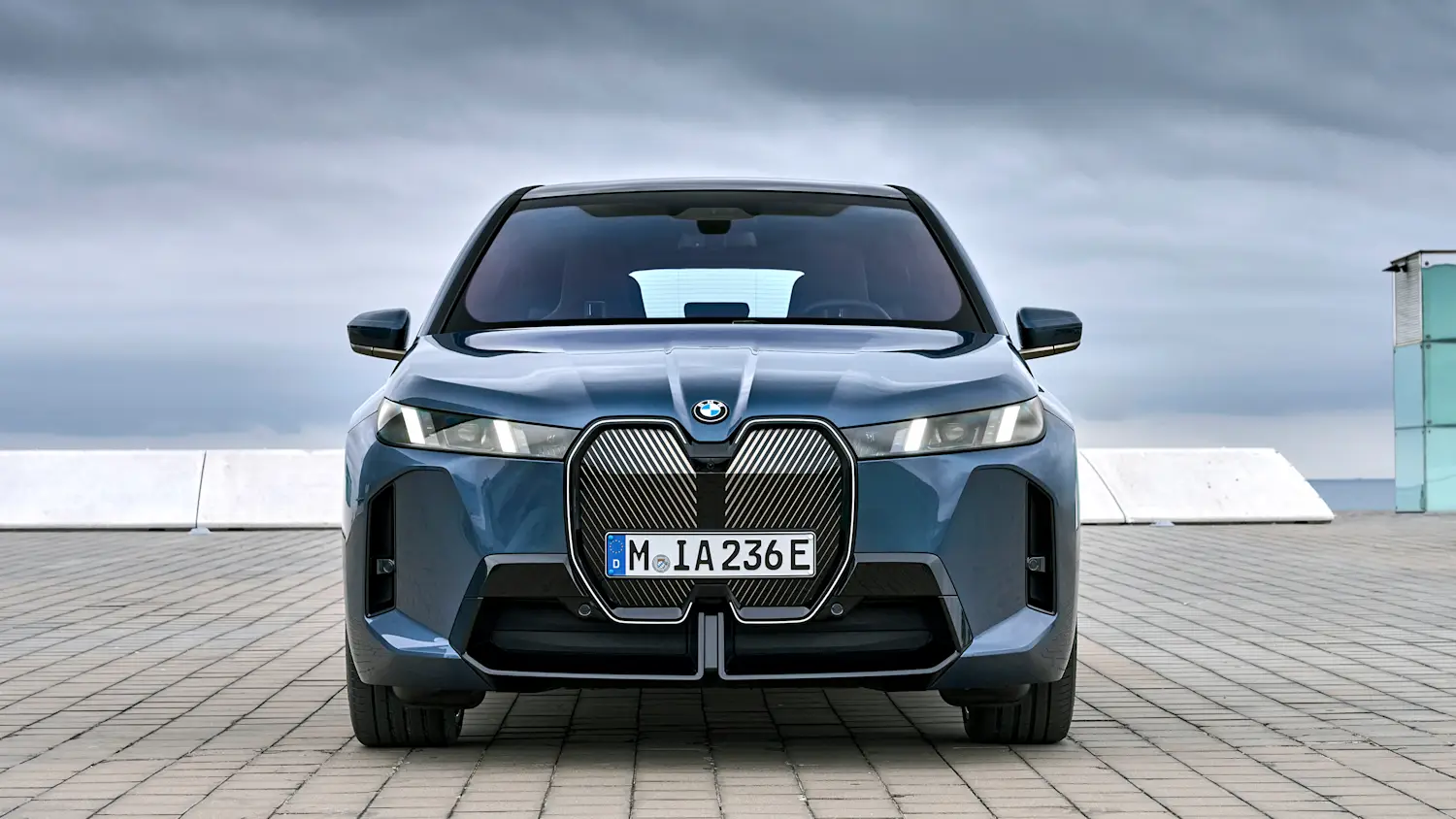
The home charger is usually sold as a convenience upgrade: plug in at night, wake up with range, stop visiting a public charger for ordinary driving.
There is a second reason to care about it. A recent five-car comparison reported by InsideEVs found that moving from a 2.3 kW portable lead to an 11 kW AC wallbox materially reduced the share of electricity lost before it reached the battery. That does not turn a wallbox into a universal money-saving gadget. It does make the charging setup part of an EV’s real energy consumption rather than a background detail.
That distinction matters to people who use an EV as a daily tool. The dashboard reports energy in the battery. The electricity bill records what crossed the meter. The gap includes conversion in the car’s onboard charger, plus the energy used to run electronics and, when conditions demand it, manage battery temperature.
The headline is efficiency, not a race to 22 kW
In the latest comparison, the reported losses were highest on the 2.3 kW portable charger and fell substantially at 11 kW. The five vehicles and exact figures are a snapshot under controlled conditions, not a league table that transfers cleanly to every climate, state of charge or model year. But the direction makes physical sense: fixed overheads run for longer when a battery is being filled slowly.
| Charging choice | What it changes | The sensible interpretation |
|---|---|---|
| Standard household outlet / portable lead | Lowest power; a long charging session | Fine for light use or occasional charging, but it can leave vehicle systems running longer. |
| Dedicated Level 2 / wallbox | Higher, steadier AC power subject to the car and circuit | Often the practical home sweet spot for overnight charging and lower conversion overhead. |
| Higher-power AC hardware | Can exceed what many cars accept | Do not buy capacity the vehicle’s onboard charger cannot use. |
| Public DC fast charging | Converts power outside the vehicle | Useful on trips, but normally costs more per kWh and is not the everyday replacement for home charging. |
ADAC’s wider testing makes the caveat clear. Its published comparisons count electricity drawn from the grid, not just battery energy, and warn that charging losses, battery temperature, ageing and measurement tolerances all affect the difference. In a separate full-charge example, ADAC reports a current BMW iX requiring 109.3 kWh from the wall to fill a 94.8 kWh usable battery. That is a reminder that the number on a battery spec sheet is not the number that will appear on the meter.
What drivers should actually check
The first question is not “what is the biggest charger I can buy?” It is “what can this car, this electrical service and this parking routine use safely?” The U.S. Department of Energy advises working with a qualified electrician to assess home charging equipment and installation. That is especially important for a hard-wired circuit, shared loads, older panels and outdoor installations.
Vehicle limits matter just as much. Tesla’s UK Wall Connector page, for example, lists up to 22 kW on compatible three-phase systems, but also makes clear that output depends on the property and car. Many EVs accept 7.4 or 11 kW on AC; fitting 22 kW hardware does not make an 11 kW onboard charger charge at 22 kW.
| Before committing | Why it matters |
|---|---|
| Car’s maximum AC acceptance | Sets the ceiling; the wallbox cannot override it. |
| Electrical service and panel headroom | Determines whether the circuit can be installed safely and whether load management is needed. |
| Typical parked time | A lower-power setup may already refill daily driving comfortably overnight. |
| Electricity tariff | Scheduling into cheaper off-peak hours can outweigh a small efficiency difference. |
| Cold-weather routine | Cabin and battery conditioning can move more energy than the charger choice alone. |
There is a useful correction here to the usual “fast is always better” instinct. Faster home AC charging can reduce a particular kind of waste because the car spends less time awake converting power. It does not mean every owner needs a large electrical upgrade, and it does not erase the energy used by heating, cooling or a winter commute. Nor does it settle the environmental case by itself; the local electricity mix and total miles still matter.
For apartment dwellers and renters, the answer may be no hardware change at all. Reliable curbside or workplace charging can be more valuable than a theoretical wallbox. GearPulse recently looked at why curbside charging needs to feel ordinary, not heroic; access remains the first efficiency feature.
Bottom line
Home charging is still the calmest way to own an EV, but the meter-to-battery gap deserves a place in the buying conversation. If a qualified electrician can install a dedicated Level 2 circuit that matches the car’s AC limit and your overnight routine, it can buy more than speed: it can trim avoidable losses every time the car plugs in.
Treat the precise percentages as test-specific, not a promise. Treat the principle as durable. The best charger is not the largest one on a spec sheet. It is the safe, correctly sized one that turns your real parking time into useful battery energy.