Quantum computing news often gets trapped between miracle claims and technical fog. This one is more useful if you read it as an operations story.
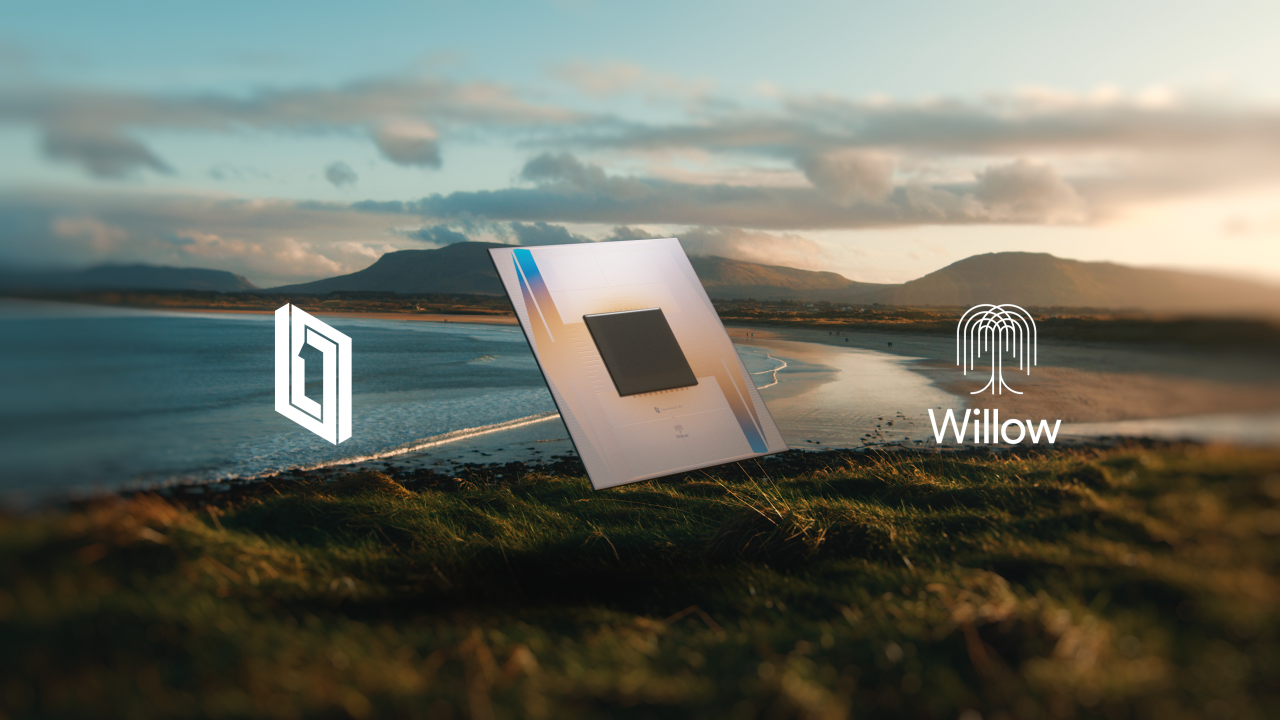
A Google-led team published a Nature paper on reinforcement-learning control of quantum error correction. The work uses error-correction data from the Willow superconducting processor as a learning signal, letting software adjust control parameters while quantum error correction keeps running. The paper reports that the approach improved surface-code logical stability 3.5-fold against injected drift and produced about 20% additional logical-error-rate suppression after conventional calibration.
GearPulse’s view: this is relevant because useful quantum computers will not only need more qubits. They will need to stay stable during long computations. Calibration is the unglamorous bridge between impressive lab hardware and machines that can run for days or months without stopping for expert retuning.
What Google demonstrated
Quantum processors are analog machines. Tiny changes in electronics, materials, temperature and control signals can push qubits away from their ideal operating point. Today, experimental systems often need recalibration. That can work for short experiments, but it is a poor fit for future fault-tolerant algorithms that may need very long uninterrupted runs.
The new Nature paper turns error correction into feedback. The same error-detection events that tell the system what went wrong also teach a reinforcement-learning agent how to steer control parameters.
| Claim | What the source says | Why it matters |
|---|---|---|
| Hardware | Demonstrated on Google’s Willow superconducting processor | Keeps the work tied to real quantum hardware, not only simulation. |
| Control scope | The agent manages more than 1,000 control parameters | Calibration is a high-dimensional problem. |
| Drift test | Surface-code stability improved 3.5-fold against injected drift with decoder steering | Shows the method can respond when hardware conditions move. |
| Fine tuning | Logical error rate fell by about 20% beyond expert conventional calibration | Suggests automation can improve already-good setups. |
| Scaling simulation | Distance-15 surface-code simulations reached about 40,000 control parameters | The scalability claim is partly simulated, not fully hardware-proven. |
The point is not that Willow became a practical commercial quantum computer overnight. It did not. The point is that a future machine cannot stop every time its analog control stack drifts. A self-correcting calibration loop is one of the things that makes longer work plausible.
Why error correction needs calibration
Quantum error correction spreads fragile quantum information across many physical qubits. The system repeatedly checks for error signals without directly measuring and destroying the logical state. That only works if physical error rates stay below a threshold.
Calibration is how the machine keeps its gates, pulses, couplers and measurements behaving well enough. Traditional calibration can use targeted experiments and expert tuning. That approach is valuable, but it separates setup from computation.
| Old workflow | Reinforcement-learning workflow |
|---|---|
| Stop or pause for calibration experiments | Learn from error-detection data during QEC runs. |
| Tune a smaller set of parameters with physics models | Adjust many parameters through feedback. |
| Depend heavily on expert tuning | Automate part of the stability loop. |
| Treat drift as an interruption | Treat drift as a condition to track. |
| Measure success after recalibration | Optimize while the system keeps operating. |
That shift matters because quantum machines are not digital servers where a bit is simply a 0 or 1 with wide safety margins. They depend on physical signals staying precise. As systems scale, manual calibration becomes less like maintenance and more like a bottleneck.
The useful caveats
There are two caveats readers should keep close.
First, the strongest hardware demonstration is still a controlled experiment. The team injected drift and measured how reinforcement learning responded. That is an important test, but it is not the same as running a valuable commercial algorithm for weeks.
Second, part of the scalability story comes from simulation. The paper reports simulations for larger surface codes with tens of thousands of control parameters. That supports the argument that the method can scale, but hardware always has ways of being less tidy than simulation.
| Caveat | Practical reading |
|---|---|
| Not a consumer product | This is quantum-system engineering, not a new cloud service for ordinary users. |
| Injected drift is controlled | Real devices may drift in messier ways. |
| Exploration has cost | Reinforcement learning must balance trying new controls with preserving computation. |
| Decoder steering is not fully solved for real-time use | Some improvements rely on methods the paper itself treats carefully. |
| Applications remain future-facing | Error correction progress does not instantly create useful quantum workloads. |
That does not make the result small. It makes it honest. Quantum computing advances are often most meaningful when they remove a specific engineering obstacle. This one targets a real obstacle: keeping the machine tuned while it is doing the work.
Why Willow context matters
Google introduced Willow in 2024 as a 105-qubit quantum chip focused on quantum error correction and system-level performance. Google said Willow demonstrated below-threshold error correction and a benchmark result far beyond classical simulation estimates for that specific task.
The 2026 reinforcement-learning paper builds on that context. It is less about a flashy benchmark and more about operating discipline. Google Quantum AI’s own hardware page emphasizes the full stack: processors, control and decoding hardware, cryostats, operating systems and software. That is the right framing. Error correction is not a single trick. It is a stack.
The audience relevance is that quantum computing is maturing from “can we make qubits?” toward “can we operate a large quantum system reliably?” That is a healthier question. It rewards boring system work: calibration, decoding, feedback loops, data pipelines and control hardware.
What to watch next
The next signals should be less theatrical and more measurable.
Look for longer uninterrupted QEC runs, larger code distances on hardware, better real-time decoder integration, public datasets, independent analysis of error rates, and evidence that these methods work across different hardware conditions.
| Next signal | Why it matters |
|---|---|
| Longer live computations | Proves calibration can hold beyond short experiments. |
| Larger physical systems | Tests whether feedback remains manageable at scale. |
| Lower logical error rates | Brings fault-tolerant workloads closer. |
| Hardware-diverse demonstrations | Shows whether the approach generalizes beyond one platform. |
| Clear application milestones | Separates engineering progress from hype. |
The opinion here: this is the kind of quantum update worth caring about precisely because it is not a consumer promise. The field needs fewer countdowns to instant disruption and more evidence that the machines can run reliably.
Bottom line
Google’s reinforcement-learning QEC work is relevant because it attacks one of quantum computing’s least glamorous constraints: drift.
If future quantum computers are going to run long, useful algorithms, they cannot depend on constant manual resets and expert retuning. They need control systems that learn from the errors the machine already sees.
GearPulse’s read: Willow learning from its own errors does not make quantum computing ready for everyday use. It does make the path look more like real engineering, and that is more valuable than another vague promise about quantum arriving soon.