The most revealing AI infrastructure story this week may not be a model at all.
It may be a solar-and-battery project in Mississippi County, Arkansas.
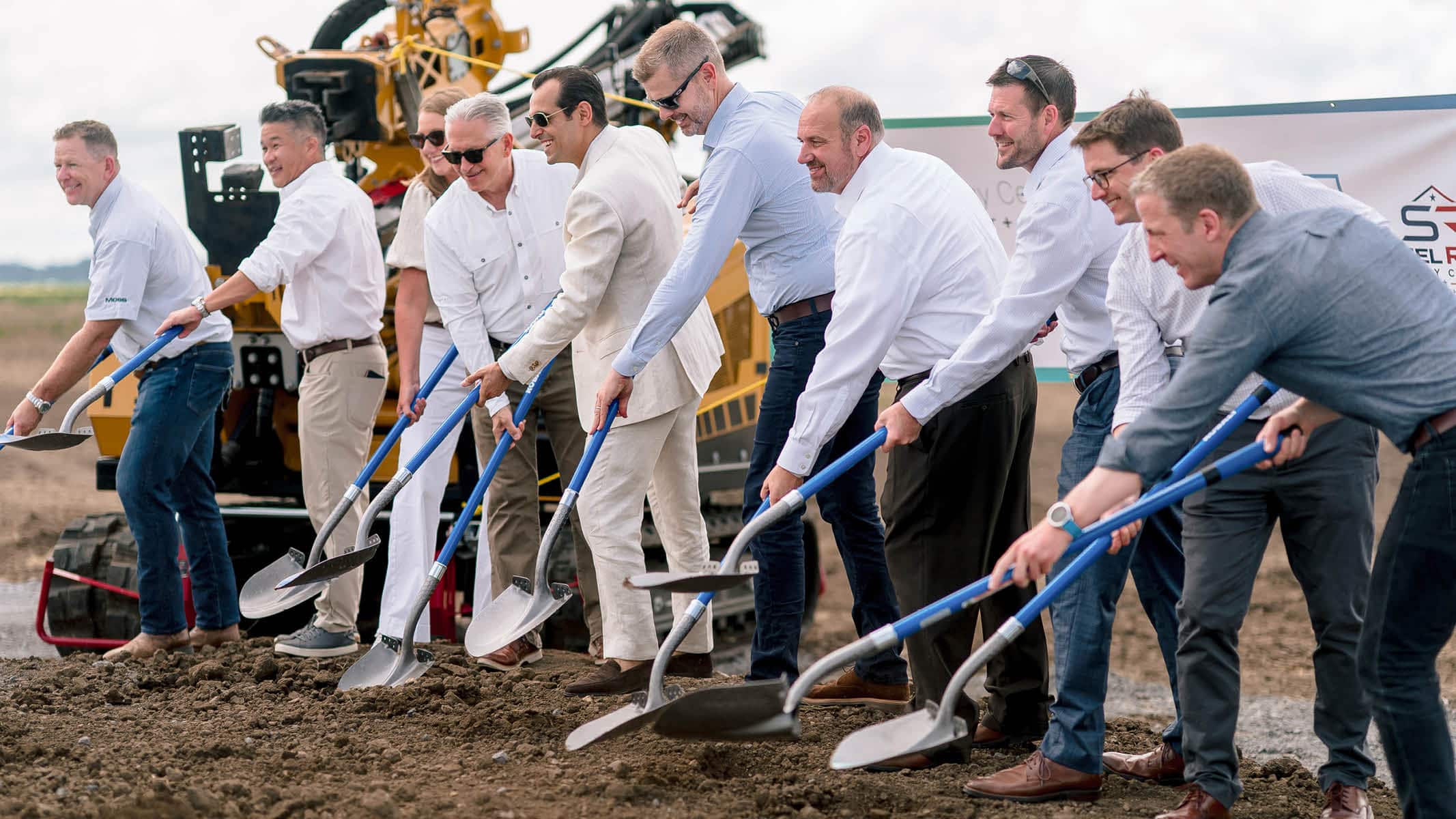
Google and Cypress Creek Energy have broken ground on the first two phases of Steel River Energy Center. Google calls it the company’s largest solar and battery storage project to date. Cypress Creek says the full three-phase project is designed for 2.5 GWdc of solar and 2.9 GWh of battery storage once complete, with the first two phases delivering 1.6 GWdc of solar and 1.9 GWh of storage to the regional grid.
GearPulse’s view: this is relevant because electricity is becoming the hidden spec sheet for the AI era. Chips, models and data centers get the glamour. Power availability decides where the future can actually run.
What is being built
Google says it is partnering with Cypress Creek and community members in Mississippi County on Steel River, with the project built around Arkansas steel and local grid needs. Cypress Creek’s project page describes Steel River as one of the most significant new energy infrastructure projects in the United States and the nation’s largest solar project with battery energy storage.
The numbers are large enough to stop treating this as a normal corporate sustainability announcement.
| Steel River detail | Public figure | Source context |
|---|---|---|
| Full solar capacity | About 2.5 GWdc | Google and Cypress Creek full-buildout figures. |
| Full battery storage | About 2.9 GWh | Cypress Creek and Swift Current project materials. |
| First two phases | 1.6 GWdc solar and 1.9 GWh storage | Google and Cypress Creek groundbreaking materials. |
| Expected full operation | 2029 | Cypress Creek and Swift Current materials. |
| Homes-equivalent figure | More than 315,000 Arkansas homes annually | Google and Cypress Creek framing. |
| Local tax revenue estimate | About $300 million over project life | Cypress Creek project materials. |
| Construction jobs | 700 per phase or 1,400 for phases one and two, depending on source framing | Cypress Creek release and project page. |
The slightly different capacity phrasings across sources are worth noting. Google and the July 14 Cypress Creek release use 2.5 GWdc and 2.9 GWh for the full project. Cypress Creek’s project facts page lists 2.46 GW solar capacity and 2.94 GWh battery storage. Swift Current’s March sale announcement listed 2,450 MWdc solar generation and 2,900 MWh of battery storage. These are the same project family, expressed with slightly different rounding and project-stage context.
The battery storage is the important part
A huge solar project is impressive. A huge solar project paired with storage is more interesting.
Google’s own post says Steel River can store peak daytime solar output and feed it back to the grid when needed. That is the practical value. Solar alone helps when the sun is producing. Storage helps shift some of that output toward the hours when the grid is under pressure.
For readers who follow AI infrastructure, this is the part to watch. Data centers do not consume electricity only when solar production is convenient. AI training, inference, cooling, networking and storage create stubborn power demand. The cleaner version of that future requires not just renewable generation but firming, storage, transmission and local grid planning.
This connects directly to recent GearPulse stories about NVIDIA agent infrastructure and local GPU pooling. The AI stack is widening. A useful model needs chips. Chips need data centers. Data centers need power. Power needs land, steel, batteries, grid interconnection and years of permitting.
The local angle is not decorative
Cypress Creek says Steel River will use 100 percent U.S.-made structural steel, with local Arkansas steel central to the project. Google says the project will support Mississippi County’s industrial economy, including steel manufacturing, data centers and other major employers.
That matters because energy infrastructure is no longer a remote abstraction. Communities are being asked to host data centers, transmission upgrades, solar fields, battery systems and industrial load growth. The public bargain has to be clearer than “a tech company gets cleaner accounting.”
| Promise | Why it helps | What residents will still judge |
|---|---|---|
| Local tax revenue | Schools, public safety and county services can benefit. | Whether the money arrives as projected and is visibly useful. |
| Construction jobs | Large projects create real short-term work. | How much work is local and how long it lasts. |
| Domestic materials | Keeps more of the supply chain in the U.S. | Cost, delivery and long-term maintenance discipline. |
| Grid capacity | New generation and storage can support regional growth. | Whether reliability and rates improve for ordinary users. |
| Community funds | Google says it is investing in affordability and school efficiency initiatives. | Whether programs feel meaningful rather than ceremonial. |
The best version of Steel River is not just a spreadsheet offset. It is a project that adds capacity, storage and local benefits in a region that is being pulled into the data-center economy.
The caveat: power purchase does not mean direct power
The Financial Times framed the deal as Google backing a major U.S. solar project to offset fossil fuel emissions, while also noting the familiar complication with these arrangements: Google remains connected to the broader grid, and power purchase agreements do not mean each electron generated by the project flows directly into a Google data center.
That caveat is important. Corporate clean-energy deals can finance new generation, but they are not the same as making every hour of a company’s electricity use carbon-free. Google has long talked about 24/7 carbon-free energy ambitions. Steel River helps the story because it pairs solar with storage at serious scale. It does not magically solve the entire power problem.
The harder truth is that AI growth is making the target more difficult. More inference, more training, more data center capacity and more cooling all mean more electricity demand. Even aggressive clean-energy buying can be chasing a moving load.
Why this belongs on GearPulse
This is not a consumer gadget launch, but it affects the gadgets and cloud services people use every day.
Every AI feature in a phone, browser, search engine, coding tool or car eventually lands somewhere physical. It runs on servers. Those servers pull power. Someone builds the substation, the battery project, the solar field, the transmission upgrade and the cooling system.
Steel River is compelling because it makes that chain visible. The AI boom is not floating above the real world. It is negotiating with the grid.
Bottom line
Google’s Steel River project is a clean-energy milestone, but the more interesting read is infrastructure realism.
The AI era will not be limited only by model quality or chip supply. It will be limited by power availability, local acceptance, grid readiness and the speed at which generation and storage can be built.
GearPulse’s read: Steel River is the kind of project tech companies need more of, and it is also a reminder that AI’s biggest constraint may be brutally physical. The cloud has a power bill, and that bill is becoming part of the product.